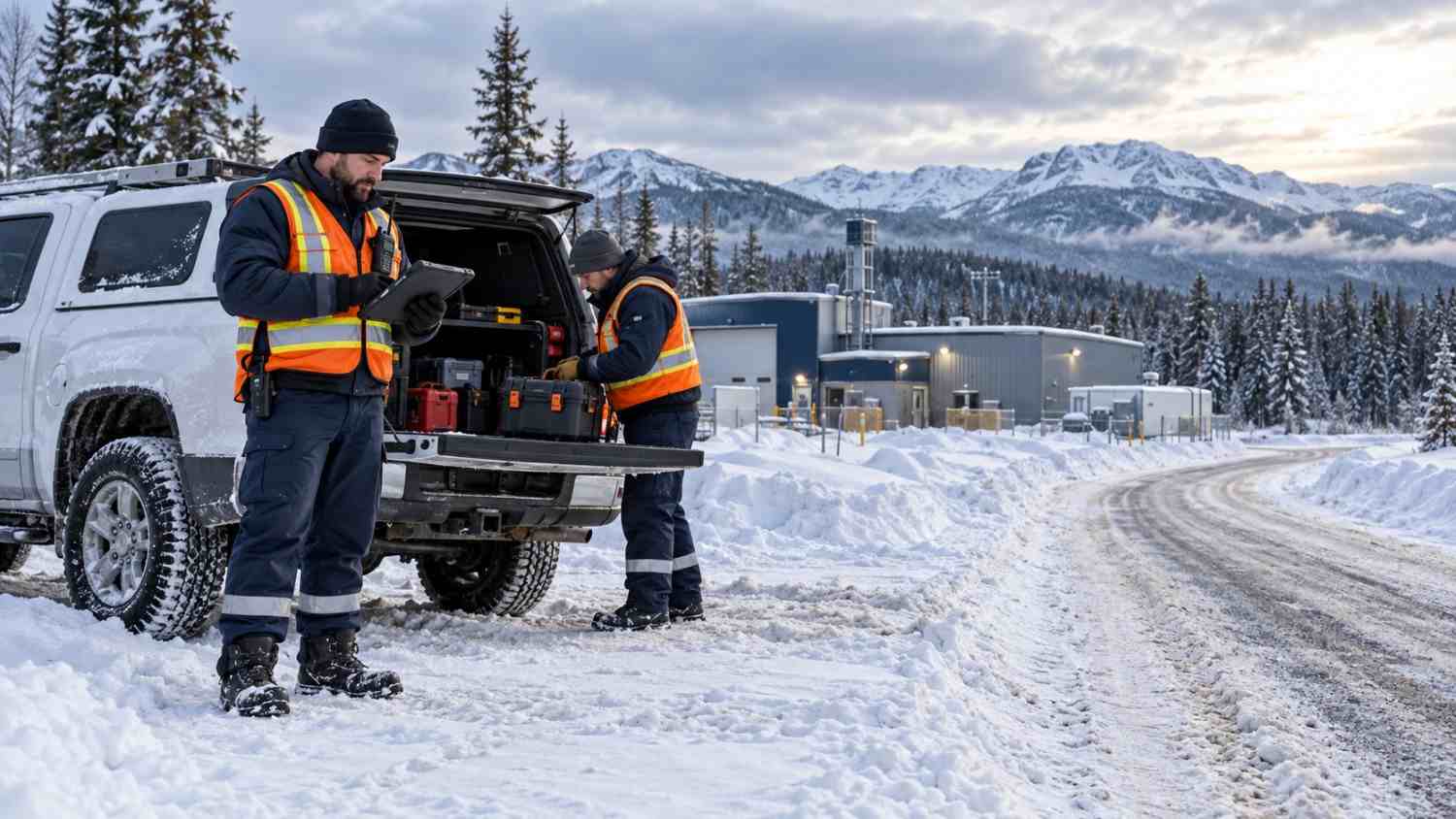
Managing facilities in remote and rural communities requires a different approach to winter planning. Snow, freezing rain, extreme cold, freeze-thaw cycles, wildfire smoke, road closures and long travel distances can all affect how quickly a maintenance issue can be assessed and resolved. When an organisation operates facilities across multiple provinces, these challenges become a matter of governance, planning and operational coordination rather than simply seasonal maintenance.
At Facility Network, we understand that effective remote facility winter operations require a balance between consistent national standards and practical local execution. With more than 40 years of experience and support for 10,000+ facilities across 2,500 cities and towns, we work with the realities of geographically distributed operations. Our coast-to-coast coverage and single point of contact model help organisations coordinate maintenance requirements while accounting for the conditions at individual properties.
For facility managers, building operators and maintenance programme leads, the objective is not to make every site operate in exactly the same way. The objective is to establish a dependable framework for service standards, ownership, preventive maintenance, escalation and documentation that can be adapted to each location.
A winter maintenance plan designed for a facility in downtown Toronto may not work in the same way for a property outside Thunder Bay, a remote operation in Northern Ontario, a rural site in Alberta or a facility in coastal British Columbia.
The differences can include:
These factors can turn a relatively minor equipment issue into a more complex operational event.
For this reason, remote facility winter operations should begin with an understanding of the individual site's exposure, critical assets and available resources.
A remote facility should not simply be marked as "high risk" because of its location. Facility leaders should assess what could happen if access is restricted, a heating system fails, a pipe freezes or a critical piece of equipment becomes unavailable.
A centralised winter programme becomes much more useful when each property has its own documented risk profile.
Start by recording the information that could influence winter service delivery. This creates a common reference point for facility managers, contractors and dispatch teams.
A site-level risk profile should consider:
Document normal access routes, alternate routes, parking arrangements, loading areas and any known seasonal restrictions. Identify whether snow accumulation, flooding, ice or road closures can prevent contractors from reaching the property.
Identify systems that are essential to building operation. Depending on the property, these may include heating, electrical distribution, plumbing, fire protection, refrigeration, building controls or backup power.
Determine who uses the facility and what happens if operations are interrupted. A non-critical storage site may have a different priority from a facility supporting essential business functions.
Record the nearest qualified contractors, typical travel distances, backup providers and potential parts or equipment constraints.
Consider regional climate, storm exposure, wildfire smoke, freeze-thaw conditions and seasonal road conditions.
This information gives facility teams a stronger foundation for facility risk controls and helps central operations teams understand why two properties may require different response arrangements.
Severe weather is not the right time to determine who is responsible for a decision.
A remote-site operating plan should clearly identify who owns each stage of the process. This is particularly important when several parties may become involved in a single incident.
Responsibilities may be divided between:
For each facility, document who can authorise preventive work, restrict access, request emergency service, approve temporary measures, communicate operational impacts and close an incident.
A clear scope-of-work structure also helps prevent duplicate dispatches or gaps in responsibility.
This is a core part of facility governance in Canada because national consistency depends on clearly defined ownership. A central team should know what it controls, what regional teams control and what must be escalated.
Consistency does not mean applying identical procedures to every property.
A national maintenance programme can establish minimum requirements while allowing individual locations to adapt implementation based on risk and local conditions.
For example, every site could be required to complete winter inspections for heating, plumbing, access points and emergency systems. However, the inspection frequency may differ according to climate, asset criticality, building use and travel constraints.
Strong multi-site maintenance standards should define:
This creates a common operating language across provinces without assuming that every property faces identical winter conditions.
Facility teams can also use their wider commercial facility maintenance services framework to connect seasonal requirements with routine maintenance and broader asset needs.
Preventive work becomes particularly important when a facility is difficult to reach during winter.
A minor defect that can be corrected during autumn may become a major service issue once heavy snow, freezing temperatures or road closures begin.
A winter preventive maintenance programme may include:
Preventive maintenance planning should also prioritise work according to consequence.
For example, an inspection of a critical heating system may warrant earlier scheduling than a lower-impact cosmetic repair. This allows maintenance teams to direct limited resources toward assets where winter failure could create greater operational disruption.
Planning should also consider the time required to source parts and schedule qualified technicians. Remote sites may need earlier intervention because replacement resources are not always immediately available.
A single service model may not be suitable across Canada's diverse operating environments.
Regional service tiers can help organisations establish consistent expectations while recognising differences in climate, geography and facility criticality.
A tiering model might include:
Critical sites: Facilities where extended disruption could have significant operational or business consequences.
Moderate-risk sites: Facilities requiring planned preventive maintenance and defined escalation procedures.
Lower-criticality sites: Properties where scheduled maintenance and event-based response may be appropriate.
The classification should consider more than geographic location.
A rural facility in Saskatchewan and a remote facility in British Columbia may have very different weather patterns, contractor networks and access challenges. Likewise, two buildings in the same municipality may have different priorities because of their functions.
Regional tiers should therefore be based on documented risk rather than assumptions about location.
Travel time is one of the most important considerations in remote facility winter operations.
A maintenance request that appears straightforward on a work order may require significant planning when a technician needs to travel several hours to reach the property.
For each remote site, document:
This information helps dispatch teams make more informed decisions.
Facility leaders should also define which circumstances require escalation. For example, a heating failure during extreme cold may require immediate attention at an occupied facility, while a minor issue at an unoccupied property may be handled through planned maintenance.
The classification should reflect safety, asset criticality, business impact, access and weather conditions.
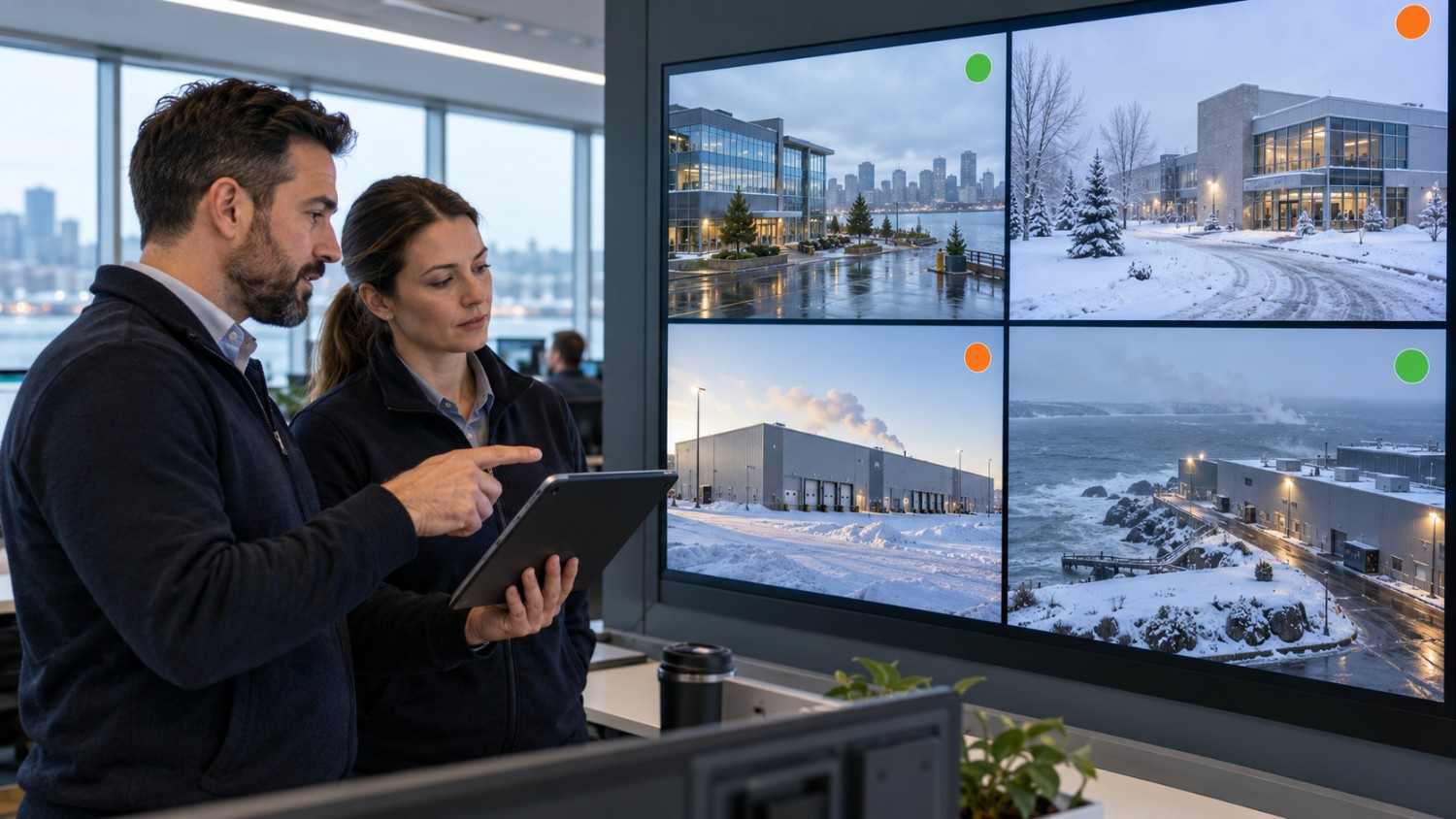
Remote facilities should remain connected to the central operating model even when local conditions require a different response.
Centralised dispatch can provide visibility into work orders, technician assignments, status updates and outstanding actions across multiple properties.
A useful dispatch record should include:
This becomes particularly valuable when severe weather affects multiple facilities at the same time.
Instead of managing individual phone calls and disconnected spreadsheets, central teams can use a consistent workflow to understand which properties are affected and what resources have been assigned.
The related guide, How Centralized Dispatch Improves Winter Work Order Control, explores how structured dispatch can improve visibility and work order coordination during winter conditions.
Technology can further support this process. Using facility management technology and real-time visibility can help teams connect service requests, property information and maintenance updates within a more coordinated operating environment.
Maintenance documentation should provide enough information for another person to understand what happened without relying on informal conversations.
For remote facilities, this is especially important because managers may not be physically present when an issue occurs.
A complete work order should record:
This creates a reliable record for future maintenance decisions.
It can also reveal recurring problems. If one facility repeatedly experiences frozen plumbing or heating interruptions, the organisation can investigate whether the underlying issue relates to insulation, equipment condition, building controls or preventive maintenance frequency.
That turns maintenance documentation into an operational improvement tool rather than simply an administrative requirement.
Remote operations become more vulnerable when they depend on a single contractor, supplier or access route.
Critical facilities should therefore have backup arrangements documented before winter.
Depending on the property and risk profile, these may include:
The objective is not to maintain unnecessary resources at every site. Instead, facility teams should identify where a lack of redundancy could create unacceptable operational exposure.
This is particularly important for facilities that cannot easily be reached during storms or that rely on specialised equipment.
Canadian organisations need to distinguish between national guidance and locally applicable requirements.
The National Building Code of Canada 2025 is a national model code developed through Canada's national code development system. It does not automatically establish the same requirements at every property. Provinces and territories adopt or adapt national model codes through their applicable regulatory frameworks, while municipalities and other authorities may have roles in permitting, administration, inspection, enforcement or local requirements.
Facility managers should therefore verify the applicable requirements for each location, including:
For federally regulated workplaces, Part II of the Canada Labour Code applies to occupational health and safety. Other workplaces must follow the applicable provincial or territorial requirements.
This distinction is important when developing national service delivery standards. A national procedure can establish internal expectations, but it should not be treated as proof that every facility meets its locally applicable legal or regulatory requirements.
Facility teams should confirm requirements with the relevant authority having jurisdiction before undertaking regulated work or alterations.
Contractor verification should happen before an emergency creates pressure.
Depending on the province and type of work, facility teams may need to review insurance, licensing, qualifications, safety requirements and workers' compensation status.
Terminology and processes vary across Canada, so organisations should verify the applicable workers' compensation and contractor requirements with the relevant provincial or territorial authority.
These requirements should form part of the contractor management process rather than being checked only when an urgent service call occurs.
A central contractor record can help teams identify which providers are approved for specific locations and work types.
A winter programme should produce measurable information that facility leaders can use to identify gaps and improve future planning.
Useful performance indicators include:
The value comes from looking for patterns.
If several rural properties in one region experience similar heating failures, the issue may point to an asset or preventive maintenance concern. If one region repeatedly experiences long travel delays, the organisation may need to review its contractor network or service tier.
This supports continuous improvement within the broader operating model.
Snow should not be the only hazard included in a Canadian winter operating plan.
Depending on the region, facilities may experience:
A property may also face multiple hazards during the same season.
Public Safety Canada's emergency management framework uses an all-hazards approach and identifies prevention and mitigation, preparedness, response and recovery as interconnected areas of emergency management. Facility teams can apply the same broad thinking when developing seasonal operational plans.
The objective is to prepare for the conditions that could disrupt the facility, not simply the weather event that is most common in the region.
Winter planning should evolve based on actual operating experience.
After a significant weather event, facility leaders should review:
This creates a feedback loop between response and preventive planning.
Over time, the organisation can use incident data to improve service tiers, contractor coverage, preventive schedules and asset priorities.
Severe weather does not follow business hours.
A remote facility may experience a heating failure, power interruption, water issue or access problem overnight or during a weekend when local staffing is limited.
An after-hours escalation plan should establish:
For a more detailed operational framework, facility leaders can review Designing an After-Hours Escalation Matrix for Winter Events, which addresses escalation responsibilities, dispatch and incident documentation.
A defined process helps prevent important decisions from depending on one individual's availability.
Winter preparedness should not exist as a separate annual exercise.
It should connect with broader maintenance, asset management, emergency planning and facility governance processes.
Organisations can strengthen this connection by maintaining central records for:
These records give operations leaders a more complete view of facility performance.
They also help connect local execution with national governance. Facility teams can use facility services by industry to consider how maintenance requirements differ across property types while retaining a consistent operational framework.
At Facility Network, we focus on creating practical operating structures that support consistency across geographically distributed facilities. Our experience spans more than 40 years, and our network supports 10,000+ facilities across 2,500 cities and towns. With coast-to-coast coverage and a single point of contact, we help organisations coordinate facility requirements across different Canadian operating environments.
We recognise that remote facilities require more than a standard service checklist. Travel conditions, contractor availability, asset criticality, local regulations and regional weather can all influence how maintenance services need to be organised.
Our approach centres on coordinated service delivery, preventive planning, clear escalation and documented work. This gives facility leaders a framework for maintaining visibility across locations while still accounting for local operating realities.
For organisations reviewing their wider maintenance strategy, our Facility Network facility management resources provide additional information that can support facility planning and operational decision-making.
Before severe winter weather arrives, facility leaders should confirm:
This checklist gives operations teams a practical starting point for identifying gaps before severe weather creates additional pressure.
Strong remote facility winter operations depend on preparation, clear ownership, reliable service coordination and measurable documentation. For Canadian organisations managing facilities across rural and remote communities, winter planning must account for geography, travel time, contractor availability, critical assets, weather exposure and provincial or municipal requirements.
At Facility Network, we bring more than 40 years of experience to coordinated facility operations, supporting 10,000+ facilities across 2,500 cities and towns. Our coast-to-coast coverage and single point of contact model help organisations establish consistent service processes while recognising the operational differences between Canadian locations. If you are reviewing your winter maintenance programme or broader multi-site operating model, contact Facility Network to discuss your facility service requirements.
What should Canadian facility teams know about remote facility winter operations?
Canadian facility teams should plan for differences in travel time, contractor availability, weather exposure, site access and asset criticality. A strong operating model establishes consistent service standards and documentation while allowing individual locations to account for local conditions.
Why do remote and rural facilities require additional winter planning?
Remote facilities can have longer travel distances, fewer qualified contractors, limited parts availability and fewer alternative access routes. Severe weather can increase these challenges, so preventive maintenance and documented backup arrangements become particularly important.
How can facility managers prepare remote sites for winter?
Facility managers should assess site-specific risks, identify critical assets, complete preventive maintenance, verify contractor coverage, document access information and establish escalation procedures before severe weather arrives.
What should be included in a remote facility risk profile?
A risk profile can include access conditions, critical building systems, occupancy, business impact, contractor availability, travel distance, regional weather exposure and applicable local requirements.
How does preventive maintenance support remote facility operations?
Preventive maintenance allows teams to address winter-sensitive equipment before severe weather makes access or repairs more difficult. It also provides an opportunity to prioritise work according to asset criticality and operational consequences.
Should every Canadian facility follow the same winter maintenance schedule?
Not necessarily. Organisations can establish common minimum standards while adjusting maintenance frequency according to building type, asset criticality, climate, access and local operating conditions.
How can centralised dispatch help remote facilities?
Centralised dispatch gives operations teams visibility into service requests, priorities, contractor assignments, updates and outstanding work. This becomes particularly useful when several remote sites are affected by the same weather event.
What should winter maintenance documentation contain?
Records should identify the facility and affected asset, reported condition, assessment findings, work completed, contractor, temporary controls, photographs where appropriate, outstanding work and completion status.
How should organisations handle provincial compliance requirements?
Organisations should identify the requirements applicable to each property and confirm current codes, permits, licensing, inspections, occupational health and safety obligations and contractor requirements with the relevant authority or regulator.
What are workers' compensation clearance requirements?
Workers' compensation requirements vary by province and territory. Organisations should verify the requirements applicable to their contractors and work with the relevant provincial or territorial authority.