Fire, life, and safety programs form the backbone of responsible facility management. For office buildings and retail environments, these programs are not one-size-fits-all. Differences in occupancy patterns, layouts, operating hours, and public access significantly influence risk profiles and compliance priorities.
Facility leaders across Canada are expected to balance regulatory compliance, occupant safety, operational continuity, and cost control. Implementing fire safety best practices office retail environments require a clear understanding of both national codes and province-specific enforcement.
Facility Network supports organizations nationwide with comprehensive fire, life, and safety compliance services designed for real-world facility conditions. This guide provides in-depth, sector-specific insights to help office and retail leaders strengthen safety programs and reduce exposure.
Fire and life safety oversight in Canada is guided by national model codes and enforced at the provincial and municipal levels. Commonly referenced standards include:
Provinces such as Ontario, British Columbia, and Alberta apply these frameworks with localized enforcement practices, inspection cycles, and documentation expectations.
Facility leaders are responsible for ensuring systems are maintained, occupants are informed, and documentation is readily available during inspections. Failure to meet these responsibilities can result in fines, operational shutdowns, or reputational damage.
Office spaces typically feature predictable occupancy patterns, controlled access, and lower ignition risks. However, challenges include:
Retail spaces introduce additional risks due to:
Understanding these differences is essential when applying fire safety best practices office retail settings require.
A fire safety plan outlines procedures for prevention, response, and recovery. In Canada, many provinces require documented plans approved by local authorities.
Core components include:
Clearly defined evacuation routes are a critical life safety element. Routes must remain unobstructed and easily identifiable at all times.
Fire alarm systems provide early warning and are a primary inspection focus. Alarm failures are among the most common compliance violations.
Provincial fire codes generally require:
Facility leaders should maintain testing logs to demonstrate compliance.
Sprinkler systems must be inspected and tested according to provincial regulations. Common deficiencies include blocked sprinkler heads and outdated inspection tags.
Proper placement and maintenance are essential.
Safety signage provides critical guidance during emergencies when visibility and stress levels are high.
Retail spaces should pay special attention to signage visibility during promotional displays.
Clutter and improper storage significantly increase fire risk.
Best practices include:
Seasonal inventory increases fire load. Temporary storage areas should be evaluated for compliance.
Overloaded circuits and temporary wiring are common fire hazards.
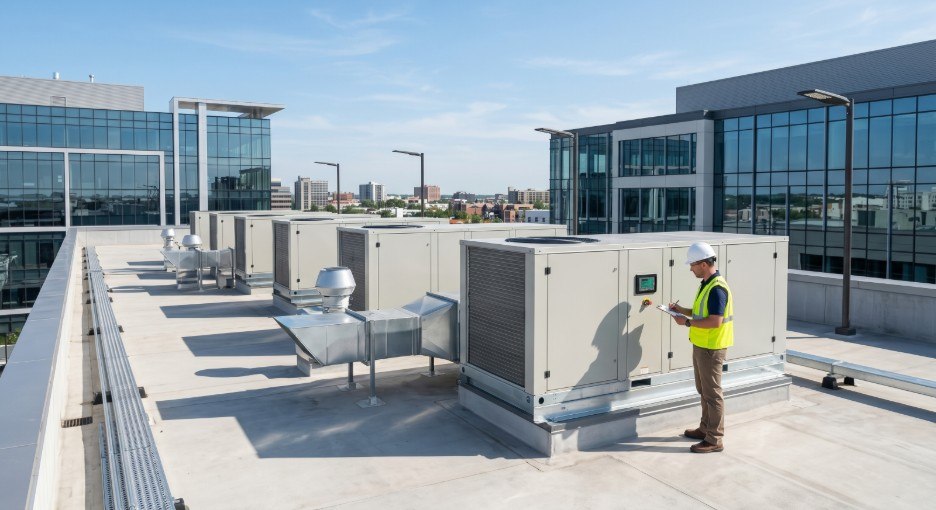
HVAC and mechanical equipment must be maintained to prevent overheating and ignition risks.
Regular preventive maintenance supports both safety and energy efficiency.
Staff should understand evacuation procedures, alarm responses, and fire extinguisher use.
Inspectors commonly request:
Centralized documentation improves inspection outcomes.
Fire safety violations can result in significant fines, enforcement orders, or occupancy restrictions depending on severity and jurisdiction. A proactive approach to compliance helps facility leaders manage long-term operational risk and avoid the disruption of unplanned remediation.
Partnering with experienced providers helps facility leaders maintain compliance and reduce administrative burden. Facility Network delivers specialized fire, life, and safety compliance services tailored to office and retail environments. Learn more about our fire, life, and safety expertise.
Facility Network supports organizations across Canada with integrated facility solutions that prioritize safety, consistency, and regulatory compliance.
Our national coverage and local expertise allow office and retail leaders to implement fire safety best practices office retail environments require without operational disruption.
Fire, life, and safety programs protect people, assets, and business continuity. By applying sector-specific fire safety best practices office retail leaders can reduce risk, improve compliance, and create safer environments for occupants and customers.
Facility Network remains a trusted partner for Canadian organizations seeking reliable, expert-led fire, life, and safety solutions. Learn how our fire, life, and safety services support inspection readiness and ongoing compliance.
How often should fire drills be conducted in office buildings?
Most offices conduct drills annually, though some provinces recommend more frequent exercises.
Do retail spaces have stricter fire safety requirements?
Retail spaces often face stricter scrutiny due to public access and variable layouts.
What is the most common fire safety violation?
Blocked exits and inadequate documentation are among the most frequent findings.
Can third-party providers manage fire safety compliance?
Yes. Professional providers help maintain systems, documentation, and inspection of readiness.
How can facility leaders stay ahead of regulatory changes?
Working with national providers ensures updates are tracked and applied consistently.