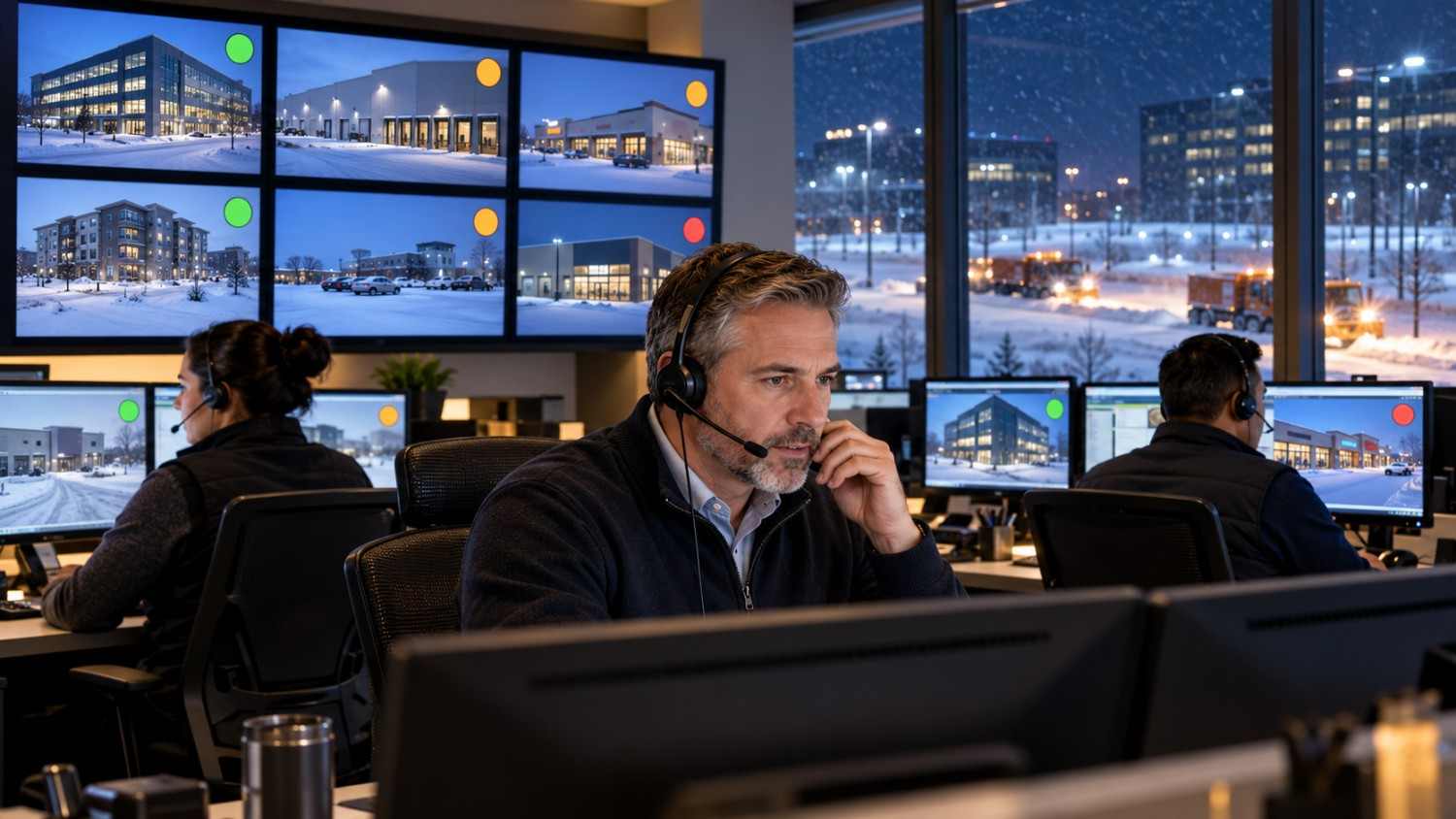
When a burst pipe floods your retail store at 2 AM, or an HVAC system fails during a weekend heatwave, every minute counts. In many commercial contexts, rapid response is often a critical factor in mitigating the impact of system failures. Emergency situations demand immediate action, which is why 24/7 emergency facility hotline benefits have become essential for protecting operations, assets, and occupant safety across Canada.
Facility Network offers comprehensive emergency maintenance services designed to minimise disruption and protect your facility investment through responsive, professional support available every hour of every day.
In this guide, we'll explore how 24/7 emergency hotlines improve maintenance outcomes, reduce downtime, and deliver operational value for commercial facilities across Canada.
Commercial buildings operate on tight schedules where downtime directly impacts revenue, customer experience, and employee productivity. Unlike residential properties, commercial facilities must adhere to strict National Building Code of Canada (NBCC) standards and provincial occupational health and safety regulations. Failure in critical systems, such as fire protection or HVAC, may create compliance risks and significant operational disruption if not addressed promptly.
The live dispatcher feature is designed to bypass automated phone trees for immediate human-to-human triage. When facility managers call, they connect immediately with trained professionals who understand commercial maintenance urgency.
Live dispatchers provide:
Emergency hotlines support faster issue resolution through:
Coordinated dispatch helps accelerate technician deployment compared to uncoordinated emergency calling. Facility Network coordinates with qualified technicians across Canada, across diverse locations and time zones.
Key advantages include:
For retailers, restaurant chains, and commercial property managers operating across Canada, coast-to-coast coverage supports more consistent service standards from St. John's to Victoria.
Benefits of comprehensive coverage include:
Canadian facilities face unique weather challenges that demand immediate response:
Canada's vast geography creates maintenance complexity:
A 24/7 hotline with coast-to-coast coverage manages these complexities through Centralised coordination and regional expertise.
For commercial rollouts and renovations across multiple sites, emergency hotlines provide Centralised project oversight. Facility Network's approach ensures consistent execution whether you're opening one location or fifty simultaneously.
Managing multiple vendors across provinces creates administrative burden and quality inconsistencies. Emergency hotlines consolidate vendor relationships while maintaining service quality through:
Emergency facility hotline benefits go beyond call handling, support faster response, limit operational disruption, and improve coordination across locations, and coast-to-coast coverage. This helps Canadian facility teams maintain continuity across diverse climates and locations.
Facility Network provides Canadian businesses with the emergency response infrastructure necessary for modern commercial operations. By centralising vendor coordination, standardising quality protocols, and facilitating immediate expert response regardless of time or location, emergency hotlines transform maintenance from reactive crisis management to proactive facility protection. Contact Facility Network to discover how comprehensive emergency hotline services can improve your maintenance outcomes while reducing costs and operational risks.
1. What types of emergencies qualify for 24/7 hotline response?
Emergency hotlines handle critical issues including HVAC failures, plumbing emergencies, electrical problems, security system malfunctions, structural damage, and any situation threatening safety, property, or business continuity across facilities.
2. Do emergency hotlines provide coverage in remote Canadian locations?
Yes, comprehensive coast-to-coast coverage includes remote facilities through pre-established relationships with regional technicians and strategic logistics planning works to coordinate regional logistics and leverage Specialised technician networks to support facilities in secondary and remote markets, subject to local infrastructure and travel conditions.
3. How does Centralised vendor coordination reduce maintenance costs?
Established SLAs help provide more predictable expenditure for emergency services compared to ad hoc market rates.
4. Can emergency hotlines integrate with existing facility management software?
Modern emergency hotlines offer API integrations with major facility management platforms, enabling automated work order creation, asset tracking synchronisation, maintenance history documentation, and real-time reporting capabilities for seamless operations.
5. What makes the live dispatcher feature more effective than automated systems?
Live dispatcher feature provides immediate human assessment, intelligent technician matching, real-time problem-solving guidance, direct communication during stressful situations, and flexible decision-making that automated systems cannot replicate effectively.