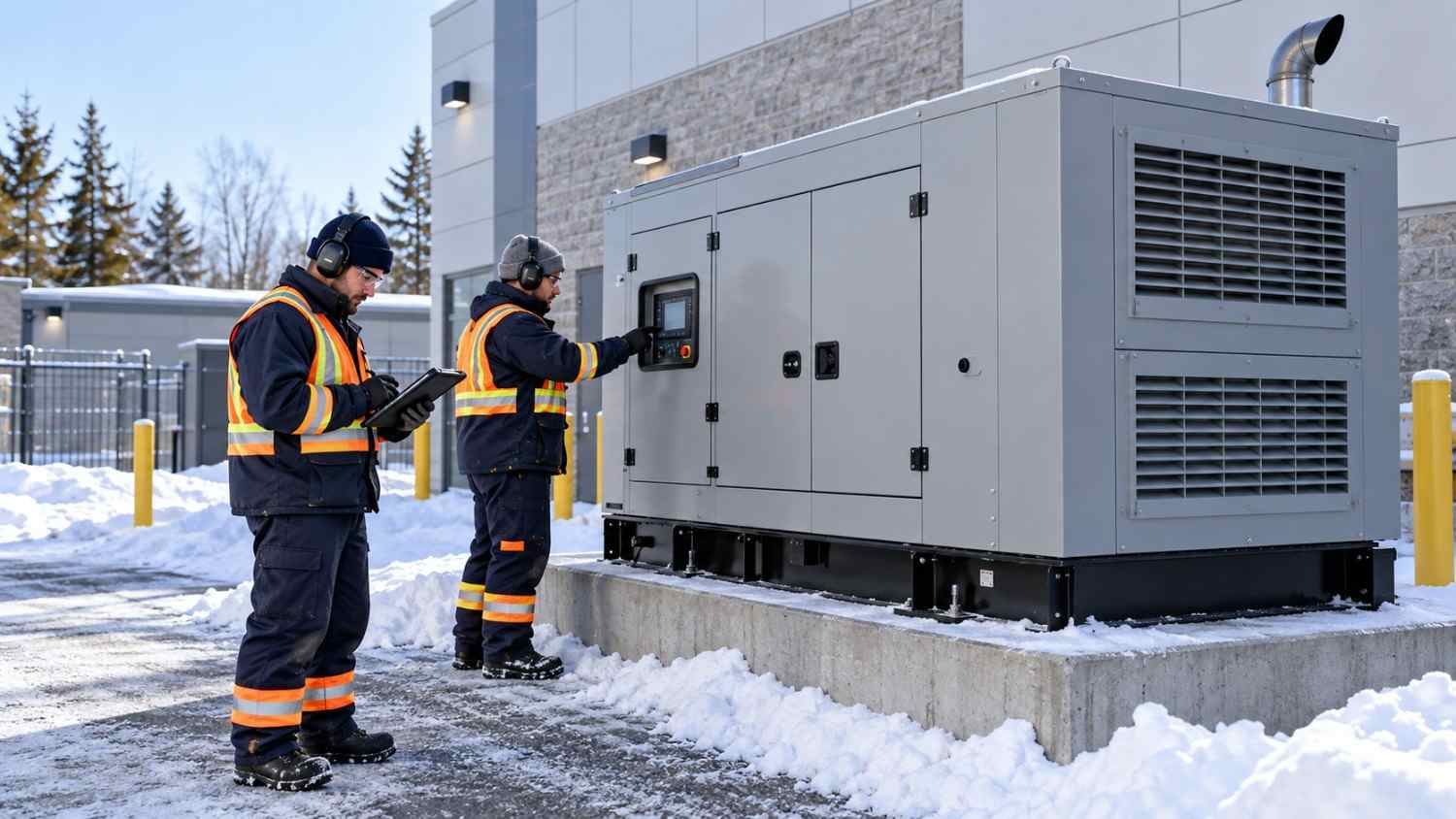
Snow and ice management becomes significantly more complex when an organisation operates facilities across multiple Canadian provinces and municipalities. A procurement strategy that works for one commercial property may not translate directly to a portfolio spanning Ontario, Alberta, British Columbia, Québec and Atlantic Canada. Weather patterns, municipal requirements, site characteristics, contractor capacity and service expectations can all vary.
At Facility Network, we support organisations that need coordinated facility services across multiple locations. Our national network serves 13 provinces and territories, with 9,500+ certified technicians, 600K+ jobs completed and more than 100 services offered as stated on our website. For national snow programmes, we focus on structured service coordination, documented activity and visibility across locations rather than treating each site as an isolated contract.
For procurement executives, the objective of national snow removal procurement is not simply to find a contractor offering the lowest seasonal price. The process should establish clear service requirements, measurable winter service levels, appropriate escalation procedures, contractor capacity and documentation expectations that can be managed across the portfolio.
National snow removal procurement is the process of sourcing, evaluating, contracting and managing snow and ice management services across multiple facilities, regions or provinces.
A national programme may include:
The procurement process should define what each location requires while establishing common commercial and reporting standards across the portfolio.
That distinction matters. A national contract does not mean every site should receive exactly the same treatment. Instead, procurement teams should establish consistent governance while allowing service specifications to reflect local conditions.
Before issuing a request for proposal, procurement teams should understand the facilities being included.
A site inventory can capture:
This information allows procurement teams to compare vendor proposals against a consistent baseline.
It also reduces the risk of asking contractors to price sites using incomplete information.
A contract should state exactly what the supplier is expected to maintain.
Broad language such as “remove snow as required” can create different interpretations between the client and contractor.
A detailed scope can specify:
Clear scope ownership supports better commercial evaluation because procurement teams can compare bids against the same service requirements.
It also creates a stronger foundation for measuring vendor performance after contract award.
Trigger thresholds are one of the most important components of a snow management contract.
The contract should explain what event causes a contractor to begin specific activities.
Triggers may relate to:
The appropriate threshold will depend on the facility, municipality, site risk and service model.
A trigger should also identify what happens after it is reached. For example, the contract may distinguish between an initial plowing event, continued storm monitoring, de-icing and post-event inspection.
This provides a more useful operational framework than relying on vague terms such as “promptly” or “as needed.”
Weather information should form part of the operating model rather than being treated as an informal responsibility.
Environment and Climate Change Canada provides weather warnings, forecasts, past weather information and climate data for locations across Canada. Its weather service provides active alerts by province and territory and supports weather-sensitive planning.
Procurement documents can therefore establish expectations around:
The contract does not need to prescribe one forecasting source for every organisation, but it should make responsibility clear.
A national snow programme can place significant demands on contractor resources during major events.
Procurement teams should assess whether vendors have sufficient:
The evaluation should also consider whether the contractor can support simultaneous events across multiple regions.
A supplier may have adequate capacity for ordinary snowfall but face resource constraints during a major storm affecting several service areas.
This is why commercial snow removal procurement should evaluate operational capacity alongside pricing.
A contractor capacity matrix can make vendor evaluation more transparent.
Consider documenting:
Procurement teams should request evidence where appropriate rather than accepting unsupported claims.
Winter service levels should be specific enough to measure but realistic enough to account for changing conditions.
A useful service-level framework can address:
Avoid contractual language that implies an unconditional response or restoration outcome regardless of weather, road closures, equipment availability or site conditions.
Instead, define the expected process and the conditions that may affect performance.
De-icing should not be treated as a single standard material decision across every property.
Site conditions can influence material selection, application practices and operational requirements.
Procurement teams may need to consider:
The lowest material cost does not necessarily represent the lowest overall operational cost when application requirements, storage, site conditions and service outcomes are considered.
Snow contracts should explicitly identify accessible routes.
Depending on the facility, these may include:
These routes may require different service priorities from general parking areas.
Procurement teams should identify the routes in site documentation and ensure vendors understand which areas require specific attention.
Snow and ice management also intersects with risk management.
Documentation should establish what happened during each significant weather event and what actions were taken.
Useful records may include:
Requirements will vary by jurisdiction and circumstance. Procurement teams should avoid treating documentation as a guaranteed legal defence.
For example, Ontario's Occupiers' Liability Act establishes a statutory duty for occupiers to take reasonable care to ensure people entering premises are reasonably safe, subject to the Act's provisions. Ontario also has specific notice provisions concerning personal injury claims caused by snow or ice.
Other provinces have different statutory frameworks and case law. Québec's civil law framework also differs from common-law provinces. These differences should be considered when developing portfolio-wide risk controls.
A private commercial property is not governed by the same operational responsibilities as a municipal road network.
Municipalities can have their own snow and ice clearing requirements, parking restrictions, road access rules and property-owner responsibilities.
Procurement teams should therefore identify the municipalities represented in the portfolio and confirm applicable local requirements.
A contract should clarify the difference between:
The exact responsibilities will depend on the location and applicable municipal rules.
This is particularly important for a national portfolio because a common corporate policy may need local implementation notes.
A national programme should not assume that winter conditions are uniform across Canada.
Alberta and parts of the Prairies can experience significant temperature fluctuations. Freeze-thaw conditions can create different operational challenges from prolonged cold and deep snow.
Procurement teams should consider how quickly conditions can change and how that affects monitoring and ice management.
Parts of Ontario can experience substantial snowfall associated with lake-effect systems. Site-level snow accumulation can therefore differ significantly between nearby communities.
Contracts should account for local weather exposure rather than relying solely on province-level assumptions.
Atlantic Canada can experience freezing rain, snow, wind and rapidly changing winter conditions. Ice management and access requirements may become particularly important during these events.
British Columbia's Lower Mainland has a different winter profile from the Prairies. Wet snow, rain, freezing conditions and short-duration snow events can create distinct site-management challenges.
These regional differences demonstrate why national snow removal procurement should combine central governance with local service specifications.
Centralised documentation can make portfolio management easier.
Procurement leaders should consider establishing a standard event record that every contractor must follow.
The record could include:
Standardisation allows operations leaders to compare service records without forcing every facility to have identical snow conditions.
It also creates a clearer audit trail for procurement and contract management.
Technology can help procurement and operations teams move beyond individual contractor reports.
A centralised system can provide visibility into:
Our facility management technology and real-time visibility capabilities can support organisations seeking greater visibility across facility service activity.
Technology should complement contract governance. A dashboard cannot compensate for an unclear scope, undefined triggers or missing ownership.
Contractor qualification should form part of the procurement process.
Depending on the jurisdiction and contract, procurement teams may need to review:
Workers' compensation requirements differ across Canada. Ontario uses WSIB, British Columbia uses WorkSafeBC, Alberta uses WCB Alberta and Québec uses CNESST. The applicable requirements should be verified for each contractor and jurisdiction rather than assuming one national process applies everywhere.
The goal is to create a procurement file that demonstrates what was requested, what was reviewed and what requirements were incorporated into the contract.
A national snow RFP should provide vendors with enough information to price and plan the work accurately.
A practical RFP structure can include:
List properties, municipalities, facility types and approximate service areas.
Identify parking areas, entrances, accessible routes, loading zones and snow storage considerations.
Define snow and ice thresholds and the associated service actions.
State measurable operational expectations without promising conditions that depend on factors outside the contractor's control.
Specify required logs, photographs, inspection records and event reports.
Define escalation procedures and requirements for major storms.
Clarify pricing structures, invoicing, additional services and event-related charges.
Explain how service performance will be reviewed and how deficiencies will be addressed.
This structure helps procurement teams compare proposals on operational capability as well as commercial terms.
Snow contracts can use different commercial structures.
Common approaches include:
Each model creates different budgeting and risk considerations.
A seasonal fixed price may provide budget predictability but requires clear scope and assumptions. Event-based pricing can align costs with actual service activity but may make annual budgeting less predictable.
Procurement teams should model likely scenarios using historical information where available and clearly document assumptions.
Do not treat historical snowfall as a guarantee of future conditions.
Procurement does not end when the contract is signed.
A national snow programme should have a defined governance process covering:
This creates a feedback loop between procurement and operations.
For a multi-site organisation, procurement can use these reviews to determine whether contract requirements remain suitable for the next season.
A storm should trigger a review process rather than simply closing work orders.
Post-event verification can examine:
The verification process should reflect the contract and site conditions.
It should also distinguish between a vendor performance issue and a condition caused by weather, access restrictions or circumstances outside the contractor's reasonable control.
Some winter events require services beyond the routine snow contract.
Examples may include:
A procurement programme should define how these situations are escalated.
Where additional emergency support is required, our 24/7 emergency facility services can form part of a broader facility response strategy.
Again, response depends on conditions such as weather, geography, access, equipment and available resources. Contracts should reflect those realities.
Cost remains an important procurement consideration, but national snow programmes should be measured through several dimensions.
Possible performance indicators include:
These measures provide procurement and operations leaders with a broader view of supplier performance.
The exact metrics should be selected according to the organisation's risk profile and contractual requirements rather than copied from another portfolio.
The central challenge of national snow removal procurement is balancing consistency with local reality.
A national framework can establish:
Local site schedules can then address:
This creates a more practical model than either extreme: completely centralised control or completely independent site procurement.
At Facility Network, we focus on coordinating facility services across multiple locations while maintaining visibility into service activity and operational requirements.
Our stated network includes 13 provinces and territories, 9,500+ certified technicians, more than 600K jobs completed and 100+ services. These capabilities support a broader model in which snow and ice management can be considered alongside other facility requirements rather than managed as an isolated seasonal purchase.
We also place emphasis on documentation and service visibility so that national operations teams can review what occurred at individual facilities and identify follow-up requirements.
For procurement leaders, this can support a more connected approach to winter risk management, service governance and multi-site facility operations.
Before awarding a national snow contract, procurement teams should confirm:
A national snow programme requires more than a standard vendor agreement. Procurement teams need a framework that connects site requirements, weather monitoring, trigger thresholds, contractor capacity, winter service levels, documentation and post-event verification.
The Canadian legal and operational environment also varies by province and municipality. For example, Ontario's Occupiers' Liability Act establishes duties concerning reasonable safety on premises and contains specific provisions relating to snow and ice claims. Other jurisdictions have different legislative frameworks and municipal requirements, so procurement teams should obtain location-specific legal and regulatory advice where necessary.
Environment and Climate Change Canada's weather information can support event monitoring, while local municipal and provincial authorities remain important sources for applicable local requirements.
At Facility Network, we help organisations coordinate complex facility requirements across multiple locations, with an emphasis on service visibility, documented activity and operational accountability. If your organisation is reviewing its winter programme or preparing a national procurement strategy, you can book a facility services consultation to discuss your portfolio, service requirements and winter operating priorities.
What Is National Snow Removal Procurement?
National snow removal procurement is the process of sourcing and managing snow and ice management services across multiple facilities, provinces or municipalities under a coordinated procurement and governance framework.
What Should A National Snow Removal Contract Include?
A contract should define service areas, trigger thresholds, snow and ice treatment requirements, accessible routes, documentation, emergency escalation, pricing, service levels, contractor responsibilities and post-event verification.
How Should Procurement Teams Compare Snow Removal Vendors?
Teams can compare vendors based on geographic coverage, equipment capacity, labour resources, emergency capability, documentation processes, service levels, compliance documentation and commercial terms.
Why Are Trigger Thresholds Important?
Trigger thresholds establish when specific snow or ice services should begin. They help reduce ambiguity between the client and contractor and provide a measurable foundation for contract management.
How Does Weather Monitoring Affect Snow Procurement?
Weather monitoring helps contractors and facility teams anticipate events, prepare resources and evaluate changing conditions. Environment and Climate Change Canada provides weather warnings, forecasts and other weather information for locations across Canada.
Should Snow And Ice Contracts Include Accessible Routes?
Yes. Procurement teams should clearly identify accessible parking, entrances, pedestrian routes and other areas requiring priority service based on the facility's requirements.
Are Snow Removal Requirements The Same Across Canada?
No. Weather patterns, municipal requirements, provincial legislation, site conditions and contractor capacity can differ significantly between locations. National programmes should therefore combine common governance with local requirements.
What Documentation Should Snow Contractors Provide?
Depending on the contract, documentation can include weather conditions, service times or activity records, areas serviced, materials used, photographs, post-event inspections, reported hazards and corrective actions.
What Is The Role Of Post-Event Verification?
Post-event verification allows facility and procurement teams to review whether contracted services were performed according to the agreed scope and whether outstanding hazards or corrective actions remain.
How Can Procurement Teams Control Winter Risk Across Multiple Sites?
A structured programme can combine standard RFP requirements, site-specific scopes, measurable service levels, contractor capacity reviews, centralised documentation, escalation procedures and regular performance reviews. The exact controls should reflect each organisation's portfolio and applicable local requirements.