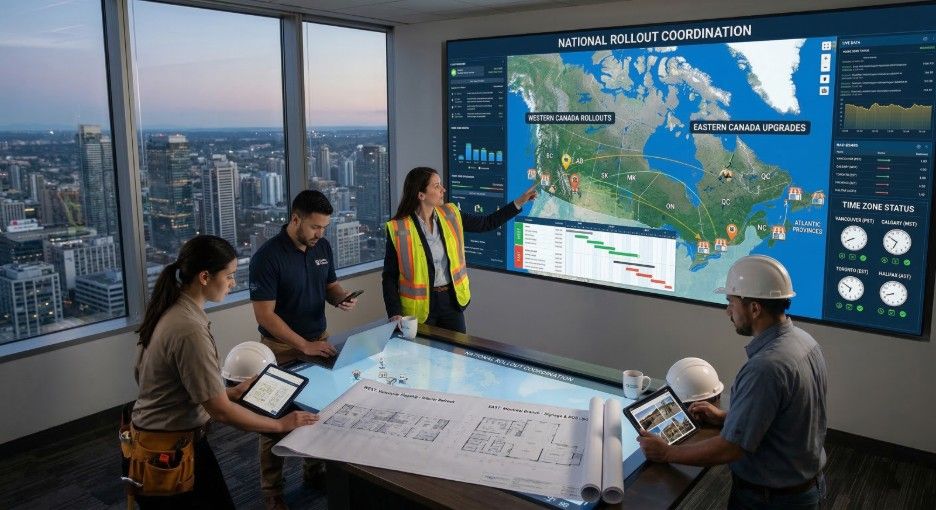
Retail chains, franchise networks, and national brands frequently undertake simultaneous upgrades to maintain consistency across locations. However, managing multi site upgrades in Canada across both Eastern and Western regions introduces a unique set of operational, logistical, and regulatory challenges. From coordinating labour teams across time zones to managing material logistics and ensuring compliance with provincial requirements, national project managers must adopt a highly structured and strategic approach.
Canada’s geographic scale adds complexity to any national rollout. The distance between provinces such as British Columbia and Nova Scotia spans thousands of kilometres, and each region operates with its own labour markets, municipal processes, and seasonal conditions. Without careful coordination, projects can experience delays, inconsistent outcomes, and increased costs.
This is where experienced facility management partners play an important role. Facility Network supports national organizations by coordinating upgrades, maintenance, and renovation initiatives across multiple locations. Their expertise in large-scale project execution allows businesses to maintain operational continuity while implementing upgrades across several sites simultaneously.
In this guide, we explore how project managers can effectively manage multi site upgrades in Canada, focusing on logistics coordination, time zone planning, labour sourcing, and operational consistency across both coasts.
Many organizations today operate across dozens or even hundreds of locations nationwide. Retail chains, hospitality brands, healthcare providers, and financial institutions regularly implement upgrades across their entire network to maintain brand standards and improve customer experiences.
There are several reasons why multi site upgrades in Canada are becoming more common.
National brands rely on consistent store layouts, signage, technology infrastructure, and interior design to create a unified customer experience. When one location is updated, the brand often chooses to implement upgrades across multiple sites to maintain visual and operational consistency.
Retail environments increasingly rely on digital infrastructure, including POS systems, security technology, and smart facility management systems. These upgrades must be implemented across many locations at once to maintain operational compatibility.
Updating multiple locations at the same time can reduce long term disruption. Rather than closing locations individually over several months, coordinated upgrades allow businesses to implement improvements within a controlled timeframe.
Retail and service businesses frequently update their locations to remain competitive. Simultaneous upgrades allow brands to refresh their image and improve operational capabilities across the entire network.
Successfully executing multi site upgrades in Canada requires careful planning, especially when sites span multiple provinces.
Canada’s vast geography makes nationwide project execution complex. Managing simultaneous upgrades across Eastern and Western Canada requires careful coordination across distances, climates, and regional markets.
Transportation of materials across the country can involve significant lead times. Shipping construction materials or store fixtures from a central warehouse to multiple provinces requires coordination with logistics providers and careful scheduling.
For example, materials shipped from Ontario to British Columbia may take several days or even weeks depending on transportation methods and supply chain availability.
Seasonal conditions vary significantly across the country. Winter conditions in Atlantic Canada may differ from those in Alberta or British Columbia. These factors affect project timelines, especially for exterior upgrades.
Each province has different building codes, safety standards, and permit requirements. Managing compliance across multiple jurisdictions requires a coordinated approach.
Organizations managing multi site upgrades in Canada must therefore build project plans that account for these regional differences. Project leads must ensure that bicoastal rollouts adhere to provincial variations of the National Building Code of Canada (NBCC) and local municipal bylaws.
One of the most important aspects of managing multi location projects is logistics coordination. Materials, equipment, and contractors must be scheduled efficiently to avoid project delays.
Many organizations benefit from centralised procurement for construction materials, fixtures, and equipment. This approach ensures consistency across locations and allows businesses to negotiate better pricing with suppliers.
However, centralised procurement must be paired with well planned distribution strategies to deliver materials to each site on schedule.
Materials may be distributed using regional staging facilities or warehouses. This reduces shipping time and allows project managers to maintain inventory close to project locations.
Large scale upgrades often involve hundreds of individual components. Tracking systems help ensure that each site receives the correct materials at the correct time.
Effective logistics coordination is essential for the success of multi site upgrades in Canada, especially when projects occur across both coasts simultaneously.
Time zone differences are an often overlooked challenge when managing nationwide projects.
Canada spans multiple time zones including:
This means that teams working in Vancouver may start their day three hours behind colleagues in Toronto.
Project managers must establish standardised reporting schedules to ensure consistent communication across regions. Daily updates, progress reports, and issue tracking should follow a structured schedule that accommodates all time zones.
Contractor schedules may vary by region. Coordinating inspection appointments, equipment deliveries, and site walkthroughs requires awareness of local time differences.
Unexpected issues can occur during construction projects. Having a national coordination team available to respond to site concerns across time zones improves project efficiency.
For organizations handling multi site upgrades in Canada, structured communication frameworks are essential. Facility Network verifies that all regional contractors maintain active WSIB/WCB coverage and comply with provincial health and safety standards (e.g., WorkSafeBC or Ontario’s OHSA).
Labour availability varies significantly across Canadian provinces. Some regions have larger construction workforces, while others may experience labour shortages during peak seasons.
Urban centres such as Toronto, Vancouver, and Calgary typically have larger contractor networks. Smaller cities or remote areas may have fewer specialized contractors available.
Certain trades, including electrical work, HVAC installation, and specialized fixture installation, may have limited availability in some regions.
Construction activity often increases during spring and summer. During these periods, contractor schedules fill quickly.
Securing contractor resources early supports efforts to keep project timelines on track and can mitigate the impact of regional labour shortages.
Facility Network often assists organizations by coordinating contractor networks across the country, ensuring that skilled trades are available where and when they are needed.
Maintaining consistent results across multiple sites requires standardised project management processes.
Organizations should develop clear project guidelines that define:
These guidelines ensure that each location meets the same operational and design standards.
Project documentation should be consistent across all sites. This includes inspection reports, contractor documentation, and compliance records.
Many organizations rely on project management platforms to monitor progress across multiple locations. These tools allow project managers to track milestones, review reports, and identify potential delays in real time.
Standardisation plays a critical role in successful multi site upgrades in Canada.
Large scale projects always involve risk. When multiple sites are upgraded simultaneously, those risks can multiply.
Material shortages or transportation delays can affect multiple sites at once. Maintaining backup suppliers and flexible scheduling can help mitigate these risks.
Municipal approvals may vary by region. Some municipalities process permits quickly, while others require longer review periods.
Unexpected contractor availability issues can delay site upgrades. Having backup contractor resources can help keep projects on schedule.
Organizations managing multi site upgrades in Canada should implement proactive risk management strategies to maintain project timelines.
Clear communication is essential when coordinating upgrades across many locations.
Using centralised communication platforms ensures that all project stakeholders receive consistent updates.
Assigning regional project leads helps coordinate activities in specific provinces or territories.
Regular updates for executives, operations teams, and store managers help maintain alignment throughout the project lifecycle.
These strategies help maintain control over multi site upgrades in Canada, even when projects span thousands of kilometres.
Executing national upgrades requires coordination across contractors, suppliers, and internal teams. Many organizations rely on facility management partners to streamline these efforts.
Facility management providers help organizations:
Facility Network supports businesses across Canada by coordinating complex facility upgrades and maintenance initiatives. Their national contractor network and project management expertise help organizations implement upgrades efficiently while maintaining consistent quality standards.
With the right support structure, companies can execute multi site upgrades in Canada without disrupting daily operations.
As businesses continue expanding across Canada, national upgrade programs will likely become more common.
Several trends are shaping the future of facility upgrades.
Many organizations are integrating smart building technologies that require coordinated installation across multiple locations.
Energy efficient lighting, HVAC upgrades, and sustainable building materials are becoming priorities for many businesses.
Advanced project management platforms allow companies to monitor nationwide projects in real time.
These trends will further increase the importance of strategic planning for multi site upgrades in Canada.
Managing simultaneous upgrades across Eastern and Western Canada requires careful planning, coordination, and expertise. From logistics coordination and labour sourcing to time zone management and regulatory compliance, national projects demand a structured approach.
Organizations that plan ahead, standardise processes, and establish strong communication systems can successfully execute multi site upgrades in Canada while maintaining operational continuity.
Partnering with experienced facility management providers can further streamline the process. Facility Network helps organizations coordinate nationwide upgrades, ensuring projects remain on schedule and meet consistent quality standards across every location.
With the right strategy and support, businesses can successfully modernise their facilities and maintain competitive, high performing locations across the country. Contact Facility Network to discuss a coordinated national upgrade strategy and project management plan for your bicoastal portfolio.
What are multi site upgrades in Canada?
Multi site upgrades refer to renovation or improvement projects that occur simultaneously across multiple locations in different provinces or regions within Canada.
Why are multi site upgrades important for national businesses?
They help maintain brand consistency, improve operational efficiency, and ensure that facilities meet modern design and technology standards.
What challenges do companies face when managing multi location upgrades?
Common challenges include logistics coordination, contractor availability, time zone management, regulatory compliance, and supply chain disruptions.
How can project managers coordinate upgrades across different time zones?
They can establish structured reporting schedules, centralised communication platforms, and regional project leads to maintain coordination across locations.
How do labour shortages affect national renovation projects?
Labour shortages can delay project timelines if skilled trades are unavailable. Early contractor scheduling helps mitigate these risks.