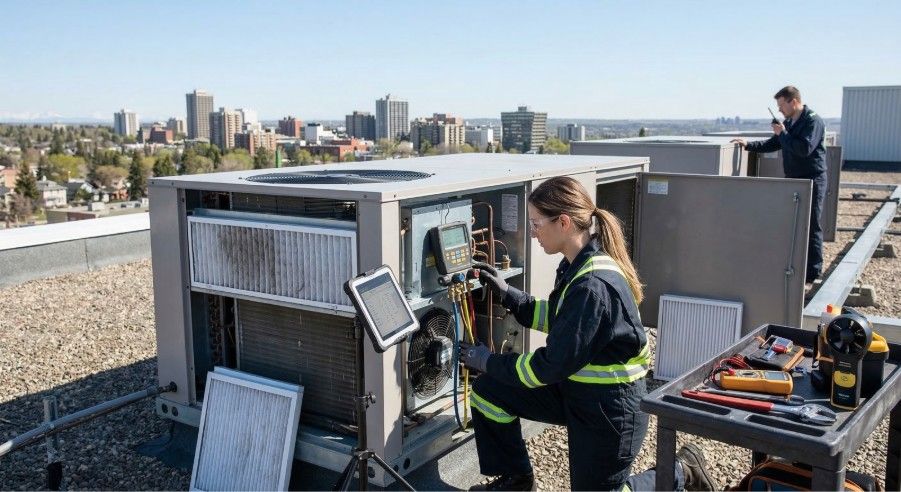
Seasonal transitions in Canada often place unique operational demands on commercial building systems. Heating, ventilation, and air conditioning systems operate continuously through winter to maintain indoor comfort in cold climates. When spring arrives, facilities teams must ensure that HVAC systems adjust effectively to changing outdoor conditions.
After several months of heavy heating operation, mechanical systems may require careful evaluation before the cooling season begins. Equipment that has been operating under winter loads may benefit from inspection, cleaning, calibration, and airflow adjustments.
For many organizations, this process is part of HVAC recommissioning in Canada, which involves reviewing the operational performance of building HVAC systems following seasonal changes. Recommissioning activities help facilities teams verify that mechanical systems are functioning as intended and responding properly to building control settings.
Facilities teams responsible for commercial buildings often coordinate spring HVAC evaluations as part of broader seasonal maintenance planning. When buildings operate across multiple locations, these assessments may occur simultaneously across a portfolio.
Organizations managing distributed properties frequently work with Facility Network to coordinate mechanical inspections, manage vendor scheduling, and support maintenance workflows across multiple sites.
This guide explores how HVAC recommissioning in Canada supports seasonal system optimization, outlines common inspection priorities, and highlights considerations for facilities teams responsible for maintaining commercial HVAC performance.
Canadian commercial buildings often operate HVAC systems under significantly different conditions throughout the year. During winter months, heating systems maintain indoor temperature despite cold outdoor air. In many regions, these systems operate continuously for extended periods. Optimization of ventilation and air quality should support alignment with ASHRAE 62.1 and the National Building Code of Canada (NBCC) Part 6 standards for HVAC design.
When spring arrives, outdoor temperatures gradually rise and building heating demand begins to decline. Mechanical systems must transition from winter operation to more balanced ventilation and cooling functions.
Without careful system review, several operational challenges may develop during this transition:
HVAC recommissioning in Canada helps facilities teams evaluate these factors and adjust system settings to support efficient operation during warmer months.
Seasonal recommissioning also allows maintenance teams to detect minor issues that may have developed during winter operation. Addressing these concerns early supports efforts to mitigate potential operational disruptions during peak cooling periods .
Recommissioning involves reviewing the operational performance of existing HVAC systems to confirm that they are functioning according to design expectations or current operational requirements.
In commercial facilities, this process may include:
The goal of HVAC recommissioning in Canada is not necessarily to replace equipment, but rather to ensure that existing systems operate effectively as environmental conditions change.
Because commercial HVAC systems are complex networks of interconnected equipment, recommissioning activities may involve multiple disciplines. Mechanical technicians, controls specialists, and facility managers may collaborate to assess how different system components interact.
Facilities teams often schedule recommissioning activities during seasonal transitions because these periods present an opportunity to evaluate how systems respond to changing environmental conditions.
Winter heating demand places continuous strain on mechanical systems in Canadian facilities. Boilers, air handling units, and ventilation components often operate under sustained load conditions throughout the colder months.
During this time, HVAC systems may experience several forms of operational stress:
While these conditions are expected during winter operation, they can affect system performance if maintenance is deferred.
By reviewing system conditions after winter use, maintenance teams can determine whether adjustments or preventative maintenance actions are necessary before cooling loads increase.
A preventive inspection is one of the most important elements of HVAC recommissioning. These inspections help identify mechanical or operational concerns that may affect system performance during the upcoming season.
Preventive inspection activities may include reviewing the condition of several system components, such as:
Inspection teams may also observe system behaviour while equipment is operating to determine whether airflow patterns or temperature responses appear consistent with building requirements.
For facilities teams responsible for large commercial buildings, preventive inspections provide an opportunity to detect issues that might otherwise remain unnoticed until occupants experience comfort concerns.
Integrating preventive inspection activities into HVAC recommissioning in Canada can support more reliable system operation throughout the year.
Facilities teams often rely on a seasonal startup checklist to guide HVAC recommissioning activities. This checklist helps ensure that important inspection and adjustment tasks are completed systematically.
While the specific contents of a checklist may vary depending on equipment type and building design, many commercial facilities include the following review areas:
Using a structured checklist helps facilities teams maintain consistency across inspections, particularly in organizations managing multiple buildings.
For operations that span several locations, standardized startup procedures can simplify the process of performing HVAC recommissioning in Canada across an entire facility portfolio.
Air distribution plays a critical role in maintaining occupant comfort and supporting building ventilation requirements. Over time, airflow patterns within a building may change due to equipment wear, duct modifications, or changes in occupancy patterns.
Air balance testing involves measuring and adjusting airflow across different areas of the building to help ensure that ventilation systems distribute air appropriately.
In commercial environments, airflow imbalances may lead to several operational concerns:
During HVAC recommissioning in Canada, facilities teams may review airflow conditions and determine whether adjustments are required.
Air balance testing may involve measuring airflow rates at supply and return vents, evaluating duct system performance, and adjusting dampers or controls where necessary.
These activities can help restore balanced airflow and support consistent indoor environmental conditions.
Modern commercial HVAC systems often rely on building automation systems to manage temperature, ventilation, and energy usage. These systems use sensors and programmable controls to adjust mechanical equipment in response to environmental conditions.
During winter operation, control settings may be configured to prioritize heating performance. When spring arrives, facilities teams may need to review and adjust these settings to support seasonal ventilation and cooling.
Control system evaluation during HVAC recommissioning in Canada may involve:
Because building automation systems influence multiple mechanical components simultaneously, control adjustments can have a significant impact on system performance.
Facilities teams often review control settings carefully during seasonal recommissioning to ensure that the system transitions smoothly from heating to cooling operation.
Organizations operating multiple commercial facilities often face logistical challenges when coordinating seasonal maintenance activities. HVAC systems in different locations may vary in design, age, and operational requirements.
Facilities teams responsible for these portfolios may need to coordinate inspections, schedule technicians, and maintain maintenance records across several sites.
Centralized coordination can simplify this process by ensuring that recommissioning activities follow consistent procedures.
Facility Network often supports organizations by coordinating mechanical services, managing contractor networks, and maintaining service documentation across distributed properties. We ensure all HVAC vendors maintain valid WSIB/WCB coverage and hold necessary provincial trade certifications (e.g., 313A in Ontario or equivalent).
This approach can help facilities teams perform HVAC recommissioning in Canada in a more organized and efficient manner.
As spring progresses, cooling demand gradually increases in many commercial facilities. HVAC systems must be ready to manage rising indoor temperatures while maintaining adequate ventilation.
Seasonal recommissioning activities help ensure that cooling equipment and airflow systems are prepared for this transition.
Preparation steps may include reviewing:
Facilities teams often coordinate these evaluations during HVAC recommissioning in Canada to help ensure that systems respond effectively when cooling demand increases.
Early preparation also allows maintenance teams to address potential issues before the peak summer season.
Documenting maintenance activities is an important part of facility management. Records provide insight into system performance over time and help teams track recurring maintenance needs.
During recommissioning activities, facilities teams often document:
This documentation helps create a historical record that supports long-term facility planning.
For organizations managing large building portfolios, centralized documentation can also help track recommissioning activities across multiple sites.
Facility Network may assist organizations in maintaining maintenance records and coordinating facility service workflows.
Maintaining HVAC performance requires consistent attention to system operation, maintenance planning, and seasonal adjustments. Recommissioning activities play an important role in ensuring that systems remain responsive to changing environmental conditions.
For facilities teams operating commercial buildings across Canada, seasonal transitions provide an opportunity to review system performance and make adjustments where necessary.
By incorporating HVAC recommissioning in Canada into routine maintenance planning, organizations can support the long-term functionality of mechanical systems while maintaining comfortable indoor environments for building occupants.
Seasonal transitions in Canada present important opportunities for facilities teams to evaluate HVAC system performance. After months of winter heating operation, mechanical systems may benefit from inspection, airflow review, and control adjustments.
HVAC recommissioning in Canada provides a structured approach to evaluating these systems and preparing them for the cooling season.
Through preventive inspections, seasonal startup procedures, and airflow assessments, facilities teams can identify potential issues and optimize system operation.
Organizations managing multiple commercial facilities may benefit from coordinated service support that helps standardize recommissioning activities across locations.
By maintaining a proactive approach to seasonal HVAC maintenance, facilities teams can support reliable system performance and maintain comfortable indoor environments throughout the year.
What is HVAC recommissioning in Canada?
HVAC recommissioning in Canada refers to the process of evaluating and adjusting existing HVAC systems to confirm that they are operating effectively after seasonal changes, particularly after winter heating periods.
Why is HVAC recommissioning important in spring?
Spring recommissioning allows facilities teams to review system performance after winter operation and prepare HVAC equipment for warmer weather conditions.
What is included in a seasonal startup checklist?
A seasonal startup checklist may include reviewing thermostat settings, inspecting ventilation components, verifying control responses, and evaluating filter and airflow conditions.
What is air balance testing?
Air balance testing measures and adjusts airflow throughout a building to help ensure that ventilation systems distribute air evenly across different areas.
How can organizations manage HVAC maintenance across multiple facilities?
Organizations often coordinate maintenance activities through centralized planning and vendor management. Facility Network can help coordinate HVAC services across distributed facility portfolios.