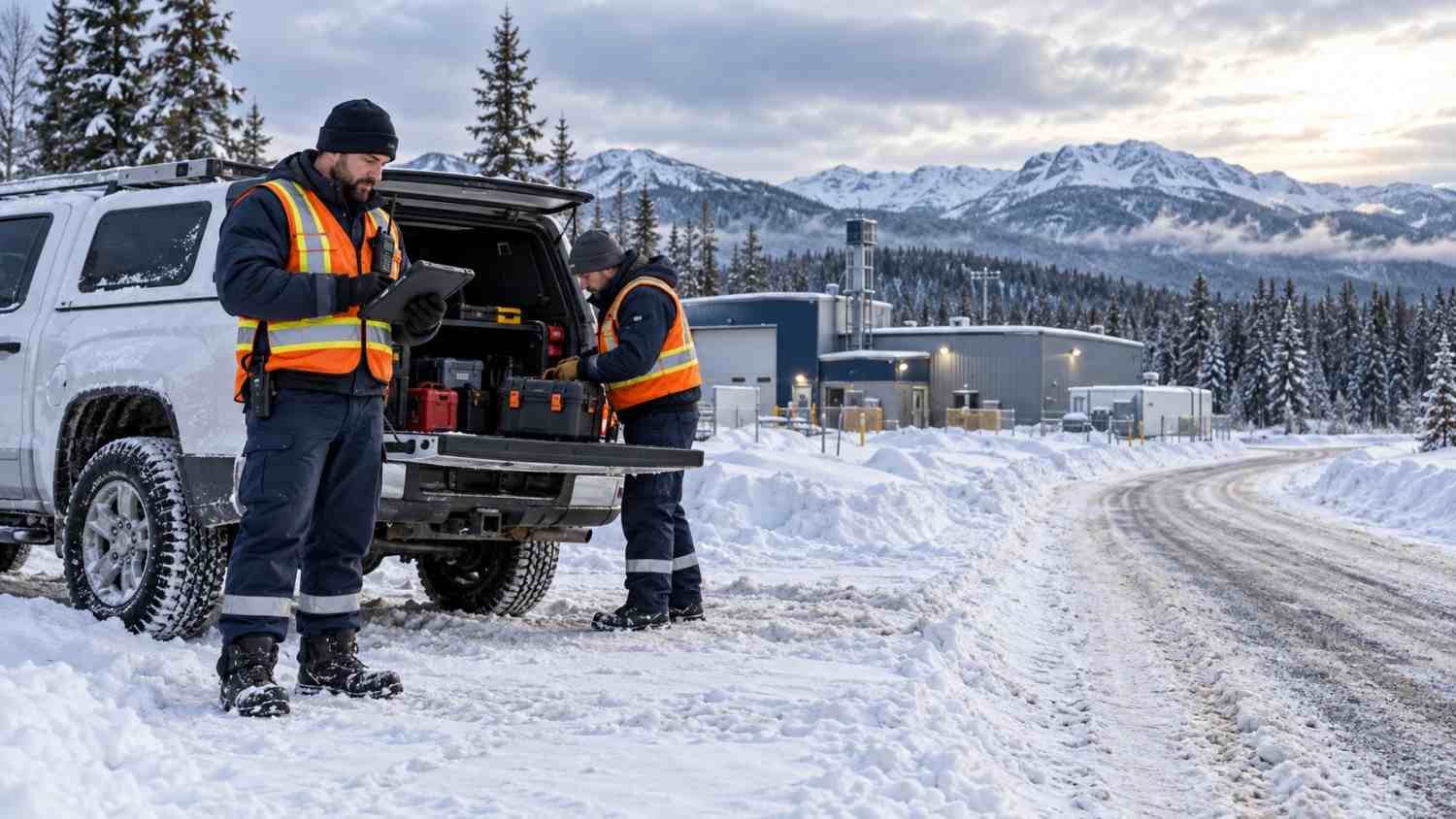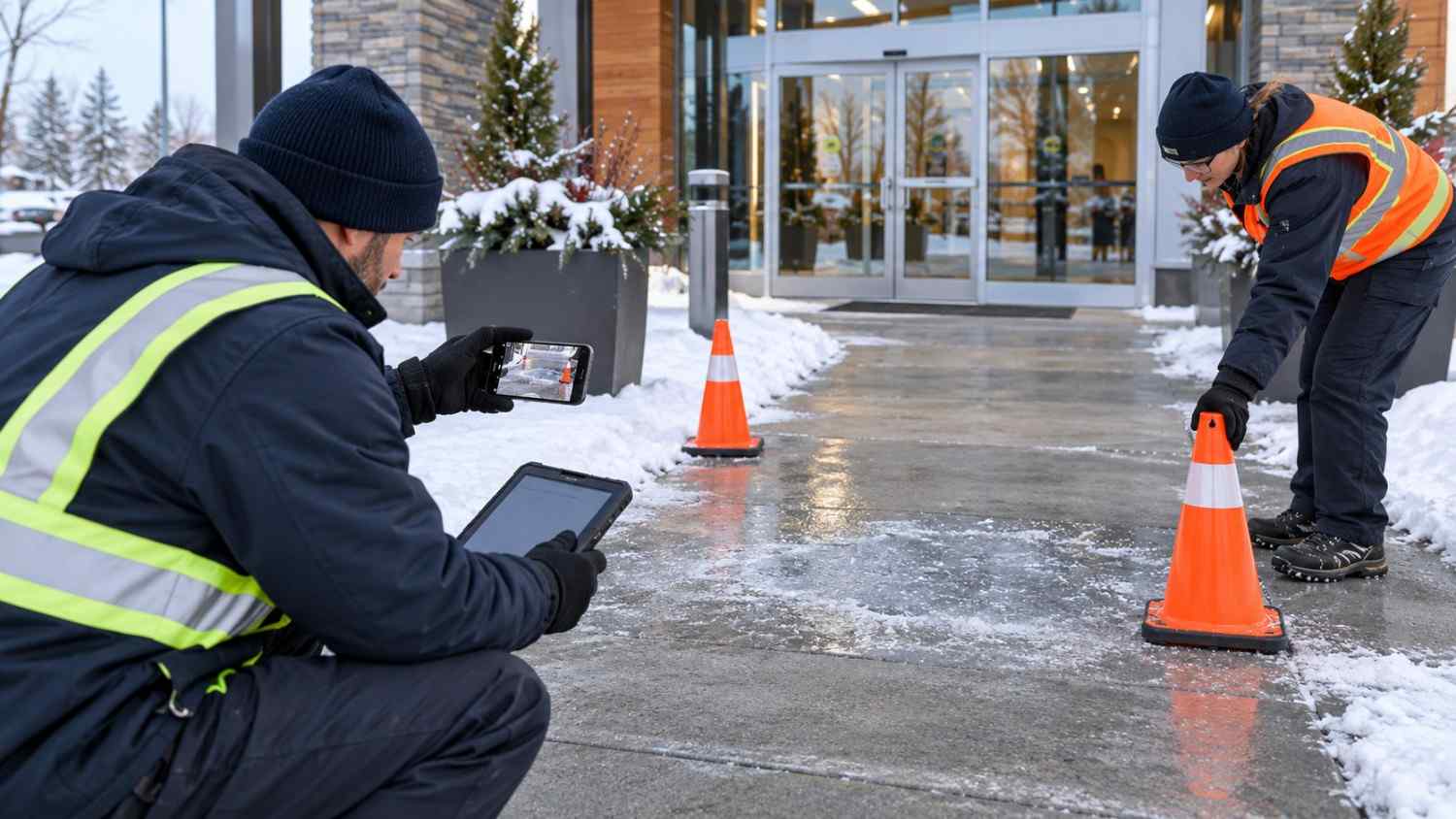
Winter conditions create a documentation challenge that goes well beyond recording whether a sidewalk was cleared. Snow, freezing rain, freeze-thaw cycles, drifting, ice formation and changing site conditions can create risks that vary significantly between facilities and across regions. For multi-site operators, the quality of the record can therefore matter as much as the service itself.
At Facility Network, we use technology, structured work-order processes and documented service verification to help teams maintain better visibility across complex facility portfolios. Our approach connects work orders, technician activity, photos, asset information and service status so operational teams can see what happened, where it happened and what still requires attention.
For Canadian facility teams, winter slip and fall documentation should provide a clear operational record without collecting unnecessary personal information. The goal is not simply to create a large volume of records. It is to create consistent, reviewable evidence that helps teams understand site conditions, confirm completed work, investigate exceptions and improve winter risk controls.
Canadian facility teams should record the condition observed, location, time, weather-related context, service requested, work performed, technician or contractor identity, completion time, supporting photographs where appropriate, exceptions and follow-up actions.
The record should also show who created, changed or approved important information. For multi-site operations, this information should connect to a consistent work-order data model so managers can compare service activity across locations.
However, documentation must be proportionate. Photos, mobile applications, location information and technician records can contain personal information. Teams should therefore define appropriate access, collection, retention and security practices based on the applicable privacy requirements.
PIPEDA establishes rules for private-sector organizations engaged in commercial activities, including principles covering consent, limiting collection, limiting use and retention, and safeguards. Provincial private-sector privacy legislation can also apply. British Columbia's Personal Information Protection Act, for example, governs how private organizations collect, use and disclose personal information and requires safeguards against unauthorized use or disclosure. Alberta's Personal Information Protection Act similarly provides a framework for private-sector collection, use and disclosure of personal information.
The specific legal requirements should be confirmed for each operation, province and type of information collected.
A basic work order might say:
“Sidewalk salted and cleared.”
That entry confirms very little.
A stronger operational record could identify:
This difference becomes important when a portfolio contains hundreds of entrances, loading areas, parking lots, pedestrian routes and exterior assets.
Good winter slip and fall documentation gives facility leaders a chronological record rather than an isolated note. It can help answer operational questions such as:
Documentation should support operational review rather than attempt to establish legal conclusions about liability.
The foundation of useful winter records is a consistent work-order structure.
Each winter-related request should contain defined fields rather than relying entirely on free-text notes. This makes records easier to search, compare and analyse.
A practical data model can include:
This structure improves work order visibility because managers can compare records using the same fields across multiple properties.
It also makes later analysis more useful. If one facility repeatedly requires emergency treatment shortly after scheduled service, the pattern becomes easier to identify than it would be in disconnected email threads or paper forms.
For teams reviewing broader work-order processes, our related article, “Designing a Work Order Management Workflow for Multi-Site Teams,” can provide a useful framework for structuring intake, assignment, escalation and completion records.
One of the most important distinctions in winter documentation is the difference between recording what was done and recording what was observed.
A technician may apply de-icing material to an entrance, but the record should also capture the relevant condition that prompted the service.
For example:
Surface condition: intermittent ice near north entrance following overnight freeze-thaw cycle.
That is more informative than:
Salt applied.
Condition records can help facility teams identify recurring operational patterns. They may show that a particular entrance repeatedly develops ice after temperature changes, that shaded areas remain hazardous longer, or that a rural property experiences delayed service because of travel conditions.
Teams should establish standard condition categories so technicians do not have to interpret terminology differently at every site.
Mobile technology can make field documentation much more consistent.
A mobile technician app can allow technicians to receive work orders, update status, attach photographs, record service completion and flag exceptions while they remain on site. This can reduce delays between field activity and central reporting.
Digital service verification can include:
The purpose is not to create a surveillance-heavy process. It is to establish a reliable operational record with enough information to verify service.
This is where facility management software can connect field activity to portfolio-level oversight. A central system can bring together work orders, service history, technician activity and management reporting rather than leaving each location to maintain separate spreadsheets.
Our facility management technology and real-time visibility can support this type of centralised operational approach by connecting service activity with broader portfolio information.
Photographs can be valuable in winter service documentation because they can show physical conditions that written notes may not adequately describe.
A photograph might document:
However, teams should avoid treating photographs as automatically risk-free.
A photograph can capture people, vehicle licence plates, employee information, visitor activity, signage or other identifying details. The privacy impact depends on what is collected, why it is collected, who can access it and how long it is retained.
PIPEDA's principles include limiting collection and limiting the use, disclosure and retention of personal information. The Office of the Privacy Commissioner of Canada also advises organizations to retain personal information only as long as needed for identified purposes and to establish retention procedures.
A practical rule is simple: capture what is operationally necessary, not everything visible in the frame.
Not every person involved in facility operations needs access to every winter service record.
For example:
Technician
Site manager
Regional manager
Compliance or risk team
Executive leadership
Role-based access reduces unnecessary exposure of personal information while keeping operational information available to people who need it.
PIPEDA guidance recommends safeguards appropriate to the sensitivity of personal information and supports limiting access based on operational need.
Teams operating in Alberta, British Columbia or Québec should also review the applicable provincial private-sector privacy requirements rather than assuming one national process automatically satisfies every jurisdiction.
Privacy considerations should be built into the documentation process before winter activity begins.
A facility team should be able to answer:
PIPEDA includes principles covering accountability, identifying purposes, consent, limiting collection, limiting use and retention, safeguards and individual access.
In Québec, private-sector organizations must account for the province's modernised privacy framework under Law 25. Alberta and British Columbia have their own private-sector privacy legislation. BC's PIPA, for example, gives individuals rights concerning their personal information and establishes rules for collection, use and disclosure. Alberta's OIPC also recommends privacy impact assessments as a best practice for private organizations where electronic systems may create privacy risks.
Because applicability can depend on the organization, activity, information and jurisdiction, privacy teams should verify the current requirements before implementing a portfolio-wide documentation policy.
A common weakness in winter records is that they document successful service but fail to document service limitations.
That can create an incomplete operational history.
Examples of useful exception categories include:
An exception should not simply close a work order. It should trigger the next appropriate action.
For example:
Observed: Loading-area ice remained after treatment.
Action: Additional treatment requested.
Status: Return visit assigned.
Verification: Completion confirmed after follow-up.
This creates an auditable chain from observation to resolution.
A national winter process cannot assume that every facility experiences winter in the same way.
A facility in coastal British Columbia may face different conditions from one in northern Alberta. A Québec facility may have different municipal requirements and service practices from a property in southern Ontario. Rural locations can introduce longer travel times, fewer available contractors and different escalation requirements.
Freeze-thaw cycles can create repeated ice formation. Heavy snowfall can restrict access. Storm systems can disrupt roads and staffing. Wildfire smoke can also affect winter operations planning indirectly when seasonal conditions overlap with ventilation, indoor air quality or workforce considerations.
For this reason, winter slip and fall documentation should include enough geographic context to explain service differences without creating an unnecessarily complicated system.
Useful portfolio fields include:
This information allows facility leaders to distinguish genuine service exceptions from conditions caused by geography or unusual weather.
Our approach can also help organisations consider how operational requirements differ between facility types, since a retail property, industrial site, healthcare facility and office portfolio may have different pedestrian patterns and risk priorities.
Winter service documentation becomes more useful when it connects to physical assets.
Asset tagging can associate a work order with a specific entrance, drainage point, exterior stairway, loading area, access route or other managed asset.
For example, if the same entrance generates repeated ice-related work orders, asset-level history can reveal the pattern.
That can lead to a different operational question:
Are we repeatedly treating the symptom when the underlying condition requires corrective maintenance?
Asset history can help teams identify issues such as:
The resulting decision may involve maintenance, inspection, engineering review or capital planning rather than another isolated service request.
Once winter documentation follows a consistent data model, teams can move from individual records to maintenance analytics.
Useful measures may include:
These measures should support investigation rather than create artificial performance targets.
For example, a high number of winter work orders at one property could indicate strong reporting discipline, severe local conditions or an underlying facility problem. The number alone does not establish poor performance.
Likewise, a low number of reports does not automatically demonstrate that a site is low risk.
AI quality assurance can help teams review large volumes of documentation, but it should not replace human judgement.
A system could potentially flag:
The appropriate role for AI is to identify records that deserve human attention.
A manager can then review the underlying work order, technician notes, photographs and site context.
This distinction is important because automated systems can misinterpret unusual but legitimate circumstances. A remote site affected by a severe storm, for example, may produce service patterns that appear abnormal without indicating poor execution.
AI should therefore support quality assurance, not independently determine whether work was adequate or whether a risk has been resolved.
An audit trail should show how an important record changed over time.
For winter service documentation, that may include:
This is particularly valuable when a work order moves through several teams or contractors.
The audit trail should also be protected from unnecessary modification. If a completed record can be freely overwritten without preserving the earlier information, its usefulness for review decreases.
The objective is not to create bureaucracy. It is to maintain a reliable operational history.
Winter service often involves external contractors, making documentation standards especially important.
Before snow season, teams should define:
Contractor compliance requirements can vary by province. Depending on the location and work involved, teams may encounter systems and terminology associated with WSIB in Ontario, WorkSafeBC, WCB Alberta and CNESST in Québec.
These requirements should be verified for the specific work, contractor and jurisdiction rather than treated as interchangeable national rules.
Before winter operations begin, facility leaders can test whether their documentation process is actually ready.
Work-order structure
Field verification
Privacy
Asset information
Management visibility
Human oversight
At Facility Network, we focus on giving multi-site teams a clearer operational view of service activity.
Our approach incorporates a Work Order Management System with consolidated invoicing and analytics, a client portal and mobile app with real-time tracking and map views, and technician mobile tools that support photo documentation and digital asset tagging.
These capabilities can help connect field activity with the wider facility record.
Our model is designed around visibility and accountability rather than simply collecting more data. The aim is to give facility leaders useful information about what was requested, what was completed, where exceptions remain and what patterns may require attention.
We also recognise that documentation needs to work across different facility types, municipalities and operating environments. That means winter processes should accommodate geographic conditions, local requirements, contractor workflows and the operational realities of multi-site portfolios.
You can learn more about Facility Network's national operating model and how we approach coordinated facility operations.
Strong winter slip and fall documentation is not about producing the largest possible number of records. It is about creating consistent, useful and appropriately protected information that helps facility teams understand conditions, verify service, manage exceptions and identify recurring problems.
The strongest process connects work orders with service verification, asset information, audit trails and privacy controls. It also leaves room for human judgement when weather, geography or site conditions create circumstances that standard workflows cannot fully capture.
At Facility Network, we combine technology, field documentation and coordinated facility services to help Canadian organisations improve visibility across complex portfolios. If your team is reviewing winter documentation, work-order governance or multi-site service visibility, you can contact Facility Network to discuss the operational requirements of your facilities.
1. What should winter slip and fall documentation include?
It should normally include the facility and exact service location, reported or observed condition, date and time, requested service, assigned technician or contractor, work performed, completion time, verification information, exceptions and required follow-up. Photographs may be included where they serve a defined operational purpose.
2. Why is digital service verification useful for winter facility operations?
Digital service verification creates a consistent record of field activity. A mobile technician app can allow technicians to update work orders, add notes and photographs, record completion and identify exceptions while they are working at the site.
3. What is the role of facility management software in winter documentation?
Facility management software can centralise work orders, service history, technician activity, asset information and reporting. This gives facility leaders greater work order visibility across multiple locations and can make recurring service patterns easier to identify.
4. How should facilities handle photographs that contain personal information?
Teams should define why photographs are required, minimise unnecessary personal information, restrict access and establish appropriate retention and deletion practices. PIPEDA requires applicable organisations to limit collection and protect personal information with safeguards appropriate to its sensitivity.
5. Does PIPEDA apply to every Canadian facility?
Not necessarily. PIPEDA generally applies to private-sector organisations engaged in commercial activities, subject to its jurisdictional rules and provincial substantially similar legislation. Québec, Alberta and British Columbia have private-sector privacy frameworks that must also be considered where applicable. Organisations should confirm the requirements relevant to each operation and province.
6. How long should winter service records be retained?
There is no single retention period that automatically applies to every winter service record. Retention should reflect the purpose of the information, applicable legal requirements, organisational policies and the nature of any ongoing matter. PIPEDA guidance states that personal information should generally be retained only as long as needed for identified purposes and recommends established retention procedures.
7. Can AI replace human review of winter service documentation?
No. AI quality assurance can help identify incomplete or unusual records, but human reviewers should assess context and determine the appropriate operational response. Automated flags should support review rather than independently determine whether a service was adequate.
8. Why should winter service records be connected to assets?
Asset tagging can help teams identify recurring problems at specific entrances, walkways, drainage points, loading areas or other locations. This can help distinguish repeated treatment from issues that may require corrective maintenance or further investigation.
9. What winter conditions should Canadian facility teams consider?
Teams should consider conditions relevant to their geography, including snow, freezing rain, freeze-thaw cycles, ice formation, drifting, storm-related access issues and rural travel times. Service frequency and response requirements may need to differ between municipalities and regions.
10. How can facility teams improve winter documentation before the season starts?
Start by defining a standard work-order model, required service fields, verification procedures, exception categories, access controls and retention rules. Test the mobile workflow before winter begins, confirm contractor requirements and review whether managers can see outstanding work and exceptions across the portfolio.