Winter contractor readiness should be assessed before the first major snow event, not while crews are already responding to it. For facility managers overseeing multiple properties, a contractor may need to respond to changing conditions across municipalities, service zones and provinces while maintaining consistent documentation and safe work practices.
At Facility Network, we approach winter operations through coordinated service delivery, documented processes and technology that helps teams maintain visibility across facility portfolios. With 9,500+ certified technicians stated on our website, service coverage across 13 provinces and territories, 600K+ jobs completed and 100+ services offered, we understand the importance of having a repeatable framework for evaluating winter contractors before service demand increases.
A snow contractor safety audit should therefore examine more than insurance certificates or equipment lists. It should assess whether a contractor can monitor weather, activate crews at appropriate thresholds, maintain accessible routes, document plowing and de-icing activity, manage exceptions and provide evidence that services were completed.
The exact legal and operational requirements vary across Canada, so facility teams should confirm applicable provincial legislation, municipal bylaws, contract terms and site-specific obligations before the winter season begins.
A snow contractor safety audit is a structured review of a contractor's ability to deliver winter services safely, consistently and with appropriate documentation.
The audit should examine five connected areas:
The purpose is not simply to approve or reject a contractor. It is to identify gaps before they become operational problems during a snow event.
Before reviewing the contractor's field operations, compare the contract against actual site requirements.
A national or multi-site snow programme may include very different properties. A distribution centre may prioritise loading areas and truck access, while a retail property may have much heavier pedestrian traffic around entrances. An office campus may have extensive walkways, stairs and parking areas.
The audit should establish:
This is where clear winter service levels become important. The contractor and facility team should have the same understanding of what constitutes routine service, enhanced service and an exception requiring escalation.
If the agreement does not clearly define these points, the pre-season audit is an opportunity to correct the gap.
Snow operations should not rely entirely on a technician discovering poor conditions after they have developed.
A stronger process connects weather monitoring with predetermined operational triggers.
Environment and Climate Change Canada provides weather alerts covering conditions such as significant snowfall, snow squalls, freezing rain, winter storms, extreme cold, flash freezes and blowing snow.
A contractor audit should establish:
The audit should also distinguish between forecasts and actual site conditions.
A forecast can indicate an expected event, but field observations may show that snow accumulation, ice formation or access conditions differ from the forecast.
Trigger thresholds should be defined in operational terms.
For example, the programme might establish separate triggers for:
The actual thresholds should be established according to the site's requirements, municipal expectations, contract terms and local conditions rather than copied from another facility.
A contractor can have a strong safety policy and still struggle if its winter capacity is insufficient.
Review the contractor's ability to provide:
Ask what happens if several contracted properties experience a major event at the same time.
This matters particularly for a national snow program. A contractor may have adequate capacity at individual sites but face resource constraints when multiple regions experience severe weather simultaneously.
For multi-site programmes, the audit should therefore examine capacity by service region rather than relying only on a national statement of capability.
Snow equipment introduces its own risks.
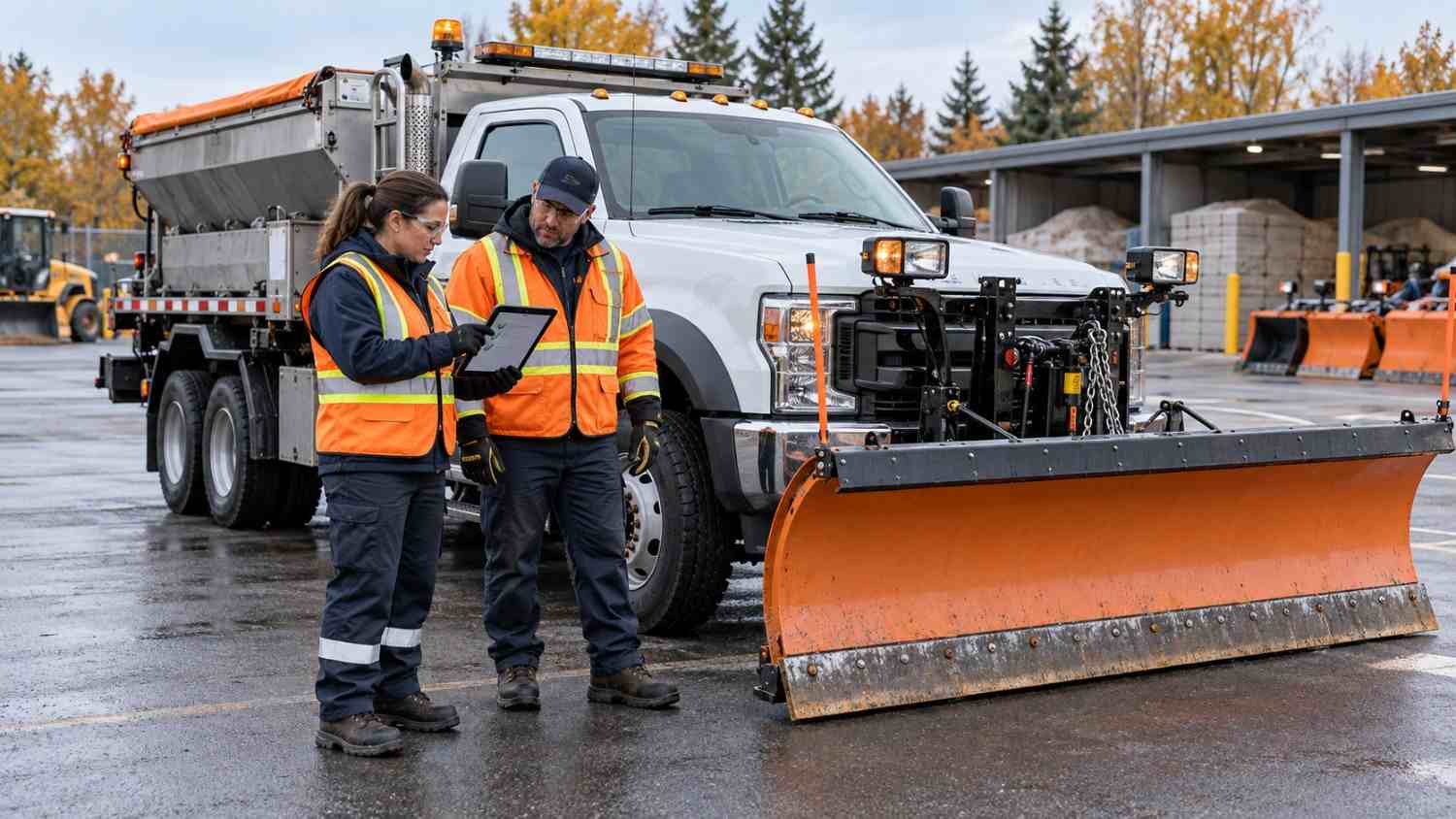
A pre-season review should confirm that equipment assigned to the site is appropriate for the property and maintained according to the manufacturer's requirements and applicable workplace safety obligations.
Consider:
Facility teams should avoid assuming that possession of equipment demonstrates readiness. The more useful question is whether the contractor can demonstrate that the equipment is available, appropriate and maintained for the expected operating conditions.
A contractor safety audit should include the people performing the work, not just the equipment.
Review whether contractors have documented procedures covering:
Applicable occupational health and safety requirements differ by jurisdiction. A facility team may encounter different regulatory bodies and workers' compensation systems, including WSIB in Ontario, WorkSafeBC in British Columbia, WCB Alberta and CNESST in Québec.
The audit should verify the contractor's obligations for the specific province and work being performed rather than applying one generic Canadian checklist.
A winter contractor should know which routes are operationally critical.
A facility map should identify:
This supports slip and fall prevention because teams can prioritise areas based on actual use and access requirements.
It also prevents a common documentation problem: recording that a property was serviced without identifying whether the specific route that mattered was actually cleared.
Accessible routes deserve particular attention because a route that remains blocked or hazardous can affect the ability of people to enter or leave a facility safely.
The contractor should have a defined approach to snow clearing and ice treatment.
The audit can examine:
The appropriate de-icing approach depends on site conditions, temperature, surface type, environmental considerations and operational requirements.
Facility teams should avoid specifying a universal treatment method for every property. A northern Alberta facility experiencing deep-freeze conditions may require a different approach from a coastal British Columbia site dealing with wet snow and repeated freezing.
Canada's winter conditions vary substantially by geography.
Alberta, Saskatchewan and Manitoba can experience prolonged periods of deep cold, blowing snow and rapid temperature changes. Alberta can also experience Chinook conditions that shift temperatures quickly.
Contractor audits should examine how the service programme responds to temperature changes, drifting and refreezing rather than focusing only on snowfall totals.
Ontario and parts of Québec can experience lake-effect snow and rapidly changing conditions. Environment and Climate Change Canada notes that snow squalls can form when cold air moves across larger open bodies of water such as the Great Lakes.
This makes local weather monitoring and site-specific trigger rules important.
New Brunswick, Nova Scotia, Prince Edward Island and Newfoundland and Labrador can experience combinations of snow, freezing rain, wind and rapid changes in conditions.
Contractor capacity should account for events that affect both service demand and road access.
Winter conditions can involve rain, wet snow, freezing conditions and repeated transitions rather than prolonged dry snowpack.
The contractor audit should therefore consider drainage, refreezing, surface moisture and the timing of inspections.
Environment and Climate Change Canada notes that Canadian snowfall varies considerably by region and that coastal British Columbia receives more precipitation as rain because of the Pacific Ocean's warming influence.
Climate normals can also help teams understand typical local conditions, although historical averages should not be treated as forecasts for a particular event.
Municipal snow and ice requirements can differ considerably.
Some municipalities establish requirements concerning sidewalk clearing, snow storage, obstruction of public rights of way or timing after snowfall. These obligations should not be assumed to be identical between Toronto, Montréal, Calgary, Vancouver or smaller municipalities.
The audit should identify:
A contractor's internal service level does not automatically replace a property's municipal obligations.
Facility managers should verify the current bylaw with the relevant municipality before each winter season, particularly when managing a large portfolio with changing locations.
Winter safety documentation can become important when an incident occurs, but the legal duties applying to an occupier depend on the jurisdiction and circumstances.
For example, Ontario's Occupiers' Liability Act states that an occupier owes a duty to take such care as is reasonable in the circumstances to see that people entering the premises are reasonably safe. The Act also addresses situations involving independent contractors.
Ontario's legislation contains specific provisions relating to injuries caused by snow or ice, including notice provisions, subject to the conditions and exceptions established by the legislation.
Other provinces use different statutory or common-law frameworks, while Québec's duties arise within its civil-law framework.
For that reason, a snow contractor safety audit should not attempt to create a single legal standard for every Canadian property. Instead, it should ensure that the organisation has identified the applicable requirements and incorporated them into its operational process with appropriate legal or compliance review.
Documentation is one of the strongest ways to test whether a contractor's process is actually operational.
Ask the contractor to demonstrate how it records:
A strong snow event documentation process should connect the record to a specific site and service area.
Instead of:
Snow cleared.
A useful record might identify:
North entrance and accessible walkway cleared following overnight snowfall. De-icing completed. Loading dock remained restricted due to active delivery traffic. Follow-up inspection assigned.
The second record provides considerably more operational context.
Completion should not always mean the work order disappears.
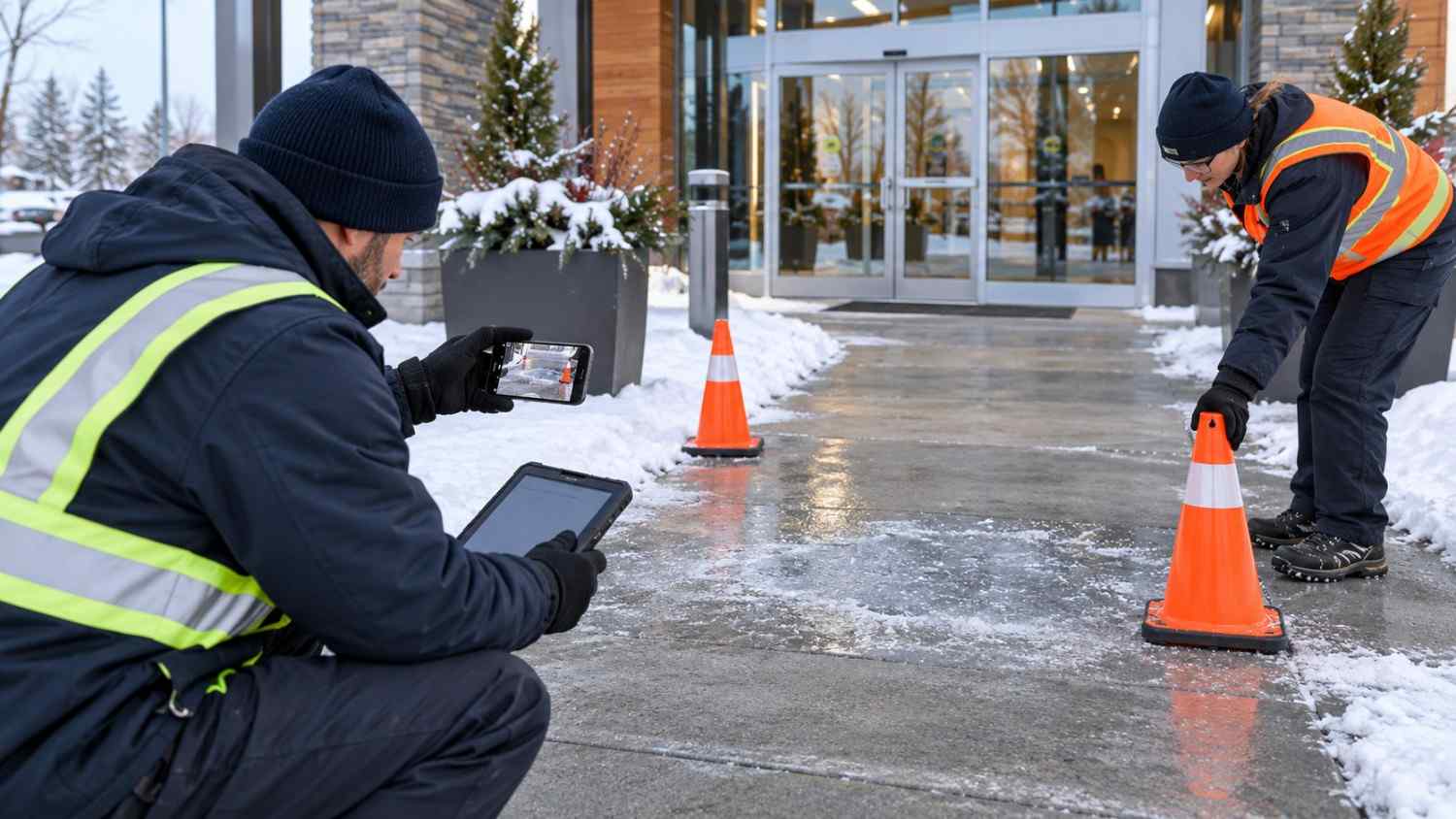
Post-event verification can include a supervisor inspection, digital service confirmation, photographs or another defined method appropriate to the site.
A useful verification process checks:
This creates a feedback loop between contractor activity and facility management.
For organisations managing significant winter exposure, facility management technology and real-time visibility can help connect work orders, service updates, location information and documentation across multiple sites.
Technology should improve visibility, but it should not be treated as a substitute for field judgement.
Before approving a contractor for the season, facility teams should review the documentation required by the contract and applicable jurisdiction.
Depending on the work and location, this may include:
Workers' compensation requirements can differ between provinces, so a contractor's documentation should be checked against the location where services will actually be performed.
A national contractor operating in Ontario, British Columbia, Alberta and Québec may have to manage different administrative systems and terminology.
A paper checklist can be useful during a site inspection, but multi-site winter operations generally require more connected information.
A snow contractor safety audit should therefore assess whether the contractor can work within the facility team's technology and reporting environment.
Useful capabilities can include:
The objective is not to track every movement of a worker. It is to create enough operational information to understand service activity while respecting privacy and contractual boundaries.
Facility teams should also define who can access records and how long information should be retained.
The strongest winter programmes do not assume every service event will go according to plan.
Contractors may encounter:
The audit should determine what happens next.
For each major exception, establish:
Trigger → Notification → Escalation → Corrective action → Verification → Closure
For example:
Trigger: Accessible entrance remains icy after initial treatment.
Notification: Contractor records exception and alerts site contact.
Escalation: Additional treatment is assigned.
Corrective action: Contractor returns to the location.
Verification: Site representative confirms condition.
Closure: Work order records completion and supporting documentation.
This makes the process measurable without assuming that every winter event will follow the same sequence.
Facility teams can use the following checklist before approving a contractor for the season.
Contractor safety should be evaluated alongside procurement decisions rather than treated as a separate exercise.
For organisations managing multiple facilities, the audit can inform questions about:
The objective is to make safety, service capability and documentation part of the same operational framework.
At Facility Network, we understand that winter service requires more than sending equipment to a property after snowfall begins. Multi-site programmes need defined service expectations, field capacity, escalation procedures and reliable documentation.
Our operating model includes 9,500+ certified technicians stated on our website, service across 13 provinces and territories, 600K+ completed jobs and more than 100 services. These capabilities support the broader challenge of coordinating facility services across diverse Canadian operating environments.
Our commercial snow removal services can form part of a broader winter programme where snow clearing, ice management, emergency response and facility maintenance need to work together.
For conditions that require urgent attention beyond planned winter services, our 24/7 emergency facility services provide another pathway for managing unexpected facility issues.
The wider commercial facility maintenance services we provide can also support organisations that want winter activities integrated into a broader maintenance programme rather than managed as an isolated seasonal task.
A snow contractor safety audit gives facility teams an opportunity to test their winter programme before operational pressure increases. The review should cover contractor capacity, equipment, worker safety, weather monitoring, trigger thresholds, accessible routes, municipal requirements, documentation and post-event verification.
Canadian winter conditions vary significantly, so the audit should account for local geography, provincial requirements and municipal rules rather than applying one identical process to every facility.
At Facility Network, we use coordinated services, field technology and documented workflows to help organisations maintain visibility across complex facility portfolios. If your organisation is reviewing its winter contractor programme, service documentation or multi-site snow operations, you can contact Facility Network to discuss your facility requirements.
What is a snow contractor safety audit?
A snow contractor safety audit is a pre-season review of a contractor's ability to deliver winter services safely, consistently and with appropriate documentation. It can cover staffing, equipment, weather monitoring, service triggers, accessible routes, compliance records, documentation, and post-event verification.
When should a facility conduct a snow contractor safety audit?
The audit should be completed before the main winter service period begins. Starting early gives facility teams time to address gaps in staffing, equipment, documentation, contracts, technology or escalation procedures before a major snow event occurs.
What should be included in a snow contractor safety audit?
A practical audit should review contractor capacity, equipment maintenance, worker safety procedures, weather monitoring, trigger thresholds, snow clearing procedures, de-icing processes, accessible routes, municipal requirements, documentation, incident reporting and post-event verification.
Why is weather monitoring important for commercial snow removal?
Weather monitoring helps contractors and facility teams prepare for changing conditions rather than relying only on observed accumulation. Environment and Climate Change Canada provides alerts for hazards including snowfall, freezing rain, snow squalls, winter storms, extreme cold and flash freezes.
What should snow event documentation record?
Records should identify the facility, service area, weather conditions, dispatch activity, arrival and completion information, plowing or de-icing performed, exceptions, inaccessible areas, follow-up requirements and post-event verification.
Are snow clearing requirements the same across Canada?
No. Municipal bylaws, provincial legislation, contractual requirements and site conditions can differ between jurisdictions. Facility teams should confirm the current requirements that apply to each property and municipality.
How does ice management support slip and fall prevention?
Ice management can form part of a broader winter risk management process by identifying areas that require treatment, establishing service triggers and documenting inspections and corrective actions. The appropriate treatment depends on local conditions, surface characteristics and operational requirements.
What role does technology play in contractor safety auditing?
Technology can improve work-order visibility by connecting service requests, mobile updates, photographs, completion records, exceptions and reporting. It should support operational oversight rather than replace physical inspections or human decision-making.
Should facility teams document contractor exceptions?
Yes. Exceptions such as blocked access, equipment failure, severe weather or incomplete service can explain why a work order did not follow the standard process. Documenting the exception and its follow-up creates a clearer operational record.
How can a national snow program handle different Canadian winter conditions?
A national programme can establish common governance and documentation standards while allowing regional service requirements to reflect local weather, geography, municipal rules, contractor capacity and facility characteristics. Prairie, Great Lakes, Atlantic and Lower Mainland properties may require different operational approaches.