.jpg)
Managing facilities in major metropolitan centres presents its own operational challenges. However, when organisations expand into remote and rural regions across Canada, complexity increases significantly.
For enterprises with distributed footprints, remote facility management in Canada is not simply a scaled down version of urban operations. It demands proactive planning, strong vendor networks, advanced logistics coordination, and centralised governance.
Facility Network partners with organisations across Canada to coordinate facility programs that extend beyond major cities into rural and northern markets. By combining national oversight with vendor expertise, businesses can maintain service consistency, compliance, and cost control regardless of geography.
This comprehensive guide examines the operational realities of rural maintenance and northern operations while outlining strategic frameworks that enable reliable remote facility management in Canada.
Canada is the second largest country in the world by landmass. Its vast geography spans dense urban corridors, remote resource communities, coastal regions, mountainous terrain, and Arctic environments.
For national operations leaders, this diversity creates variables such as:
Facilities in remote areas cannot rely on the same vendor density or response times available in Toronto, Vancouver, or Montreal. As a result, remote facility management in Canada requires a distinct operational model.
Rural maintenance involves servicing facilities located outside major population centres. These facilities may include retail outlets, healthcare sites, financial branches, industrial assets, or community hubs.
Key challenges include:
Smaller communities often have fewer qualified contractors. This restricts competition and may increase pricing variability.
Emergency repairs may require technicians to travel several hours, particularly in winter conditions.
Parts and equipment may need to be shipped from urban centres, increasing downtime risks.
Skilled trades may be scarce in certain regions, complicating preventative maintenance schedules.
National organisations must anticipate these factors within their operational governance models.
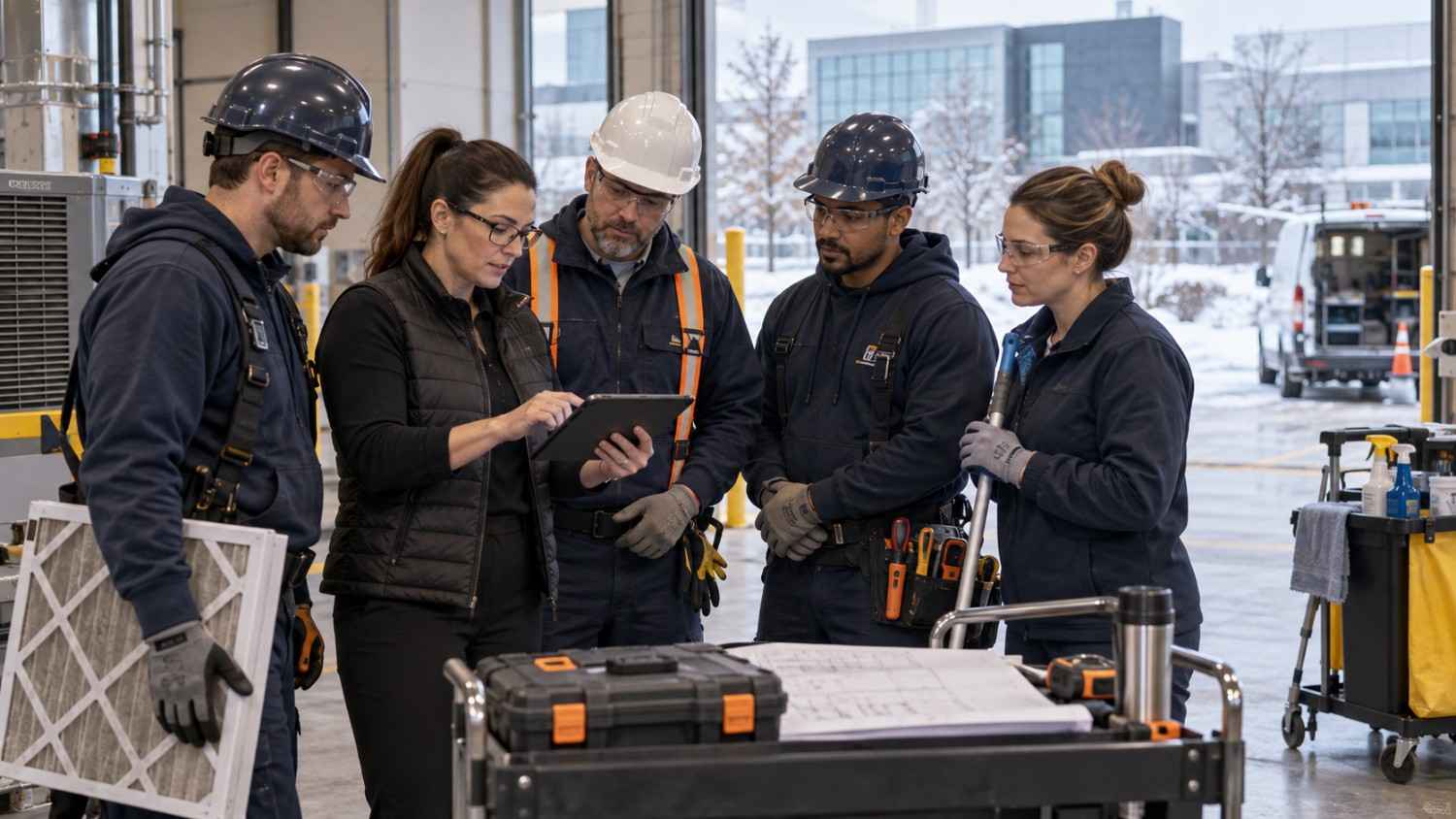
Northern operations introduce additional complexities. Provinces and territories such as Northern Ontario, Manitoba, Saskatchewan, Alberta, Yukon, Northwest Territories, and Nunavut experience harsh winters and limited infrastructure.
Facilities in these regions face:
Remote facility management in Canada must incorporate seasonal planning cycles to mitigate climate related risks.
Preventative maintenance becomes particularly important in northern environments, where emergency repairs are both costly and logistically challenging.
In urban settings, multiple vendors can often respond within hours. In remote areas, accessibility constraints require structured contingency planning.
Effective strategies include:
Centralised oversight ensures that facilities in rural and northern regions receive consistent service standards.
Transportation logistics represent one of the most significant barriers in rural maintenance.
Challenges include:
Logistics planning must account for:
Without structured planning, logistics inefficiencies can escalate costs and increase downtime.
Remote facility management in Canada requires integration between operations teams, vendors, and supply chain partners to ensure reliable service delivery.
Working with vendors presents both opportunities and risks.
Local contractors often provide:
However, national organisations must also manage:
Facility Network integrates vendor compliance checks, service level agreements, and performance tracking into its national model, helping organisations maintain consistency across dispersed locations.
Digital platforms are essential for managing facilities across vast territories.
Key technological enablers include:
These tools provide visibility into rural maintenance activities and enable national operations teams to monitor service quality without constant on site presence.
Remote facility management in Canada depends heavily on technology to bridge geographic gaps.
In remote regions, reactive maintenance is not sustainable. Travel costs, weather delays, and limited vendor availability make emergency repairs expensive.
Preventative maintenance strategies should prioritise:
Scheduled preventative programs reduce the likelihood of unexpected failures.
National coordination ensures that northern operations adhere to structured maintenance calendars aligned with climate realities.
Remote facilities often incur higher operational costs due to:
However, cost management does not require service compromise.
Strategies include:
Remote facility management in Canada must balance fiscal discipline with operational reliability.
Facility Network supports cost visibility through centralised reporting, helping enterprises understand regional cost drivers and optimise budgets.
Geographic isolation increases exposure to operational risk.
Examples include:
Risk mitigation frameworks should include:
Proactive planning strengthens resilience in rural and northern settings.
Remote facilities often operate in environmentally sensitive regions. Energy efficiency and responsible maintenance practices are critical.
Considerations include:
Sustainable remote facility management in Canada integrates green maintenance standards and emissions monitoring even in isolated communities.
Clear communication channels are essential when managing facilities from central offices.
Best practices include:
Technology enables transparency, but governance ensures accountability.
Facility Network emphasises communication protocols that keep national operations teams informed of rural maintenance activities in real time.
Consistency remains critical even when facilities differ significantly.
National standards should define:
Remote facility management in Canada succeeds when regional execution aligns with national governance frameworks.
Performance data from rural sites should be analysed alongside urban locations.
Metrics may include:
Analysing regional patterns enables informed decisions about vendor partnerships and infrastructure investments.
Remote facility management in Canada becomes increasingly efficient when guided by data driven insights.
Provincial and territorial regulations may vary, particularly regarding environmental standards and safety codes.
National organisations must:
Central governance prevents regional oversight gaps and reduces compliance risk.
Managing remote and rural facilities independently can overwhelm internal operations teams. A national partner provides:
Facility Network brings national reach combined with regional expertise, enabling organisations to execute remote facility management in Canada with confidence and accountability.
Economic development in rural and northern regions continues to evolve. As businesses expand beyond major urban centres, facility complexity will increase.
Future considerations include:
Organisations that proactively strengthen rural maintenance frameworks today will be better prepared for tomorrow’s geographic expansion.
Canada’s vast geography presents unique operational challenges for enterprises managing facilities outside major urban centres. From logistics barriers and limited vendor pools to climate extremes and regulatory variability, remote and rural sites require specialised oversight.
Remote facility management in Canada demands proactive planning, strong governance, technology integration, and coordinated vendor networks. When executed effectively, organisations can maintain service consistency, cost control, and compliance across all regions.
Facility Network supports national operations leaders by delivering structured oversight and regional execution across Canada’s diverse landscape. Through disciplined governance and reliable vendor coordination, enterprises can confidently manage rural maintenance and northern operations while preserving operational excellence. Get in touch with us to know more about our services.
1. What is remote facility management in Canada?
Remote facility management in Canada refers to overseeing and maintaining facilities located in rural, northern, or geographically isolated regions while ensuring consistent service standards and compliance.
2. Why is rural maintenance more complex than urban facility management?
Rural maintenance faces limited vendor availability, longer response times, higher travel costs, and supply chain delays.
3. How can organisations improve service accessibility in northern operations?
By building vendor networks, pre qualifying contractors, maintaining spare parts inventories, and implementing preventative maintenance schedules.
4. What role does technology play in remote facility management?
Technology enables centralised oversight, real time reporting, preventative scheduling, and performance analytics across dispersed sites.
5. How can businesses control costs in rural and northern regions?
Through negotiated regional agreements, consolidated service visits, centralised procurement, and detailed cost tracking.
6. What are the biggest risks in managing facilities in remote Canada?
Extended downtime due to weather, vendor scarcity, logistics delays, and regulatory variability are primary risks.
7. How does Facility Network support remote and rural operations?
Facility Network coordinates vendor networks, standardises governance frameworks, and provides centralised reporting systems to ensure consistent remote facility management in Canada.