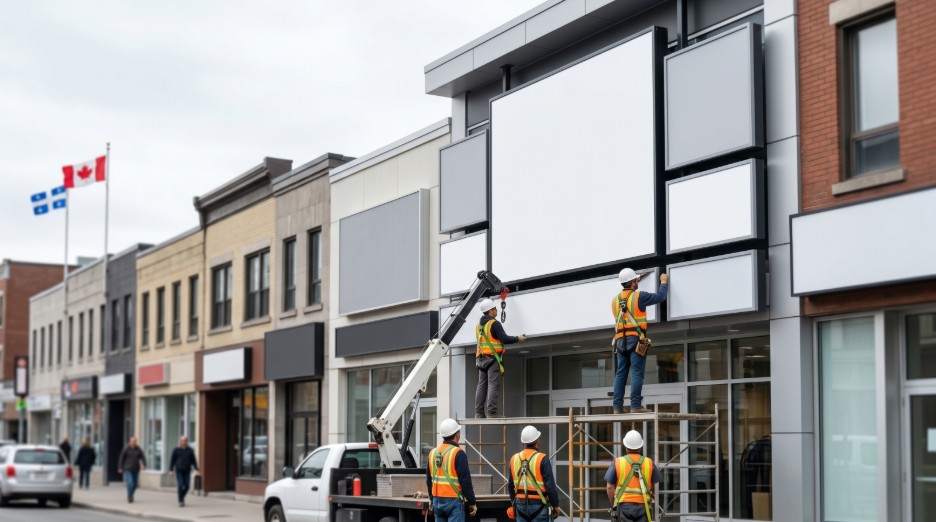
Commercial organizations operating across Canada are increasingly reviewing how language compliance requirements may affect storefront signage, branding strategies, renovation planning, and retail rollout coordination within Quebec. As businesses continue adapting to evolving provincial language regulations, many national property managers, retailers, and facility teams are paying closer attention to Quebec Bill 96 commercial signage requirements and how they may influence commercial environments throughout the province.
Bill 96 introduced amendments connected to the Charter of the French Language in Quebec, including changes related to commercial signage and the visibility of French language content within public-facing environments. One of the key operational discussions surrounding Quebec Bill 96 commercial signage requirements involves the evolving treatment of trademarks and storefront displays that previously relied on the recognized trademark exception.
For national retailers and commercial property operators managing multiple locations across Canada, these updates may affect storefront planning, signage coordination, facility refreshes, vendor management, and operational timelines.
At Facility Network, we support organizations across Canada with coordinated commercial facility services through a hybrid model that pairs our internal technicians with a managed network of vendor partners. This combination covers rollout support, preventative maintenance planning, vendor management, and operational oversight tailored to complex multi-site commercial environments. As Quebec Bill 96 commercial signage requirements continue shaping commercial planning discussions, many organizations are evaluating how to coordinate signage updates and storefront modifications while maintaining operational continuity.
This guide explores how Quebec Bill 96 commercial signage considerations may affect national retailers and commercial facilities, including storefront visibility, French language predominance, rollout coordination, signage planning, operational compliance considerations, and practical facility management strategies for commercial organizations operating within Quebec.
Quebec Bill 96 introduced amendments intended to reinforce the use and visibility of the French language within commercial and public environments across Quebec.
One of the key operational areas receiving attention involves storefront signage and public-facing commercial displays.
The Quebec Bill 96 commercial signage discussions are particularly important for organizations operating:
Many national businesses previously relied on the recognized trademark exception when displaying non-French trademarks on storefront signage.
Under evolving requirements, organizations may now need to evaluate how French language elements appear alongside trademarks and whether French wording is considered markedly predominant within the public display.
Because regulatory interpretation and enforcement considerations may vary depending on specific circumstances, businesses should coordinate with qualified legal and language compliance professionals when reviewing signage obligations.
French language visibility has long played an important role within Quebec’s regulatory and cultural landscape.
Commercial signage requirements may apply to:
The concept of French language predominance generally relates to how visible and prominent French wording appears within public signage.
Factors that may be considered include:
Because signage conditions differ significantly across commercial environments, organizations should avoid assuming that a single approach applies universally to every storefront.
One of the major operational discussions tied to Quebec Bill 96 commercial signage involves the evolving treatment of trademarks displayed in languages other than French.
Previously, some businesses relied on the recognized trademark exception when displaying non-French trademarks without accompanying French language elements.
National retailers and franchise operators may now review:
These reviews may affect:
Commercial organizations should coordinate signage planning carefully to support operational consistency across Quebec locations.
Commercial signage updates often involve more than simply replacing visual graphics.
Organizations may need to coordinate:
Multi-site commercial organizations often manage:
Commercial signage planning often involves balancing:
Facilities may review:
Commercial properties differ significantly in:
Quebec Bill 96 commercial signage planning should always account for the specific operational and physical characteristics of each property.
National retailers operating across multiple provinces may face additional complexity when coordinating Quebec-specific signage changes.
Organizations may need to manage:
Commercial organizations may encounter:
Effective rollout planning often requires centralized operational coordination combined with site-specific execution strategies.
Commercial tenants may need to coordinate signage modifications with property owners and landlords before proceeding with storefront updates.
Facilities may review:
Signage projects may involve multiple stakeholders, including:
Early communication may help reduce project delays and scheduling conflicts during rollout implementation.
Some signage modifications may involve operational reviews related to:
Commercial signage installations should always account for:
Where required, organizations should coordinate with qualified professionals familiar with commercial signage installations and applicable provincial or municipal requirements.
Some organizations may explore phased rollout approaches when updating signage across multiple locations.
Facilities may review:
Commercial properties often remain operational during signage updates.
Phased implementation approaches may help organizations:
However, rollout strategies should always align with actual operational requirements and applicable obligations.
Commercial signage discussions may also extend beyond exterior storefronts.
Facilities may review:
National organizations often seek consistent branding and operational standards across distributed facilities.
Commercial signage updates frequently involve multiple vendors and service providers.
Organizations may coordinate:
Effective coordination may help support:
Commercial rollout projects often become more manageable when communication remains centralized and operational responsibilities are clearly defined.
Commercial signage within Quebec must also withstand varying environmental conditions throughout the year.
Facilities may experience:
Signage planning may involve consideration of:
Commercial organizations should always evaluate signage solutions within the context of local climate exposure and property conditions.
Older commercial properties may present additional challenges during signage modernization projects.
Facilities may encounter:
Commercial retrofit projects often require balancing:
Quebec Bill 96 commercial signage planning should remain operationally practical and tailored to the realities of each facility environment.
Organizations may maintain documentation related to:
Operational documentation may help support:
Where required, organizations should coordinate with qualified legal advisors and applicable authorities regarding signage obligations and compliance considerations.
National retailers often seek to maintain recognizable branding across Canadian markets while adapting to regional operational requirements.
Commercial organizations may evaluate:
Successful rollout planning often involves:
Because commercial properties differ significantly, signage implementation strategies should always remain flexible and operationally realistic.
Organizations preparing for Quebec Bill 96 commercial signage considerations often begin with operational assessments and portfolio reviews.
Practical planning strategies may include:
We support organizations across Canada with coordinated commercial facility services, rollout support, preventative maintenance planning, infrastructure coordination, and vendor management tailored to complex commercial property operations.
Quebec Bill 96 commercial signage discussions are continuing to influence how national retailers and commercial organizations approach storefront branding, rollout planning, operational coordination, and public-facing signage strategies within Quebec.
As businesses review evolving French language predominance considerations and storefront display requirements, many organizations are focusing on practical planning approaches that support operational continuity, vendor coordination, and site-specific implementation.
Because commercial properties differ significantly in infrastructure, signage conditions, lease obligations, and operational complexity, signage planning strategies should always remain tailored to the realities of each facility environment.
At Facility Network, our team works with organizations across Canada to support coordinated commercial facility services, rollout planning, operational oversight, infrastructure coordination, and vendor management designed for complex commercial property portfolios.
To know more about our commercial facility services or discuss your rollout planning needs, contact us now.
What is Quebec Bill 96 commercial signage planning?
Quebec Bill 96 commercial signage planning generally refers to reviewing storefront signage and public-facing displays to align with evolving French language visibility requirements within Quebec.
Why are national retailers reviewing storefront signage in Quebec?
Many national retailers are evaluating signage because of evolving discussions surrounding French language predominance and the treatment of non-French trademarks on storefronts.
What does “markedly predominant in French” generally mean?
The concept generally relates to the visibility and prominence of French wording within public signage and storefront displays.
Can Quebec Bill 96 affect existing storefront signage?
Yes. Existing storefront signage may require operational review depending on the property, branding approach, and applicable language considerations.
Why is vendor coordination important during signage rollouts?
Commercial signage projects often involve multiple stakeholders, including landlords, installation vendors, property managers, and operational teams.
Do signage updates only apply to exterior storefronts?
Not necessarily. Some organizations may also review interior signage, directional displays, and customer-facing graphics.
Why do existing commercial properties present additional rollout challenges?
Older buildings may involve infrastructure limitations, architectural restrictions, legacy signage systems, or access challenges during retrofit projects.
How can multi-site organizations manage signage updates more effectively?
Many organizations coordinate rollout planning centrally through vendor management, operational oversight, scheduling coordination, and site-specific implementation strategies.