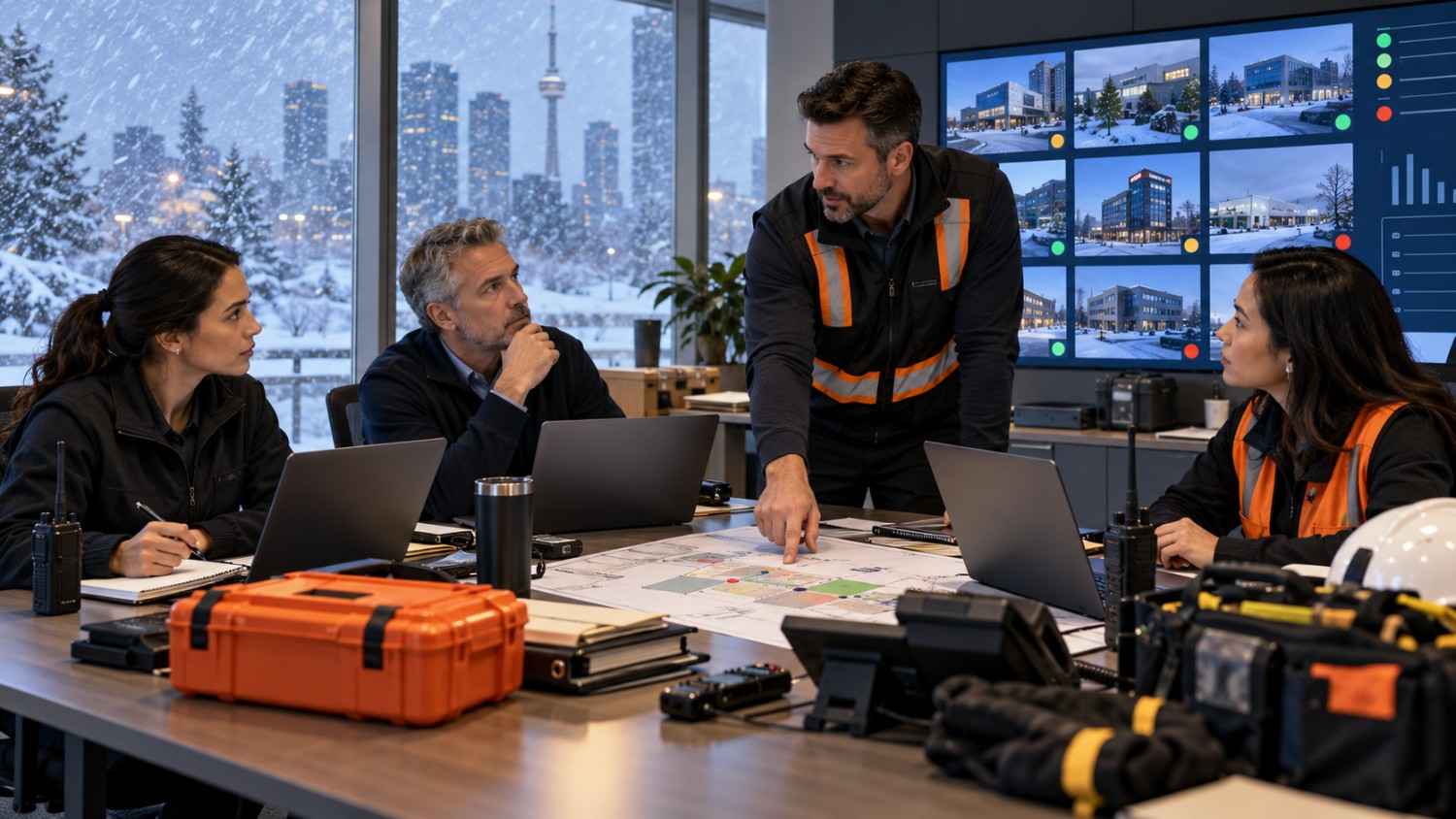
Snow and ice management becomes harder to govern when an organisation operates multiple facilities across Canada. Different municipalities can have different requirements, while weather patterns, site layouts, pedestrian traffic, contractor capacity and operating hours can change the level of service a property requires. For procurement executives and national operations leaders, a well-designed service-level agreement (SLA) provides a framework for measuring what a snow and ice contractor is expected to do.
At Facility Network, we support organisations that need coordinated facility services across multiple locations. Our stated network includes 13 provinces and territories, 9,500+ certified technicians, 600K+ jobs completed and more than 100 services offered. For winter programmes, we focus on practical service coordination, documented activity and visibility across sites so that operational teams can review performance using consistent information.
The purpose of snow removal SLA metrics is not to promise that every storm will produce the same result. Weather, access, equipment availability, site conditions and municipal restrictions can affect service delivery. Instead, a well-written SLA should establish measurable processes, responsibilities, escalation requirements and documentation standards that can be reviewed after each event.
Snow removal SLA metrics are measurable performance requirements used to define and evaluate a contractor's snow and ice management services.
Depending on the contract, metrics may address:
The key is to distinguish between something the contractor can reasonably control and something determined by external conditions.
For example, an SLA can require a contractor to monitor an agreed weather source and document when a predefined trigger is reached. It should be more cautious about promising that a parking lot will always be completely clear within a fixed period regardless of ongoing snowfall.
An SLA cannot be measured accurately if the underlying scope is vague.
Before setting performance targets, procurement teams should identify exactly what the contractor is responsible for.
A commercial snow and ice scope may include:
The scope should also identify areas that are excluded.
This prevents a common procurement problem where the client expects a contractor to maintain an area that was never included in the contract.
Trigger thresholds determine when the contractor is expected to initiate a service activity.
A contract might establish different triggers for:
The trigger should be measurable and connected to an action.
For example:
Trigger: Agreed snow accumulation threshold is reached.
Required action: Contractor initiates the contracted plowing procedure and records the event.
Verification: Activity is logged against the applicable site and event.
This is more useful than language such as "remove snow promptly" because the latter is difficult to evaluate consistently.
Trigger thresholds should reflect the facility, local climate, site risk and operating requirements.
Weather monitoring is an important component of winter service management, but it should not be confused with physical response.
Environment and Climate Change Canada provides weather warnings, forecasts, past weather information and climate data for Canadian locations. Its weather service also provides active alerts by province and territory.
A contract can define:
This creates a measurable process while recognising that forecasts and actual site conditions can differ.
One of the most important principles in SLA design is controllability.
A vendor may control whether it:
The vendor may not control:
This distinction should influence the wording of every SLA.
Instead of requiring an unconditional outcome, procurement teams can define a measurable process with appropriate exceptions and escalation requirements.
A national programme can use several categories of metrics rather than relying on one response-time figure.
The exact targets should be agreed based on facility type and operating requirements.
A useful SLA should explain what happens when a service event begins.
Possible measures include:
These measures are generally easier to verify than vague requirements such as "respond immediately."
Procurement teams should also define what happens when the normal service pathway is disrupted.
For example, if severe weather prevents safe access to a facility, the contractor should have a documented process for reporting the issue and escalating it to the designated facility contact.
The SLA can then measure whether the exception was communicated and documented rather than treating an uncontrollable access problem as an automatic service failure.
Snow removal and ice management should not always be treated as one service metric.
A contractor may complete plowing while a separate freezing condition requires additional ice treatment.
The SLA can therefore distinguish between:
This approach gives procurement teams greater visibility into what actually occurred during an event.
For organisations developing broader commercial snow removal requirements, these distinctions can also improve scope and pricing comparisons.
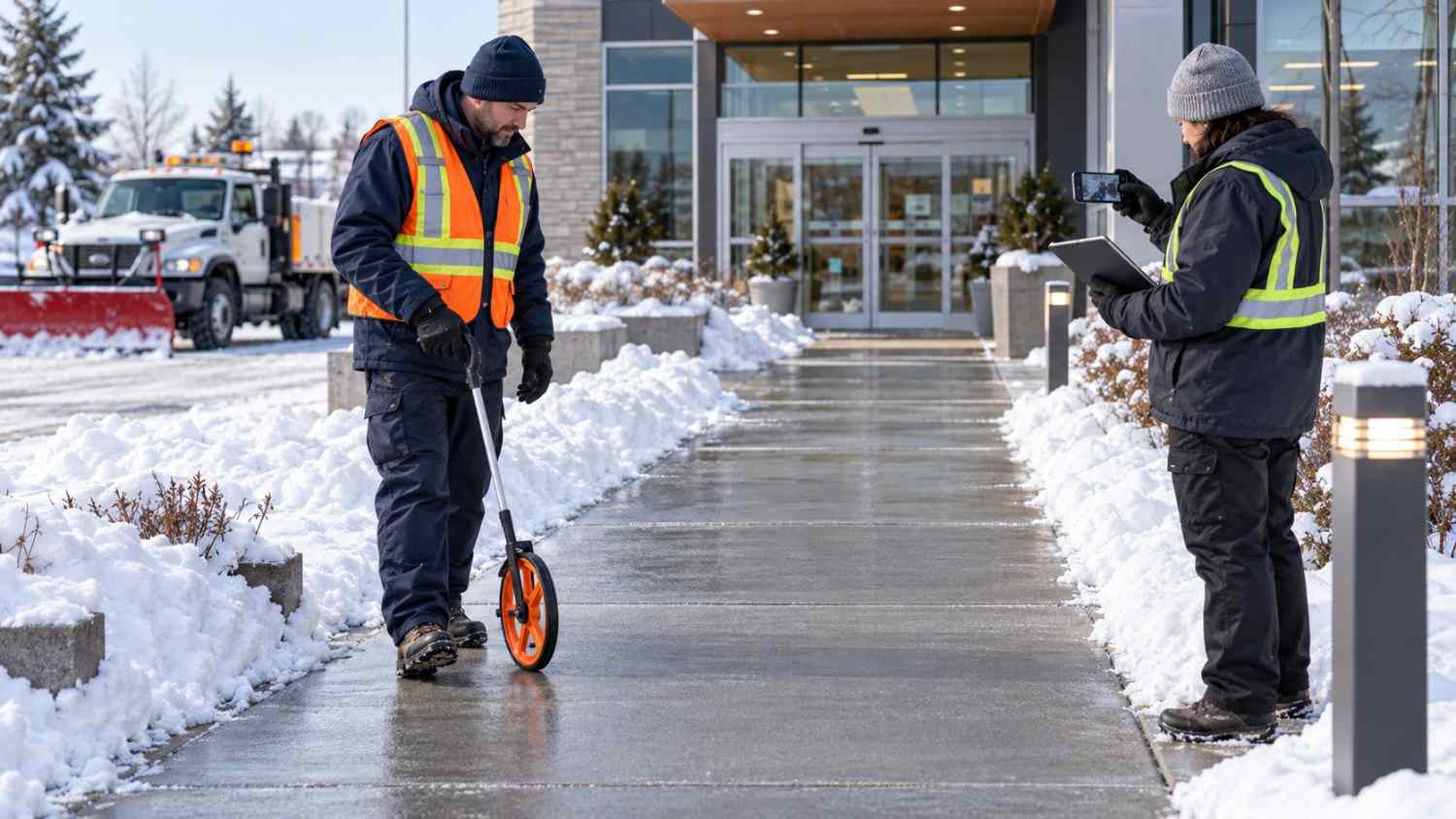
Accessible routes should have clearly defined service expectations.
Depending on the property, this may include:
The contract should identify these areas on site plans or other suitable documentation.
An SLA can then require the contractor to inspect and document these areas according to the agreed service process.
This is particularly important when the general parking area and pedestrian routes are maintained under different operating priorities.
A snow event should not be considered complete simply because the contractor has marked the work order closed.
Post-event verification can assess whether:
The verification process can be performed by the contractor, facility team or another designated party depending on the contract.
The important point is that the SLA should establish what constitutes an acceptable record.
Snow event documentation is particularly useful for multi-site programmes because it creates a consistent record across locations.
A standard event report can include:
This documentation should support operational review rather than exist solely for administrative purposes.
For example, repeated records may show that one entrance regularly requires additional attention because of drainage or refreezing. Procurement and facility teams can then investigate the underlying site condition rather than treating every event as a separate contractor issue.
Snow and ice SLAs often form part of a broader winter risk management programme.
The contract should not promise that slips and falls will never occur. Instead, it can establish processes for identifying and addressing snow and ice conditions.
Possible measures include:
Legal duties vary across Canada.
For example, Ontario's Occupiers' Liability Act establishes a duty for occupiers to take reasonable care to see that people entering premises are reasonably safe in the circumstances. The Act also contains specific provisions relating to notice for personal injury caused by snow or ice.
That does not mean a particular SLA guarantees a legal outcome. Procurement teams should review applicable provincial legislation, municipal requirements and legal advice for each relevant jurisdiction.
Québec's civil law framework also differs from the statutory frameworks used in common-law provinces, reinforcing the need for jurisdiction-specific review.
Municipal snow and ice rules can affect commercial facility operations.
Procurement teams should identify the municipalities in the portfolio and review applicable requirements concerning matters such as:
A corporate SLA should not assume that one municipal standard applies across Canada.
Instead, national contracts can establish common documentation and governance while allowing local schedules or site requirements to address municipal conditions.
Canada's winter conditions vary significantly by region, so snow removal SLA metrics should account for local operating environments.
Alberta and other Prairie locations can experience prolonged cold as well as rapid temperature changes. Freeze-thaw conditions can influence ice formation, refreezing and service requirements.
An SLA may therefore need clear provisions for changing surface conditions rather than focusing only on snowfall depth.
Parts of Ontario and nearby regions can experience localised heavy snowfall. Two facilities within the same broader region may have substantially different site conditions during one event.
Site-specific triggers and service requirements can help account for this variation.
Atlantic provinces can experience snow, freezing rain, wind and rapid changes in weather. Ice management and access may therefore require specific operational controls.
British Columbia's Lower Mainland has a different winter environment from the Prairies. Wet snow, rain and freezing temperatures can create site-specific challenges that require a different service approach.
These differences reinforce the value of combining national governance with local service requirements.
An SLA should reflect whether the contractor has the capacity to deliver the contracted programme.
Procurement teams can evaluate:
The evaluation should consider what happens during a major storm affecting multiple sites simultaneously.
A vendor may perform well during normal events but encounter capacity constraints when several regions experience severe weather at the same time.
This is particularly relevant to a national snow programme.
A measurable SLA needs a defined exception process.
Possible exceptions may include:
The contractor should be required to report the exception, explain the operational impact and identify the next action.
An exception should not automatically erase accountability. The purpose is to distinguish between a service failure and a documented condition that affected delivery.
Technology can make SLA measurement considerably easier when the contract generates many work orders across multiple locations.
A centralised system can help capture:
Our facility management technology and real-time visibility capabilities can support organisations that need greater visibility across facility service activity.
Technology should support the SLA rather than define it. The contract still needs clear service requirements, ownership and measurement rules.
A vendor scorecard can bring multiple metrics together without reducing the evaluation to a single number.
For example:
The scorecard should use the measures agreed in the contract.
Procurement teams should avoid introducing new metrics after an event and then using them to assess a vendor retroactively.
Service-level requirements and pricing should be designed together.
For example, a contract that requires additional inspections, detailed photographs and frequent reporting will create operational costs that should be reflected in the commercial model.
Possible pricing structures include:
The procurement team should document assumptions around snowfall, service frequency and additional event activity.
Historical weather information can support planning, but it should not be treated as a guarantee of future snowfall.
Budgets should be reviewed in CAD and should account for applicable GST, HST or PST based on the jurisdiction and transaction.
Post-event review provides an opportunity to determine whether the SLA is producing useful information.
The review can examine:
This process can identify whether the SLA itself needs refinement.
For example, if teams repeatedly disagree about when an event officially started, the trigger definition may need clarification. If contractors consistently report access problems, the site access requirements may need to be revised.
SLA management should not sit entirely within facility operations.
Procurement, finance, operations and risk teams can each use SLA data differently.
Procurement can use performance information during contract reviews and renewal discussions.
Operations can identify recurring site issues and service gaps.
Finance can compare contracted services against invoices and event records.
Risk Teams can review documentation and recurring winter hazards.
This creates a stronger governance structure around the snow programme.
Our broader commercial facility maintenance services can also be considered as part of an integrated facility operating model when organisations want winter services managed alongside other maintenance requirements.
Performance data should always be interpreted in context.
A contractor may have an apparently lower service result at a facility because:
This does not automatically mean the vendor performed adequately or inadequately. The purpose of documentation is to provide enough information for the organisation to determine what happened against the agreed contract.
This is why snow removal SLA metrics should include both measurable service requirements and a documented exception process.
For organisations operating across Canada, the most practical approach may be a common SLA framework supported by site-specific schedules.
The national framework can establish:
Individual site schedules can establish:
This approach provides consistency without pretending that a facility in Winnipeg has the same winter operating requirements as one in Vancouver.
At Facility Network, we focus on coordinating facility services with clear operational processes and service visibility. Our stated network includes 13 provinces and territories, 9,500+ certified technicians, 600K+ jobs completed and more than 100 services offered.
For organisations managing complex portfolios, we can bring winter service activity into a broader facility management structure where documentation, work orders, service coordination and follow-up are easier to review across locations.
Our approach recognises that measurable service does not mean promising a fixed outcome under every weather condition. Effective winter programmes need clear scope, defined triggers, documented exceptions and practical escalation procedures.
Before finalising a winter services agreement, procurement teams should confirm:
Effective snow removal SLA metrics should make winter service performance easier to understand without creating unrealistic promises. The strongest agreements define what triggers service, what activities must be completed, how exceptions are handled and what evidence must be retained.
For Canadian portfolios, the SLA should also account for regional weather differences, municipal requirements and provincial legal frameworks. National model codes are not automatically enforceable in every jurisdiction. NRC explains that national model codes are adopted and enforced by provincial and territorial authorities, which can modify or supplement them.
Similarly, winter property-management duties can differ by province. Ontario's Occupiers' Liability Act, for example, establishes a reasonable-care duty for occupiers and contains provisions specifically addressing snow and ice injury notices.
A national programme should therefore use a consistent governance framework while retaining local requirements where necessary.
At Facility Network, we help organisations coordinate facility services across complex portfolios with an emphasis on documented activity, operational visibility and accountable service management. If your organisation is reviewing winter service contracts or developing measurable snow and ice requirements, you can book a facility services consultation to discuss your portfolio and operating requirements.
What Are Snow Removal SLA Metrics?
Snow removal SLA metrics are measurable requirements used to evaluate snow and ice management services. They can cover trigger thresholds, dispatch, plowing, de-icing, accessible routes, documentation, inspections, escalation and corrective actions.
What Should A Snow Removal SLA Measure?
A snow removal SLA can measure whether agreed triggers were recognised, contracted areas were serviced, required documentation was completed, exceptions were escalated and post-event verification occurred.
Why Are Trigger Thresholds Important In Snow Contracts?
Trigger thresholds establish when a defined service activity should begin. They make expectations clearer and provide an objective basis for reviewing whether the agreed process was followed.
How Should Weather Monitoring Be Included In An SLA?
The contract should identify who monitors weather, which information sources are used, what conditions require preparation or service and how weather-related decisions are documented. Environment and Climate Change Canada provides weather alerts, forecasts and climate information for Canadian locations.
Should Snow Removal SLAs Include De-Icing Metrics?
Yes. Plowing and de-icing can involve different triggers and activities. Separating them in the SLA can make it easier to document when each service was required and completed.
How Can SLAs Support Slip And Fall Prevention?
An SLA can establish processes for inspecting priority routes, treating ice, documenting hazards and escalating deficiencies. It should not promise that incidents will never occur or guarantee a particular legal outcome.
Are Snow Removal SLA Requirements The Same Across Canada?
No. Weather, site conditions, municipal bylaws and provincial legal requirements vary. A national programme can use common governance and documentation standards while maintaining local schedules for individual facilities.
What Should Be Included In Snow Event Documentation?
Depending on the contract, records may include the event date, weather conditions, trigger information, service activity, areas treated, materials used, photographs, inspections, exceptions and corrective actions.
How Should Procurement Teams Handle SLA Exceptions?
Contracts should identify foreseeable exceptions such as unsafe access, municipal restrictions, extreme weather, equipment failure and client-controlled obstructions. The vendor should document the condition, communicate its impact and follow the agreed escalation process.
How Can Technology Improve Snow SLA Measurement?
A central facility management platform can consolidate work orders, photographs, contractor updates, inspections and corrective actions. This can give procurement and operations teams greater visibility across multiple locations.