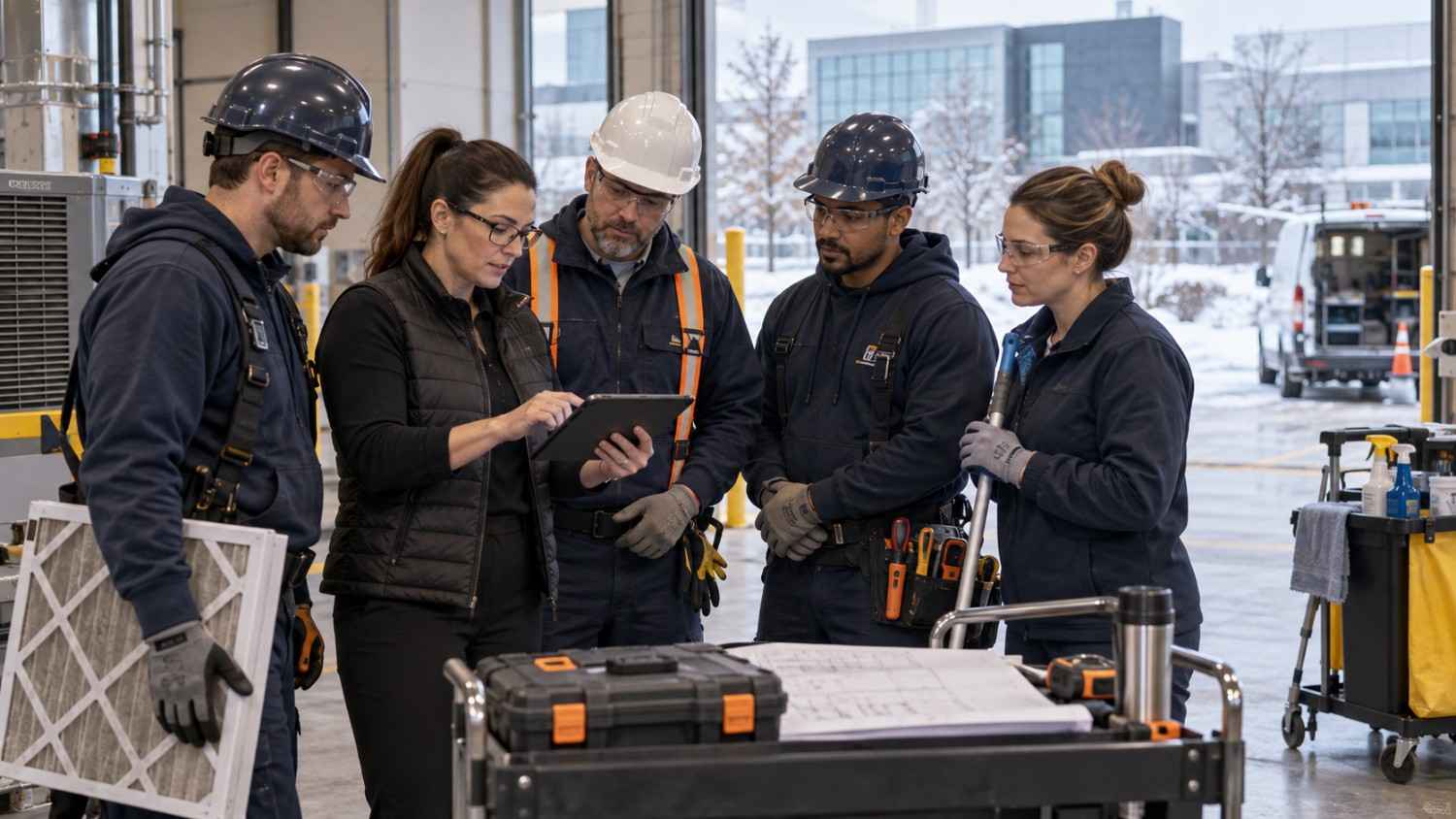
When a facility issue is reported, the speed of the response often depends on what happens before a technician arrives.
A request may begin with an email from a site manager, a phone call from an employee, a message to a regional facilities team or an automated alert. If there is no consistent process for capturing, prioritising, assigning and tracking that request, even a straightforward repair can become difficult to manage.
This is why work order management is an important part of enterprise facility operations.
For organizations with multiple locations, an effective work order process creates a structured path from the initial service request through assignment, completion, documentation and closeout. It can help operations teams establish clearer accountability, improve visibility and coordinate service providers more consistently.
The objective is not simply to process more work orders. It is to ensure the right work receives the right level of attention at the right stage.
Work order management is the process used to receive, prioritise, assign, monitor, document and close facility service requests.
A typical work order lifecycle includes:
Request → Triage → Prioritization → Assignment → Service → Verification → Closeout
Each stage matters.
If the initial request lacks useful information, the wrong technician may be assigned. If priority is unclear, urgent issues may compete with routine requests. If completion is not documented, facility teams may have difficulty confirming what happened.
A structured process connects these steps.
A small number of facilities may be able to manage maintenance requests through informal communication. Enterprise portfolios create a different level of complexity.
A multi-site organization may have:
Without a standard process, every location can develop its own approach.
This creates inconsistent response practices and makes portfolio-level reporting more difficult.
An enterprise work order process provides a common operating framework while allowing individual facilities to account for their specific requirements.
The first step is to establish how work enters the system.
Requests may arrive by portal, phone or email. The important control is that each request enters a shared work-order process with an assigned owner, priority and status. Requests left only in individual inboxes or conversations can be missed, duplicated or delayed.
A central request process can capture the information needed to make an informed initial assessment.
The exact information required will depend on the organization and service type.
The goal is to give the person responsible for triage enough context to determine the next step.
Not every work order requires the same response.
A leaking tap, failed refrigeration unit and major electrical issue should not automatically enter the same queue.
Enterprise teams can establish priority categories based on operational impact rather than simply the order in which requests arrive.
For example:
An issue involving an immediate or significant operational, safety or property concern may require urgent escalation.
The issue is materially affecting operations but may not require emergency intervention.
The issue requires service but does not currently create significant operational disruption.
The work can be scheduled as part of preventive maintenance, project activity or another planned program.
Priority definitions should be adapted to the organization's facilities and risk profile.
The key is consistency.
Triage determines what should happen next.
A strong triage process should answer:
This step helps prevent inappropriate assignments.
For example, a request that simply says "HVAC not working" may not contain enough information for an efficient service response. Asking targeted questions at intake can help determine whether the issue involves a complete system failure, a temperature complaint, a control problem or another condition.
Better information at the beginning can support better coordination later.
Once the request has been assessed, the next step is assignment.
For enterprise organizations, vendor selection can involve more than geographic proximity.
Consider:
A structured assignment process can also help avoid repeatedly relying on the same vendor simply because they are familiar to one location.
For organizations managing multiple facilities, a centralized service model can provide greater consistency in how vendors are selected and assigned.
Facility Network combines internal field technicians and qualified managed vendor partners with centralized coordination to deliver commercial facility services across Canada. Its service portfolio includes areas such as HVAC, electrical, plumbing, roofing, janitorial, snow clearing and emergency services.
A work order process should establish what happens after assignment.
Response expectations can be based on priority, service type, contract requirements and site conditions.
For example, the process may define:
These expectations should be realistic and aligned with actual service capabilities.
Avoid treating every request as urgent. Over-classifying routine work can make priority systems less useful and place unnecessary pressure on service teams.
Instead, the organization should define what constitutes an urgent request and apply that definition consistently.
A common process weakness is closing a work order as soon as a technician reports that the job is finished.
Completion and verification are not always the same thing.
Depending on the service, the closeout process may require:
This information creates a record of what happened.
For recurring facility issues, historical work-order records can become particularly useful. A new service request may be connected to previous repairs, helping facility teams identify whether a problem is isolated or recurring.
Work orders should create more than an administrative record.
Over time, they can become a source of operational knowledge.
Consistent documentation can help teams understand:
Facility Network highlights digital work-order management, real-time tracking, photo documentation, analytics and digital asset information within its technology-enabled service model.
The value of this information increases as the portfolio grows.
A work order should not disappear into a queue after assignment.
Enterprise teams need defined escalation points for requests that are delayed, incomplete or operationally significant.
An escalation framework creates ownership when the original plan does not work.
It can reduce the need for facility managers to chase individual requests by making overdue actions and their owners visible.
Reactive requests are only one part of facility operations.
When work-order data is reviewed over time, recurring service requests may identify opportunities for preventive maintenance or asset review.
For example, repeated repairs to the same piece of equipment may indicate that the organization should investigate:
This does not mean every repeat repair requires replacement.
The important point is that work-order history can provide information that supports better maintenance decisions.
Enterprise reporting should answer questions that matter to decision-makers.
Instead of producing reports that simply count work orders, consider whether the data helps answer:
Where are requests occurring?
Which service categories generate the most activity?
How many requests remain open?
Which issues are recurring?
Where are escalations occurring?
How are vendors performing against agreed expectations?
Which facilities require additional attention?
These questions can help procurement, operations and facility management teams interpret maintenance activity in context.
The exact reporting structure should reflect the organization's operational goals.
Enterprise standardization works best when it provides consistency without ignoring site realities.
A facility in Vancouver may have different environmental considerations from a property in Winnipeg. A retail location may have different operating requirements from an industrial facility or office.
The work order framework can remain consistent while the service requirements vary.
For example:
This approach allows corporate teams to maintain operational oversight while facility managers retain the flexibility required for individual sites.
Once the process is established, organizations should assess whether it is actually working.
Potential measures include:
These measures should be interpreted according to service category and priority.
For example, comparing a routine landscaping request directly with an emergency electrical issue would provide limited operational insight.
The objective is to identify process gaps and opportunities for improvement.
Even organizations with established maintenance systems can encounter process weaknesses.
Without meaningful priority categories, urgent issues can become difficult to identify.
Phone calls, emails and messages can create fragmented records when they are not captured in the shared work-order process.
Incomplete requests can lead to incorrect vendor assignments or unnecessary follow-up.
A technician's arrival does not necessarily mean the issue has been resolved.
Recurring work may point to a larger maintenance or asset issue.
A high number of work orders does not automatically indicate poor facility performance. Service type, asset condition, facility size and operational requirements all matter.
Technology can make a structured work order process easier to administer across a large portfolio.
A suitable platform may support:
Technology is not a replacement for operational processes. It supports them.
A poorly designed workflow can remain inefficient even after it is moved into software.
The process should therefore be defined first, with technology selected to support the required operating model.
A mature process creates clear ownership at every stage:
1. Capture
The request enters through a defined channel.
2. Triage
The issue is assessed using consistent criteria.
3. Prioritise
Operational impact determines urgency.
4. Assign
The appropriate service provider or internal resource is selected.
5. Track
Progress remains visible until the work is complete.
6. Verify
Completion and documentation are reviewed.
7. Analyse
Historical data is used to identify recurring issues and operational trends.
This approach gives facility teams a repeatable framework for managing both routine and urgent maintenance activity.
Effective work order management is ultimately about creating control over the service-request lifecycle.
For a single location, informal processes may appear manageable. Across a national or multi-site portfolio, inconsistent request channels, unclear priorities, fragmented vendor communication and incomplete documentation can create unnecessary operational complexity.
A structured enterprise process provides a clearer alternative.
By standardising intake, triage, prioritization, assignment, escalation, documentation and reporting, organizations can improve visibility while creating clearer accountability for facility service delivery.
Facility Network supports commercial organizations across Canada with coordinated facility services and national coverage. Explore Facility Network's services to learn more about its approach to commercial facility maintenance and service coordination.
If your organization is reviewing its current work-order process, contact Facility Network to discuss your facility requirements and operational needs.
What is work order management in facility operations?
Work order management is the structured process of receiving, prioritising, assigning, tracking, documenting and closing facility maintenance requests. It provides a consistent framework for managing service activity across one or multiple locations.
Why is work order management important for enterprise facilities?
Enterprise organizations may handle large volumes of maintenance requests across multiple locations and service providers. A structured process can improve visibility, clarify ownership and create more consistent approaches to service coordination.
What information should a facility work order include?
Depending on the request, a work order may include the site, requestor, issue description, facility area, affected asset, priority information, photographs, access requirements and relevant service details.
How should facility teams prioritise work orders?
Priorities should generally reflect operational impact, urgency, safety considerations, asset criticality and the organization's established service requirements. Emergency, high-priority, routine and planned categories can help distinguish different response needs.
How can work order management improve vendor accountability?
A structured process can establish clear assignment, response, communication, documentation and completion requirements. This provides a framework for reviewing vendor performance against agreed expectations.
Can work-order data support preventive maintenance decisions?
Yes. Historical work-order information can help identify recurring repairs, frequently serviced assets and locations with repeated issues. These patterns can support further maintenance or asset-management evaluation where appropriate.
What should organizations look for in a work order management system?
Organizations should consider whether the system supports service requests, prioritization, work-order tracking, vendor coordination, documentation, reporting, asset information and integration with the organization's operational processes. The system should support the workflow rather than replace sound facility-management practices.