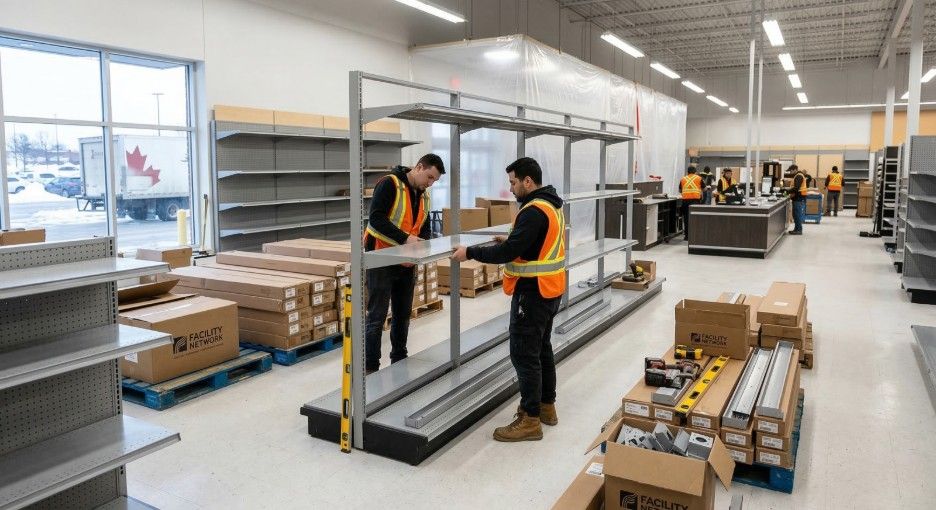
Retail environments are constantly evolving. As brands expand, refresh store layouts, or launch new concepts, fixture installation becomes a critical part of retail operations. From shelving units and point of sale counters to display systems and signage, fixtures define how customers interact with retail spaces. Coordinating installations across multiple locations requires careful planning, logistical precision, and strong project management.
For organizations managing large networks of stores, retail fixture installation in Canada often involves simultaneous upgrades across several provinces. Retail operations teams must ensure that fixtures are delivered on time, installed consistently, and aligned with brand standards.
This process becomes even more complex when installations occur across dozens or hundreds of stores nationwide. Vendor staging, equipment delivery schedules, contractor coordination, and installation standards must all align to avoid costly delays or inconsistent store experiences.
Companies such as Facility Network play an important role in helping retailers manage these large scale initiatives. By coordinating contractor networks, managing project timelines, and ensuring consistent installation practices, they help brands successfully execute fixture rollouts across Canada.
This guide explores the strategies and best practices required to manage retail fixture installation in Canada, with a focus on logistics coordination, vendor staging, installation standards, and operational efficiency.
Fixtures are a fundamental part of retail store design. They influence product visibility, customer navigation, and operational efficiency within a store.
When retailers update or expand their store network, fixture installation becomes a central component of the project.
Fixtures are designed to showcase products in a way that maximizes visibility and encourages customer engagement. Shelving units, racks, display tables, and wall systems all contribute to the visual merchandising strategy of a store.
The placement of fixtures determines how customers move through a store. Strategic layouts guide customers through product zones and highlight featured merchandise.
Well designed fixtures support efficient store operations by providing organized storage, accessible displays, and functional service counters.
For these reasons, successful retail fixture installation in Canada requires precision and consistency across all locations.
Managing fixture installations across a national retail network introduces several operational challenges.
Canada’s vast geography means fixtures must be transported over long distances. Retailers operating stores from British Columbia to Atlantic Canada must coordinate shipping schedules and delivery logistics carefully.
Installations must support alignment with the National Building Code of Canada (NBCC) and provincial accessibility standards, such as the Accessibility for Ontarians with Disabilities Act (AODA), regarding aisle widths and counter heights.
Many retail installations occur outside of regular business hours to minimize disruption. This requires careful coordination with store managers and contractors.
Fixture manufacturers, logistics providers, and installation teams must all work together seamlessly. Delays from any vendor can affect the entire rollout.
These challenges highlight the importance of structured planning for retail fixture installation in Canada.
Vendor staging is a critical component of fixture installation projects. It ensures that all materials and equipment are available when installation teams arrive on site.
Retailers often work with multiple vendors to manufacture and supply fixtures. Coordinating these vendors through a centralised system helps maintain consistency and reduces the risk of delays.
Some national retailers use regional warehouses or staging facilities to store fixtures before distribution. This approach allows teams to distribute materials to nearby stores quickly.
Before installation begins, project managers should confirm that all fixtures and components have arrived at the staging location. Missing components can delay the entire installation process.
Effective vendor staging helps streamline retail fixture installation in Canada, particularly when installations occur across multiple stores simultaneously.
Fixture installations require careful coordination of equipment delivery schedules.
Shipping large retail fixtures requires specialised transportation. Items such as shelving systems, display cabinets, and checkout counters must be packaged and transported safely.
Retail locations often have limited space for receiving large shipments. Scheduling delivery windows helps ensure that materials arrive when installation teams are ready to begin work.
Tracking systems help ensure that each store receives the correct fixtures. This is particularly important when different store formats require different fixture configurations.
Logistics planning plays a vital role in successful retail fixture installation in Canada.
Consistency is essential when installing fixtures across multiple retail locations. Customers expect the same brand experience regardless of which store they visit.
Retailers should provide clear installation guidelines that define how fixtures should be assembled and positioned.
These guidelines often include:
Installation teams should use checklists to ensure that all tasks are completed correctly.
Fixtures must align with the retailer’s visual merchandising strategy. Display heights, lighting placement, and product zones should remain consistent across stores.
Maintaining strong installation standards is essential for successful retail fixture installation in Canada.
Fixture installation typically requires skilled installation teams who are familiar with retail environments.
Many retailers rely on contractors who specialize in fixture assembly and installation. These professionals understand how to install complex retail systems quickly and safely.
For nationwide projects, retailers often work with contractor networks that operate across multiple provinces.
Contractors should be trained on the specific fixtures being installed. Proper training ensures consistent results and reduces installation errors.
Facility Network helps retailers coordinate contractor networks to support large scale retail fixture installation in Canada, ensuring installations meet brand standards across all locations.
Retail stores must continue serving customers even during upgrade projects. Installation schedules must therefore minimize operational disruption.
Many fixture installations occur overnight or during early morning hours when stores are closed.
In some cases, installations are completed in phases to allow parts of the store to remain operational.
Store managers should receive advance notice of installation schedules. Clear communication helps ensure that staff are prepared for deliveries and installation teams.
Careful scheduling helps ensure smooth retail fixture installation in Canada without affecting the customer experience.
Quality control is an important step in fixture installation projects.
Project managers should conduct inspections after installation to verify that fixtures have been installed correctly.
Fixtures must meet safety requirements and building regulations.
After installation, retailers may evaluate how fixtures support merchandising strategies and customer flow.
Quality control ensures that retail fixture installation in Canada delivers consistent results across all store locations.
Modern retail fixtures often include integrated technology.
Examples include:
Installing these fixtures requires coordination between installation teams and technology specialists.
Technology enabled fixtures often require electrical connections and network access.
After installation, all digital components should be tested to ensure they function properly.
Technology integration adds another layer of complexity to retail fixture installation in Canada. Any technology-integrated fixtures requiring hardwiring must be installed by a Licensed Electrical Contractor in accordance with the Canadian Electrical Code (CEC).
Retailers increasingly prioritize sustainability in store design.
Some fixtures are designed to be modular and reusable across multiple store formats.
Integrated lighting systems can reduce energy consumption while improving product visibility.
During store upgrades, old fixtures must be disposed of responsibly or recycled whenever possible.
Sustainable practices are becoming an important part of retail fixture installation in Canada.
Managing fixture installations across dozens or hundreds of stores requires strong coordination and project management.
Facility management providers help retailers streamline these complex initiatives by:
Facility Network supports national retailers by managing fixture installation projects across Canada. Their contractor networks and project management expertise allow businesses to execute installations efficiently while maintaining consistent store standards.
With the right coordination, retailers can complete retail fixture installation in Canada smoothly and efficiently across their entire store network.
Fixture installation is a critical component of retail expansion, store refresh programs, and brand standardization initiatives. Coordinating these installations across multiple locations requires careful planning, efficient logistics, and strong contractor coordination. Facility Network verifies that all installation contractors maintain valid WSIB/WCB coverage and adhere to provincial health and safety regulations, including proper fall protection for high-level racking.
From vendor staging and equipment delivery to installation standards and quality control, every stage of the process must be managed carefully to ensure success.
Organizations that implement structured project management processes can execute retail fixture installation in Canada efficiently while maintaining consistent brand experiences across their store networks.
With experienced partners such as Facility Network, retailers gain the support needed to manage complex installations across multiple provinces, ensuring projects remain on schedule and meet high quality standards.
What is retail fixture installation?
Retail fixture installation involves assembling and installing store fixtures such as shelving units, display racks, counters, and signage that support product display and store operations.
Why is fixture installation important for retail chains?
Fixtures influence product visibility, customer flow, and store functionality. Proper installation ensures consistent store layouts and improves the shopping experience.
What challenges are involved in retail fixture installation in Canada?
Challenges include logistics coordination, transportation across large distances, contractor availability, and maintaining installation consistency across locations.
What is vendor staging in fixture installation projects?
Vendor staging refers to the process of organizing and storing fixtures and materials before they are delivered to retail locations for installation.
How can retailers minimize disruption during fixture installations?
Retailers often schedule installations during overnight hours or use phased installation approaches to keep stores operational.