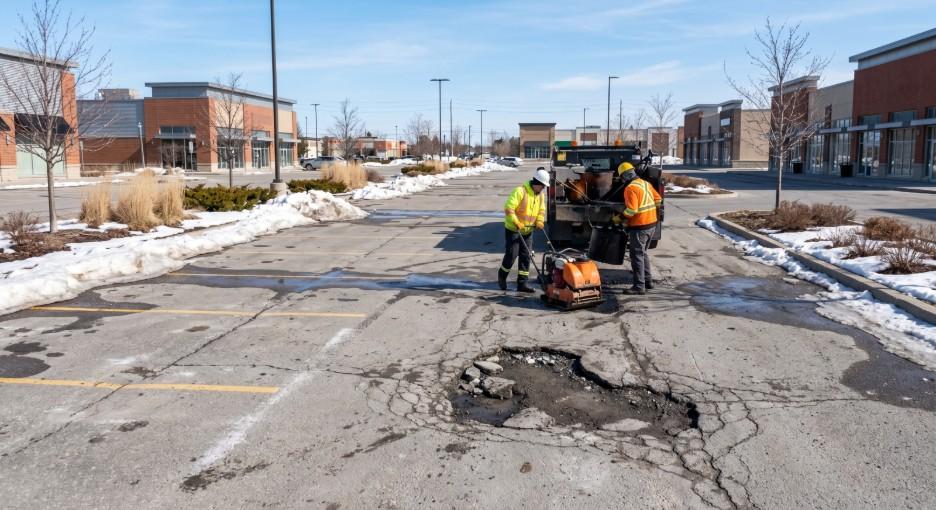
Canadian winters can be particularly demanding on commercial exterior infrastructure. Snow accumulation, ice formation, freeze-thaw cycles, road salt exposure, snow clearing equipment, and fluctuating temperatures all place stress on parking lots, asphalt surfaces, walkways, curbs, drainage systems, and surrounding landscaping. By the time spring arrives, many commercial properties begin to show visible signs of seasonal deterioration that may affect appearance, accessibility, safety, and operational flow.
For property managers, retail operators, facility teams, and multi-site commercial organizations, spring exterior recovery planning often becomes an essential part of seasonal facility maintenance. Parking lot repair in Canada is especially important during this period because winter conditions may contribute to potholes, asphalt cracking, heaving, drainage issues, and surface wear that continue to worsen if left unaddressed.
At Facility Network, our team supports organizations across Canada with coordinated commercial facility services, seasonal maintenance planning, vendor management, and multi-site operational support. Spring asphalt and landscaping recovery programs help commercial facilities prepare for increased traffic, warmer temperatures, and changing operational demands after winter weather exposure.
This guide explores how commercial properties can approach parking lot repair in Canada alongside landscaping recovery, drainage reviews, pothole management, sealant applications, and broader exterior maintenance planning tailored to Canadian commercial environments.
Commercial parking lots and asphalt surfaces across Canada are exposed to months of environmental stress during winter.
Common contributing factors include:
Over time, these conditions may contribute to:
Parking lot repair in Canada often becomes a priority during spring because many of these issues become more visible once snow and ice begin to melt.
Freeze-thaw activity is one of the most common causes of asphalt deterioration in Canadian climates.
Moisture may enter small cracks within the asphalt surface. As temperatures drop, the moisture freezes and expands. When temperatures rise again, thawing occurs and additional water may penetrate the surface before the cycle repeats.
Over time, this process may weaken asphalt structure and contribute to visible surface failure.
Asphalt heaving occurs when ground movement or frost-related expansion causes pavement surfaces to lift unevenly.
This condition may affect:
Heaving often becomes more noticeable after snowmelt because changing temperatures expose uneven pavement conditions that were previously concealed beneath snow and ice.
Commercial properties may observe:
Parking lot repair in Canada frequently involves assessing areas affected by frost movement and seasonal ground expansion.
Uneven pavement conditions may affect:
Repair approaches should always reflect site-specific conditions, pavement age, traffic patterns, and environmental exposure.
Potholes are among the most visible signs of winter-related asphalt deterioration.
They commonly develop when moisture infiltrates weakened pavement areas and repeated freeze-thaw cycles gradually break apart the asphalt surface.
Commercial properties may experience pothole formation due to:
Potholes may worsen rapidly during spring due to increased rainfall and fluctuating temperatures.
If potholes are left untreated, they may continue expanding and contribute to additional surface deterioration over time.
Commercial facilities often prioritize parking lot repair in Canada during spring to help address winter damage before peak summer traffic begins.
A structured spring asphalt inspection helps commercial facilities identify visible deterioration following winter operations.
Facilities may inspect:
Spring reviews often focus on identifying:
Because every property experiences different weather exposure and traffic conditions, inspection priorities should remain site-specific.
Drainage plays an important role in long-term asphalt performance.
Poor drainage conditions may contribute to:
Commercial facilities may observe:
Parking lot repair in Canada often involves reviewing whether drainage systems continue to function effectively after snowmelt and freeze-thaw activity.
Improper drainage may also affect:
Drainage conditions should always be evaluated in relation to the full property layout and grading design.
Sealant applications are commonly used as part of seasonal asphalt maintenance planning.
Commercial properties may apply sealants to help protect pavement surfaces from:
Spring and early summer are often practical periods for evaluating sealant application needs because winter debris and surface damage have become more visible.
Sealant use should be based on:
Not every parking surface requires the same maintenance approach, and treatment timing should reflect site-specific conditions.
Small asphalt cracks may appear minor initially but can gradually worsen if moisture penetration continues.
Cracking may contribute to:
Commercial facilities often review:
Parking lot repair in Canada frequently includes crack management strategies aimed at reducing further deterioration during future winter seasons.
Landscaping areas often require extensive recovery work following Canadian winters.
Commercial properties may experience:
Landscaping influences:
Spring landscaping recovery often works alongside asphalt restoration as part of a broader exterior maintenance strategy.
Winter snow clearing operations can unintentionally affect both pavement and landscaping infrastructure.
Commercial properties may observe:
Facilities may inspect:
Exterior recovery programs should account for areas exposed to repeated snow clearing operations throughout winter.
Pedestrian pathways may also experience deterioration after winter weather exposure.
Common concerns include:
Commercial facilities may review:
Where required, repairs must support alignment with the National Building Code of Canada (NBCC) and applicable regional standards, such as the Accessibility for Ontarians with Disabilities Act (AODA) or the British Columbia Accessibility Act, while reflecting site-specific conditions.
Winter weather and snow clearing may reduce the visibility of parking lot markings over time.
Spring inspections may review:
Visible markings support:
Line painting schedules should align with pavement condition and seasonal operational planning.
Landscaping recovery also affects lighting performance and property visibility.
Overgrown vegetation or damaged landscape areas may interfere with:
Commercial facilities may coordinate landscaping maintenance with broader spring property inspections to support visibility and accessibility.
Properties with irrigation systems often require spring startup inspections following winter shutdown periods.
Facilities may review:
Winter freezing conditions may contribute to visible irrigation system damage if components were affected by freeze expansion.
Irrigation planning should align with landscaping needs, seasonal weather patterns, and operational priorities.
Loading docks and service corridors often experience concentrated winter wear due to heavy vehicle traffic and snow clearing operations.
Spring inspections may review:
Parking lot repair in Canada frequently includes evaluating service areas that remain heavily active throughout winter operations.
Organizations operating multiple facilities across Canada often face additional challenges managing spring asphalt and landscaping recovery.
Regional climate differences may affect:
At Facility Network, we support coordinated commercial facility services across distributed property portfolios, including seasonal maintenance planning, vendor coordination, exterior inspections, and operational management tailored to multi-site environments.
Commercial organizations may encounter:
Centralized planning may help support more consistent exterior maintenance management across commercial portfolios.
Spring creates an important window for exterior recovery planning, but weather conditions across Canada may remain variable for extended periods.
Commercial facilities may need to account for:
Repair priorities may shift based on:
Parking lot repair in Canada should remain adaptable to regional weather patterns and evolving site conditions.
Commercial asphalt performance may also be affected by environmental exposure beyond winter weather alone.
Factors may include:
Long-term surface maintenance planning often combines seasonal inspections with preventative repair strategies aimed at reducing future deterioration risks.
Exterior recovery work may involve active vehicle areas, pedestrian traffic, and operational disruptions.
Commercial facilities may coordinate:
Where required, maintenance activities should align with applicable workplace safety requirements and property access considerations.
Because every commercial property operates differently, work sequencing should remain site-specific.
Some organizations may incorporate technology-assisted inspection tools into asphalt recovery planning.
These may include:
Technology use should reflect operational requirements and property complexity rather than being treated as universally necessary.
Not every commercial property requires the same level of assessment technology.
Successful spring recovery planning extends beyond isolated repairs.
Commercial exterior maintenance strategies may involve:
Parking lot repair in Canada becomes most effective when integrated into broader preventative maintenance planning tailored to the property environment.
At Facility Network, our team supports organizations across Canada with coordinated commercial facility services, exterior maintenance planning, vendor management, and operational oversight designed for complex commercial environments.
Canadian winters can leave commercial properties dealing with asphalt deterioration, potholes, drainage concerns, landscaping damage, and surface instability that become increasingly visible during spring thaw conditions.
A proactive approach to parking lot repair in Canada helps commercial organizations identify winter-related damage early while supporting safer traffic flow, improved property appearance, better drainage performance, and long-term surface management.
From asphalt inspections and pothole repairs to landscaping recovery and sealant planning, spring exterior maintenance plays an important role in overall commercial facility operations.
Because every commercial property experiences different weather exposure, traffic demands, and operational conditions, recovery strategies should always reflect site-specific requirements rather than generalized assumptions.
At Facility Network, we work with organizations across Canada to coordinate commercial facility services, preventative maintenance planning, seasonal inspections, vendor management, and operational support tailored to multi-site property portfolios.
To discuss your exterior maintenance planning needs or seasonal recovery projects, contact our team now.
Why is parking lot repair in Canada especially important after winter?
Canadian winters expose asphalt surfaces to freeze-thaw cycles, snow removal activity, moisture infiltration, and heavy traffic conditions that may contribute to cracking, potholes, and pavement deterioration.
What causes potholes in commercial parking lots?
Potholes often develop when water enters weakened asphalt surfaces and expands during freezing conditions, gradually breaking apart the pavement over time.
What is asphalt heaving?
Asphalt heaving occurs when frost-related ground movement causes pavement surfaces to lift unevenly, potentially affecting vehicle movement, drainage, and pedestrian access.
Why are spring asphalt inspections important?
Spring inspections help identify visible winter damage such as cracking, potholes, drainage concerns, and surface wear before conditions worsen during warmer months.
How do drainage problems affect commercial asphalt?
Poor drainage may contribute to standing water, moisture infiltration, freeze damage, and accelerated pavement deterioration if water is not properly redirected away from the surface.
What role do sealants play in asphalt maintenance?
Sealants may help protect asphalt surfaces from moisture penetration, salt exposure, UV conditions, and surface oxidation as part of preventative maintenance planning.
Why does commercial landscaping require spring recovery?
Winter conditions may damage turf, soil, curbs, irrigation systems, and landscape beds due to snow storage, salt exposure, and freeze-thaw activity.
How can multi-site organizations manage exterior recovery more effectively?
Many organizations coordinate inspections, maintenance scheduling, vendor management, and documentation practices centrally to support consistent exterior maintenance across multiple commercial properties throughout Canada.