
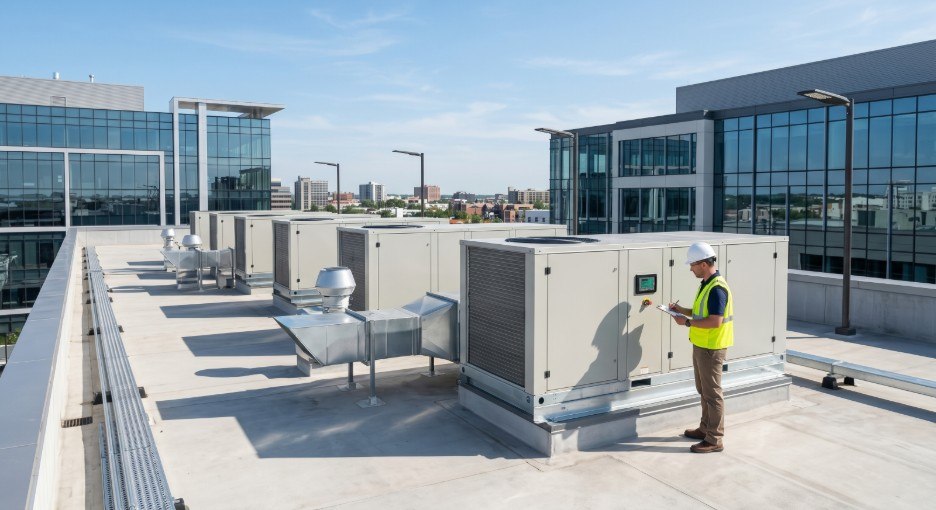
Commercial facilities across Canada are continuing to adapt to evolving expectations surrounding energy performance, operational sustainability, and infrastructure modernization. As governments, municipalities, and industry organizations place greater emphasis on building efficiency and environmental responsibility, many facility managers and commercial property operators are reviewing how changing energy efficiency regulations in Canada may influence HVAC systems, lighting infrastructure, maintenance planning, and future capital improvements.
Commercial buildings rely heavily on heating, cooling, ventilation, and lighting systems to support daily operations, occupant comfort, and building functionality. Over time, these systems may require upgrades or operational adjustments to align with evolving building performance expectations, updated model codes, and broader sustainability initiatives.
At Facility Network, we support organizations across Canada with coordinated commercial facility services, preventative maintenance planning, vendor management, infrastructure support, and operational oversight tailored to complex commercial environments. As energy efficiency regulations in Canada continue evolving, many organizations are assessing how mechanical systems, lighting infrastructure, and operational practices may support long-term facility resilience and performance objectives.
This guide explores how evolving energy efficiency regulations in Canada may affect commercial HVAC and lighting systems, including NECB alignment, LEED-related considerations, operational planning, preventative maintenance strategies, and practical approaches to facility modernization.
Energy efficiency regulations in Canada generally refer to building performance standards, operational requirements, and infrastructure expectations intended to support more efficient energy use across commercial, institutional, and industrial properties.
These frameworks may influence:
Requirements and implementation approaches may vary depending on:
Because commercial facilities across Canada differ significantly in age, design, and operational complexity, energy efficiency planning should always remain site-specific.
Commercial buildings represent a substantial portion of energy usage across Canadian urban and industrial environments.
As infrastructure ages and operational expectations evolve, organizations are increasingly reviewing:
Energy efficiency regulations in Canada are contributing to broader conversations surrounding long-term operational sustainability and infrastructure resilience.
Facility teams are often balancing several operational priorities simultaneously, including:
Rather than approaching efficiency improvements as isolated projects, many organizations are integrating them into broader facility planning strategies.
The National Energy Code for Buildings, commonly referred to as NECB, provides model energy performance guidance for commercial buildings across Canada.
The NECB framework addresses areas such as:
Provincial adoption and implementation may vary, and local amendments may apply depending on jurisdiction.
Commercial organizations may review NECB-related considerations when planning:
Energy efficiency regulations in Canada are increasingly shaped by discussions surrounding higher building performance expectations and long-term sustainability planning.
HVAC infrastructure often represents one of the largest operational energy demands within commercial facilities.
Systems may include:
Commercial facilities across Canada operate within demanding seasonal climates that require extensive heating during winter and cooling during warmer months.
HVAC systems may influence:
As energy efficiency regulations in Canada continue evolving, many organizations are reviewing whether existing HVAC systems continue to support current operational expectations. Any mechanical modernization or chiller replacements must be executed by certified technicians in strict compliance with Canadian federal and provincial halocarbon management regulations (e.g., ODP certification).
Ventilation remains a critical component of commercial facility operations.
Facilities may review:
Commercial ventilation planning often requires balancing:
Because building occupancy patterns differ significantly, ventilation strategies should always reflect actual facility usage and operational conditions.
Preventative maintenance plays an important role in supporting long-term HVAC performance.
Commercial facilities may maintain schedules related to:
Deferred maintenance may contribute to:
Energy efficiency regulations in Canada are encouraging some organizations to review whether existing maintenance practices adequately support operational efficiency objectives.
Lighting systems are another major focus area within commercial energy planning discussions.
Commercial facilities may assess:
Older lighting infrastructure may present challenges related to:
Facilities may explore upgrade opportunities as part of broader operational modernization strategies.
However, lighting planning should always align with site-specific operational requirements and building usage patterns.
Exterior lighting serves both operational and safety-related functions within commercial environments.
Facilities may review:
At Facility Network, we support organizations across Canada with coordinated commercial facility services, including operational planning, preventative maintenance support, infrastructure coordination, and vendor management tailored to complex commercial properties.
Commercial properties often aim to maintain:
Lighting system planning should reflect actual property conditions, occupancy patterns, and environmental exposure.
Some organizations are exploring building automation technologies to help manage HVAC and lighting performance more effectively.
These systems may support:
Technology implementation should always remain operationally appropriate and aligned with facility complexity.
Not every commercial facility requires advanced automation systems.
Implementation decisions may depend on:
Technology should be treated as an optional operational tool rather than a mandatory solution for every facility.
Many organizations are also reviewing how facility upgrades may align with broader sustainability frameworks such as LEED.
LEED-related planning may involve:
Commercial tenants, investors, and property stakeholders are increasingly interested in building performance and sustainability considerations.
However, facilities should avoid assuming that every property requires formal certification programs.
Operational practicality and infrastructure realities should always guide planning decisions.
Energy efficiency regulations in Canada may affect existing commercial properties differently than new construction projects.
New developments may incorporate updated standards during initial design and construction phases, while existing facilities often approach upgrades gradually through renovation and modernization planning.
Older facilities may face limitations related to:
Facility upgrade planning should balance operational continuity with long-term infrastructure goals.
Building envelopes influence how efficiently commercial facilities retain heat and manage indoor environmental conditions.
Facilities may review:
Poor building envelope conditions may contribute to:
Energy efficiency regulations in Canada are contributing to greater attention on thermal performance and environmental resilience.
Canadian commercial facilities operate within highly varied climate conditions.
Facilities in different regions may experience:
Energy performance strategies that work well in one province may not be equally effective elsewhere.
Commercial organizations should always evaluate:
Operational planning should remain regionally informed rather than generalized.
Lighting modernization may also require evaluation of broader electrical infrastructure.
Commercial facilities may review:
To mitigate liability, infrastructure planning and lighting retrofits must support both operational flexibility and strict adherence to the Canadian Electrical Code (CE Code), subject to oversight from provincial regulators like the Electrical Safety Authority (ESA).
Commercial energy planning is not solely about reducing energy usage.
Facilities must also consider:
HVAC and lighting decisions should support operational usability alongside efficiency objectives.
Organizations operating facilities across multiple provinces often face additional complexity when implementing energy-related upgrades.
Facilities may vary significantly in:
Commercial organizations may encounter:
At Facility Network, our team supports organizations across Canada with coordinated facility services, preventative maintenance planning, vendor management, and operational oversight designed for distributed commercial portfolios.
Some organizations begin planning through operational assessments and infrastructure reviews.
These evaluations may include:
Energy efficiency regulations in Canada are encouraging many commercial property teams to better understand how existing infrastructure performs under current operational conditions.
Commercial organizations may maintain operational documentation related to:
Documentation practices may support:
Where required, facilities must coordinate with qualified professionals to ensure that all infrastructure modernization projects align with commercial infrastructure standards and provincial occupational health and safety regulators such as the MLITSD (Ontario), WorkSafeBC, or CNESST (Quebec).
Many organizations are integrating energy planning into broader sustainability and operational resilience strategies.
Facilities may prioritize:
Effective energy planning often involves phased implementation strategies rather than immediate large-scale infrastructure replacement.
Because every commercial facility differs, modernization approaches should remain tailored to operational realities and long-term business objectives.
Energy efficiency regulations in Canada are encouraging commercial organizations to review how HVAC systems, lighting infrastructure, operational controls, and preventative maintenance strategies may support evolving building performance expectations.
Practical commercial facility planning may involve:
At Facility Network, we support organizations across Canada with coordinated commercial facility services, infrastructure planning support, operational oversight, and preventative maintenance programs tailored to complex commercial environments.
Energy efficiency regulations in Canada continue shaping how commercial facilities approach HVAC modernization, lighting upgrades, preventative maintenance, and long-term infrastructure planning.
As organizations evaluate evolving NECB alignment discussions, sustainability initiatives, and operational performance expectations, many are focusing on practical strategies that support energy management while maintaining occupant comfort and operational continuity.
Because commercial properties across Canada differ significantly in age, infrastructure, occupancy patterns, and climate exposure, facility planning should always remain site-specific and adaptable to regional operational realities.
At Facility Network, our team works with organizations across Canada to support coordinated commercial facility services, preventative maintenance planning, operational oversight, vendor management, and infrastructure support tailored to complex commercial properties.
What are energy efficiency regulations in Canada?
Energy efficiency regulations in Canada refer to building performance frameworks, operational standards, and infrastructure expectations related to energy usage within commercial and industrial facilities.
Why are HVAC systems important for energy planning?
HVAC systems influence heating, cooling, ventilation, occupant comfort, and overall building energy consumption within commercial facilities.
What is the NECB?
The National Energy Code for Buildings is a Canadian model code that provides guidance related to commercial building energy performance and operational efficiency.
How do lighting systems affect commercial energy performance?
Lighting infrastructure may influence operational efficiency, maintenance requirements, occupant visibility, and overall energy usage within commercial buildings.
Why are preventative maintenance programs important?
Preventative maintenance may help support mechanical reliability, airflow consistency, equipment performance, and long-term operational efficiency.
Do all commercial buildings require building automation systems?
No. Automation systems depend on building complexity, infrastructure compatibility, operational goals, and facility-specific requirements.
How do Canadian climate conditions affect commercial energy planning?
Canadian facilities must account for regional weather conditions such as winter heating demands, temperature fluctuations, and seasonal operational strain.
Why are multi-site organizations reviewing energy planning strategies?
Organizations operating multiple facilities often seek more consistent maintenance coordination, infrastructure oversight, and operational planning across distributed commercial portfolios.

.jpeg)
