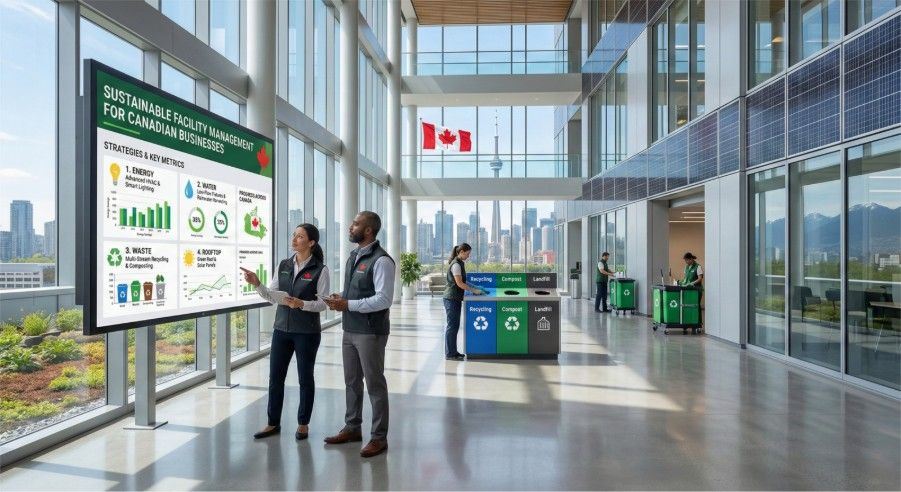
Sustainability is no longer a communications exercise or a side initiative. For Canadian enterprises, it is a financial, operational, and governance priority. From carbon pricing frameworks to investor scrutiny and regulatory expectations, environmental performance now sits firmly on the executive agenda. Within this context, facilities represent one of the most controllable and measurable levers for impact.
For organisations operating nationally, the complexity increases. Climate variability, provincial energy regulations, and infrastructure differences mean that sustainability must be approached strategically. This is where sustainable facility management Canada becomes essential. It enables companies to embed environmental leadership into everyday operations while protecting cost discipline and service standards.
Facility Network works with Canadian enterprises to design and execute scalable, accountable facility programs that integrate sustainability with performance. By combining national oversight with local execution, organisations can achieve measurable ESG facilities Canada outcomes without compromising operational reliability.
This comprehensive guide explores the financial, operational, and governance aspects of sustainable facility management Canada, offering practical strategies for ESG and operations leaders across the country.
Canada’s policy environment continues to evolve in response to climate change, energy security, and stakeholder expectations. Carbon pricing systems, provincial energy codes, and disclosure requirements create both risks and opportunities for facility operators.
Facilities typically account for:
Sustainable facility management Canada transforms facilities from cost centres into strategic assets that support enterprise value.
Environmental, social, and governance metrics increasingly influence capital allocation, investor confidence, and brand reputation. Within ESG facilities Canada frameworks, facilities play a critical role in:
Large enterprises operating across multiple provinces must harmonise environmental performance metrics to ensure consistent reporting. Without national coordination, sustainability data becomes fragmented, limiting transparency and audit readiness.
A centralised facility governance model allows organisations to align operational practices with corporate ESG objectives. This alignment ensures that sustainability reporting reflects verified, standardised data rather than estimates.
A strong framework for sustainable facility management Canada integrates governance, data analytics, procurement standards, and operational execution. It should include the following pillars:
Sustainability standards must be consistent nationally while accommodating regional differences in climate, infrastructure, and regulations. Governance structures should define:
Energy consumption, water usage, waste diversion rates, and carbon emissions must be tracked in real time. Without accurate data, sustainability becomes speculative.
Third party service providers influence environmental outcomes significantly. Contracts must include performance metrics related to green maintenance, responsible sourcing, and waste reduction.
Sustainable operations are not static. Regular audits, benchmarking, and program reviews ensure measurable progress year over year.
Facility Network supports organisations by integrating these pillars into structured facility management programs that promote accountability and measurable outcomes.
Energy efficiency remains the most immediate and impactful driver of sustainable facility management Canada. Given Canada’s diverse climate, energy consumption patterns vary widely across provinces. However, several common strategies apply nationwide.
Comprehensive energy audits identify inefficiencies in HVAC systems, lighting, insulation, and building envelopes. These audits provide data driven recommendations that balance capital investment with operational savings.
LED upgrades remain one of the most cost effective sustainability initiatives. Reduced electricity consumption directly improves financial performance.
Properly maintained HVAC systems reduce energy waste and extend equipment life. Predictive maintenance prevents inefficiencies that drive up utility costs.
Energy efficiency programs contribute directly to ESG facilities Canada metrics while improving net operating income.
Carbon reduction is a measurable and reportable outcome that aligns with corporate sustainability targets. In Canada, reducing emissions often involves a combination of operational improvements and strategic investments.
Scope 2 emissions calculations should reflect recognised grid intensity factors, such as those published in Canada’s National Inventory Report (NIR), to ensure regional accuracy. Facilities operating in different provinces may require location-based adjustments to maintain consistency and credibility in disclosures. Organisations must:
Transitioning from fossil fuel based heating systems to electric alternatives can significantly reduce carbon intensity in provinces with cleaner grids.
Where feasible, power purchase agreements or renewable energy credits can supplement energy efficiency measures.
Service vehicle fleets used for maintenance and repairs also contribute to emissions. Gradual electrification supports comprehensive sustainability goals.
Sustainable facility management Canada requires integration of these strategies into a coordinated roadmap with measurable milestones.
Green maintenance practices reduce environmental impact without sacrificing service quality. They include:
Responsible procurement policies ensure vendors align with corporate sustainability values. Contracts should include sustainability clauses addressing:
Facility Network incorporates sustainability criteria into vendor evaluation processes, ensuring consistent environmental performance across locations.
Transparency is central to ESG credibility. Organisations must demonstrate measurable outcomes tied to sustainability objectives.
Effective reporting frameworks require:
Compliance with provincial and federal environmental regulations further necessitates strong oversight. Inconsistent facility management practices increase risk of penalties or reputational harm.
By implementing structured sustainable facility management Canada programs, organisations strengthen audit readiness and regulatory compliance simultaneously.
Canada’s geography introduces unique sustainability challenges.
Cold climates increase heating requirements significantly. Insulation upgrades, smart thermostats, and preventative HVAC maintenance mitigate excessive energy use.
In warmer provinces, air conditioning efficiency becomes critical. Preventative servicing ensures systems operate optimally.
Facilities in remote areas may face limited access to sustainable materials or specialised vendors. Centralised oversight ensures standards remain consistent.
National coordination allows enterprises to anticipate seasonal variability and integrate sustainability into operational planning cycles.
One of the most important misconceptions about sustainable facility management Canada is that it increases costs. In reality, sustainability initiatives often deliver measurable financial returns.
Energy efficiency directly lowers electricity and gas bills.
Predictive maintenance reduces emergency repairs and extends equipment life.
Proactive compliance reduces exposure to regulatory penalties.
Sustainable buildings often command higher valuations and attract tenants.
For ESG and operations leaders, sustainability and financial discipline are not competing objectives. They are mutually reinforcing.
Advanced analytics and digital platforms enable organisations to manage sustainability at scale.
Key technological enablers include:
These tools create visibility across dispersed facilities and provide executives with actionable insights.
Facility Network leverages national data systems to ensure clients can monitor sustainability performance in real time across their Canadian footprint.
Sustainability must be embedded within governance structures to ensure long term impact.
This includes:
When governance and operations align, sustainable facility management Canada becomes an integrated component of enterprise strategy rather than a standalone initiative.
Effective measurement frameworks include both operational and strategic indicators.
Examples include:
Continuous benchmarking against industry standards helps organisations refine their strategies and maintain leadership positions in ESG facilities Canada performance.
Despite clear benefits, organisations often encounter obstacles.
Decentralised facilities may operate independently, creating inconsistency.
Upfront capital costs can deter investment despite long term savings.
Incomplete data undermines accurate reporting and decision making.
Suppliers may lack sustainability capabilities or transparency.
A national partner with governance expertise helps overcome these challenges through structured frameworks and performance oversight.
Facility Network supports Canadian enterprises by integrating sustainability into national facility programs. Through standardised governance, data transparency, and accountable vendor management, the company enables measurable progress toward ESG objectives.
Its national footprint ensures consistency across provinces while accommodating local operational realities. By aligning sustainable facility management Canada strategies with financial and governance priorities, organisations achieve both environmental impact and operational excellence.
Looking ahead, sustainability expectations will continue to intensify. Stakeholders will demand:
Organisations that proactively embed sustainable facility management Canada into their governance models will be better positioned to respond to regulatory changes and market expectations.
Facilities represent one of the most actionable pathways toward enterprise wide sustainability leadership.
Sustainability is no longer optional for Canadian enterprises. It is a strategic necessity that influences financial performance, investor confidence, regulatory compliance, and brand reputation. Facilities, as major drivers of energy use and emissions, offer a powerful lever for impact.
By implementing structured sustainable facility management Canada programs, organisations can achieve measurable ESG facilities Canada outcomes, reduce carbon footprints, and enhance operational resilience. With the right governance frameworks, technology integration, and vendor accountability, sustainability becomes embedded within daily operations.
Facility Network partners with enterprises across Canada to design scalable, accountable, and results driven facility programs. Through national oversight and regional execution, organisations can lead in sustainability while maintaining service quality and financial discipline. Call us to know more about our services.
1. What is sustainable facility management Canada?
Sustainable facility management Canada refers to structured strategies that reduce environmental impact while maintaining operational performance. It includes energy efficiency, carbon reduction, green maintenance, and sustainability reporting aligned with Canadian regulations.
2. How does sustainable facility management support ESG facilities Canada objectives?
It provides measurable data on energy consumption, emissions, and waste reduction. This data strengthens ESG reporting, improves compliance readiness, and demonstrates environmental accountability to stakeholders.
3. Does sustainable facility management increase operating costs?
When implemented strategically, it often reduces costs. Energy efficiency and predictive maintenance lower utility expenses and minimise emergency repairs.
4. How can organisations measure carbon reduction from facilities?
By establishing baseline emissions, tracking energy usage, and implementing reduction initiatives such as HVAC optimisation and renewable procurement.
5. What role does technology play in sustainable facility management Canada?
Technology enables real time data monitoring, predictive maintenance, automated reporting, and national performance oversight.
6. Why is vendor management important in sustainability programs?
Vendors influence environmental outcomes significantly. Accountability measures ensure they adhere to green maintenance practices and responsible sourcing standards.
7. How can multi province enterprises maintain consistent sustainability standards?
Through national governance frameworks, centralised reporting systems, and standardised operating procedures supported by experienced facility partners like Facility Network.