Spring creates an important operational transition period for commercial retailers across Canada. As winter weather conditions begin to ease, retail facilities often experience increased customer traffic, changing exterior conditions, seasonal merchandising updates, and expanded operating activity. At the same time, lingering winter damage, drainage concerns, lighting failures, and overlooked safety hazards may continue to affect commercial properties if they are not identified early.
For retail operators, property managers, and multi-site facility teams, conducting a structured commercial property liability check during spring can help support safer environments, improve visibility across retail locations, and identify operational concerns before they contribute to disruptions or avoidable incidents.
At Facility Network, our team works with organizations across Canada to support commercial facility operations through coordinated maintenance programs, vendor management, seasonal inspections, and multi-site service planning. Spring security and liability audits are an important part of helping retail environments prepare for changing weather conditions, increased occupancy, and evolving operational demands.
This guide explores how Canadian commercial retailers can approach spring security reviews, lighting assessments, slip-hazard management, alarm system evaluations, and broader commercial property liability check planning while maintaining procurement-safe and operationally practical facility strategies.
Winter conditions across Canada often leave behind issues that may not become fully visible until temperatures begin to rise.
Commercial retail properties may experience:
As snow melts and foot traffic increases, these conditions can create operational risks if left unaddressed.
A spring commercial property liability check helps retail organizations assess both visible and less obvious concerns that may affect safety, accessibility, customer experience, and day-to-day operations.
Because facility conditions vary by location, climate exposure, building age, and property type, audit processes should always reflect site-specific realities rather than relying on generic checklists alone.
Commercial retailers operate in highly public-facing environments where customers, employees, vendors, and contractors regularly interact with the property.
Liability exposure may increase when:
A commercial property liability check is not simply an aesthetic exercise; it is a critical risk mitigation strategy. Documented seasonal audits help facilities demonstrate a standard of care that supports alignment with provincial Occupiers' Liability Acts, helping retail operators manage exposure related to slip-and-falls, property damage, and public safety during seasonal transitions.
Retail properties may experience increased exposure around:
Seasonal audits may help facilities prioritize maintenance coordination before spring and summer activity levels increase.
Exterior lighting systems often endure prolonged exposure to snow, moisture, salt, freezing temperatures, and fluctuating weather conditions throughout Canadian winters.
Spring inspections may help identify lighting failures affecting:
Lighting conditions can affect:
Reduced visibility in parking lots or walkways may contribute to increased operational concerns during evening business hours or periods of poor weather.
Retail property inspections may identify:
Facilities should evaluate exterior lighting conditions based on property layout, operating schedules, and local environmental exposure.
Parking areas often become one of the most important focus areas during a commercial property liability check.
Winter conditions may leave behind:
As snow melts and rainfall increases, previously hidden pavement damage may become more visible.
Retail facilities may review:
Commercial retailers with high customer traffic often prioritize parking lot repairs early in the spring season to help reduce operational disruptions during busier periods.
Slip hazards remain a major concern during seasonal transitions in Canada.
Spring thaw conditions may create:
A commercial property liability check should include a structured review of pedestrian pathways and exterior access points.
Retail facilities may inspect:
Entrances often experience concentrated moisture transfer during spring weather fluctuations.
Facilities may review:
Slip-resistance strategies should align with actual property conditions, occupancy levels, and seasonal exposure rather than assuming uniform solutions across all sites.
Spring audits also create an opportunity to review security systems following winter operations.
Commercial alarm systems may experience issues related to:
Retail facilities may inspect:
Facilities operating across multiple locations may require more structured coordination to ensure consistent security system functionality throughout the portfolio.
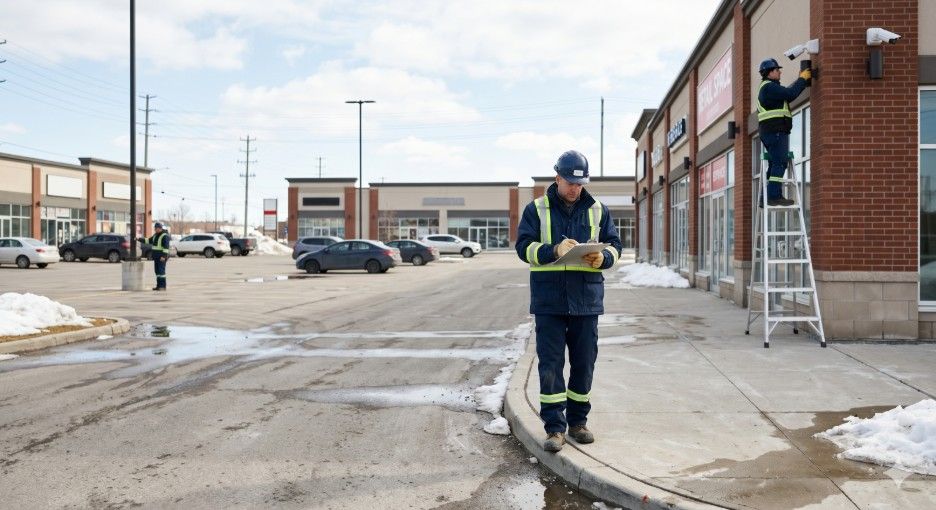
Security cameras may become obstructed during winter due to:
Spring inspections may involve:
Exterior surveillance effectiveness may be influenced by:
Security infrastructure should be reviewed in relation to actual property activity patterns and operational needs.
Landscaping conditions can affect both safety and security visibility during spring and summer.
Overgrown vegetation may interfere with:
Commercial retailers may review:
Landscaping maintenance should balance appearance, accessibility, operational flow, and security visibility requirements.
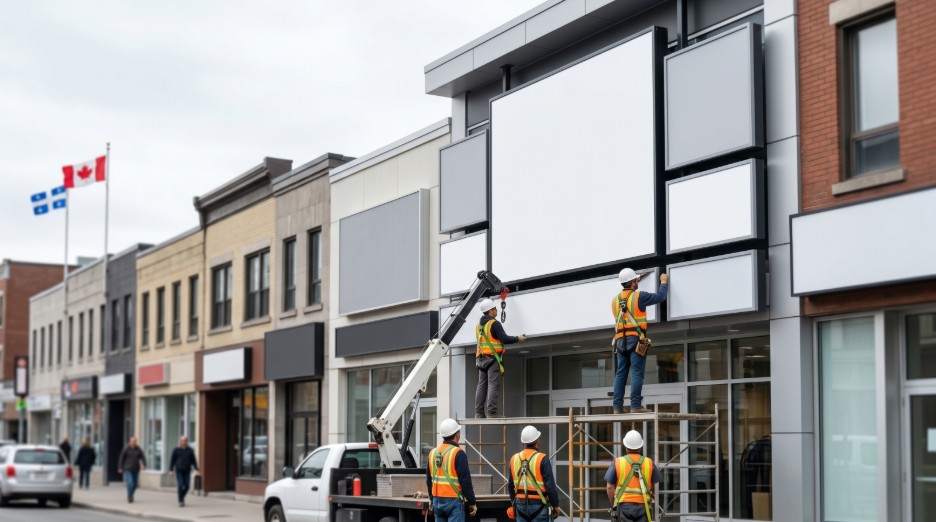
Winter exposure can affect commercial signage systems through:
Spring inspections may evaluate:
Wayfinding and visibility can influence:
Retail environments with large parking areas or multi-tenant layouts may require additional signage reviews during spring maintenance planning.
Retail facilities should review emergency access routes and exit conditions following winter operations.
Areas commonly inspected may include:
Winter debris, pavement damage, or drainage issues may affect accessibility and operational readiness.
Facilities must ensure that egress routes, fire lanes, and emergency lighting pathways support alignment with the National Fire Code of Canada (NFC), the National Building Code of Canada (NBCC), and applicable provincial life safety regulations.
Spring lighting and security audits often overlap with broader electrical infrastructure reviews.
Commercial facilities may inspect:
At Facility Network, our team supports commercial electrical service coordination for retail and multi-site facility environments across Canada.
To mitigate liability, all electrical inspections and repairs must be performed by certified commercial electricians in strict adherence to the Canadian Electrical Code (CE Code) and relevant provincial authorities, such as the Electrical Safety Authority (ESA) in Ontario. Furthermore, modifications to access control or surveillance systems should be handled by provincially licensed security integrators.
Water management plays an important role in liability reduction during spring.
Improper drainage may contribute to:
Facilities may inspect:
Drainage conditions should be reviewed based on local climate exposure, snowmelt patterns, and site-specific property design.
Spring operational transitions may also involve changes to retail access patterns.
Retailers may reopen:
Facilities may evaluate:
Changing occupancy and traffic patterns may require updates to access management procedures during spring and summer operations.
Retail delivery zones remain active throughout the year and often require seasonal inspection attention after winter operations.
Commercial property liability check reviews may include:
Loading areas exposed to snow clearing operations or freeze-thaw movement may experience additional wear during Canadian winters.
Interior transition areas near entrances frequently become high-risk locations during seasonal thaw periods.
Retail facilities may review:
Water tracked indoors during spring weather changes may increase slip risks in customer-facing environments.
Cleaning schedules and floor maintenance procedures may require seasonal adjustment based on occupancy patterns and weather conditions.
Organizations operating multiple retail locations across Canada often face added complexity when managing spring liability audits.
Regional differences in climate, snow exposure, and operational schedules may affect:
At Facility Network, we support national commercial facility operations through coordinated vendor management, seasonal maintenance planning, inspection scheduling, and multi-site operational oversight.
Commercial organizations may encounter:
Centralized audit coordination may help support greater operational consistency across distributed retail portfolios.
Documentation can play an important role in commercial property management and seasonal maintenance planning.
Facilities may maintain records related to:
Documentation practices should align with organizational workflows and operational requirements.
Because property conditions change over time, audits should be treated as ongoing operational processes rather than one-time seasonal events alone.
Canadian spring weather can remain unpredictable for extended periods.
Retail facilities may continue to experience:
A commercial property liability check should not end after one inspection cycle. Many facilities continue monitoring outdoor conditions throughout the spring transition period.
Operational plans may require adjustment based on:
Facility planning should remain adaptable rather than relying on rigid assumptions about seasonal conditions.
Some retail organizations may incorporate technology-assisted monitoring into seasonal security and maintenance planning.
These may include:
Technology implementation should reflect operational needs, property complexity, and maintenance capabilities rather than being treated as universally necessary.
Not every retail facility requires the same level of technological integration.
An effective spring audit strategy supports more than short-term repairs. It helps retail organizations identify operational risks, coordinate preventative maintenance, and prepare facilities for increased seasonal activity.
Commercial property liability check planning in Canada may involve:
Because every property environment differs, audits should always reflect site-specific conditions, regional weather exposure, occupancy patterns, and operational requirements.
Our team works with commercial organizations across Canada to coordinate seasonal facility services, security-related maintenance planning, electrical service support, and multi-site operational management tailored to complex retail environments.
Spring introduces new operational demands for commercial retailers across Canada. Melting snow, changing weather conditions, increased customer traffic, and lingering winter damage can all affect property safety, visibility, and operational readiness.
A proactive commercial property liability check allows retail organizations to review lighting conditions, slip hazards, alarm systems, drainage concerns, parking areas, and security infrastructure before seasonal activity intensifies.
Because liability exposure varies by property type, occupancy, climate, and facility design, seasonal audits should always be tailored to the specific retail environment and operational requirements.
At Facility Network, we support organizations across Canada with coordinated commercial facility services, electrical maintenance coordination, vendor management, seasonal inspections, and multi-site operational support.
What is a commercial property liability check?
A commercial property liability check is a seasonal or routine review of facility conditions that may affect safety, accessibility, security, and operational risk within commercial properties.
Why are spring liability audits important for retailers in Canada?
Canadian winters may leave behind pavement damage, drainage concerns, lighting failures, and slip hazards. Spring audits help identify these issues before seasonal customer traffic increases.
What areas are commonly reviewed during a retail liability audit?
Retail audits may include parking lots, sidewalks, entrances, lighting systems, alarm systems, drainage infrastructure, loading zones, signage, and emergency access routes.
Why is exterior lighting important during a liability inspection?
Lighting affects visibility, customer navigation, parking lot safety, and exterior monitoring. Burnt-out fixtures or poor lighting conditions may increase operational concerns after winter.
How do slip hazards develop during spring weather transitions?
Melting snow, water pooling, freeze-thaw cycles, and drainage issues may create slippery surfaces around entrances, sidewalks, parking lots, and ramps.
What security systems should retailers inspect during spring?
Retailers may review intrusion alarms, motion sensors, surveillance cameras, access controls, emergency communication systems, and exterior lighting infrastructure.
Why are drainage inspections important during spring?
Improper drainage may contribute to water accumulation, slippery surfaces, and property deterioration during spring thaw and rainfall periods.
How can multi-site retailers manage seasonal audits more effectively?
Many organizations use centralized vendor coordination, inspection scheduling, maintenance tracking, and operational reporting to support consistency across multiple retail locations throughout Canada.