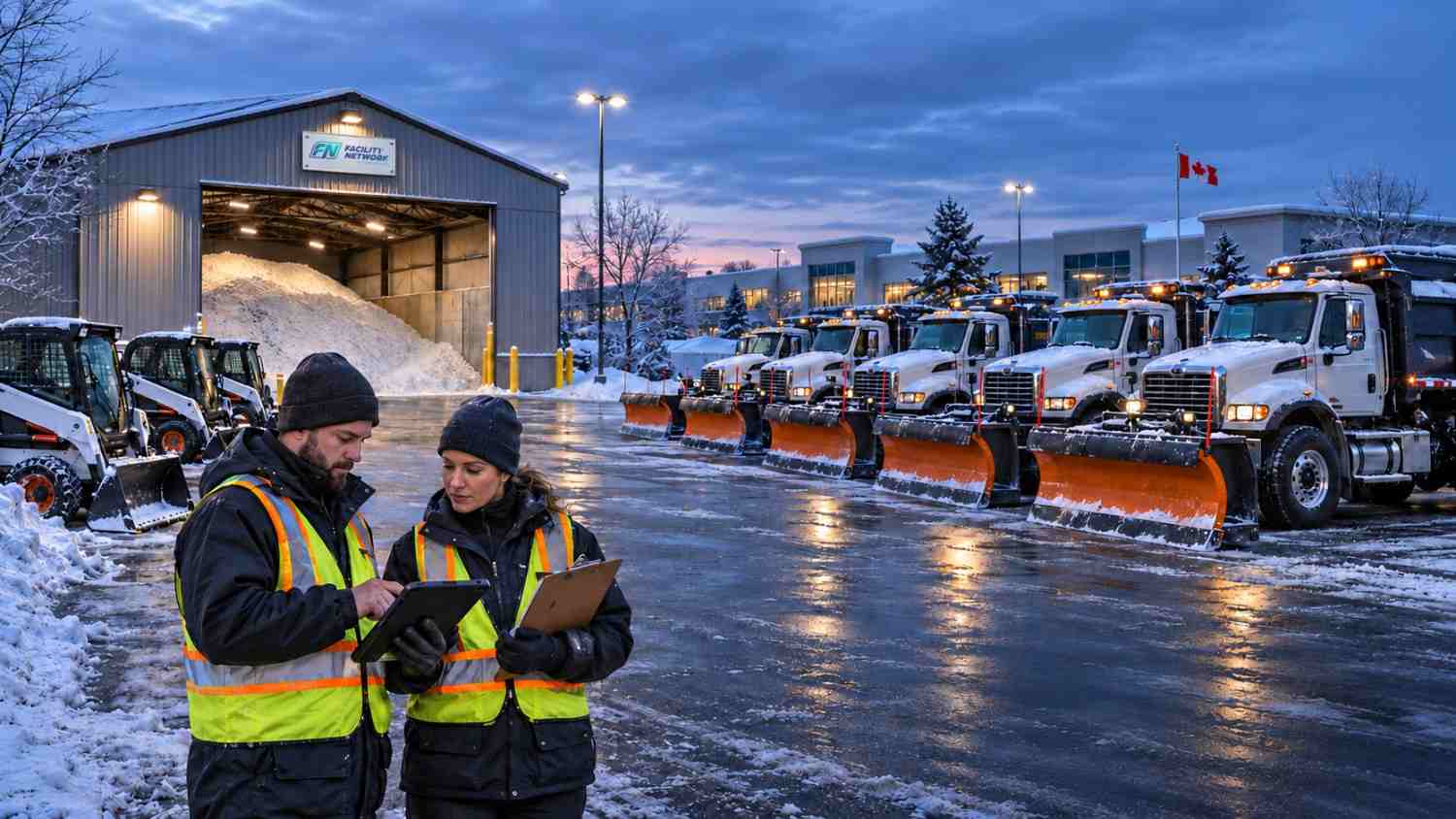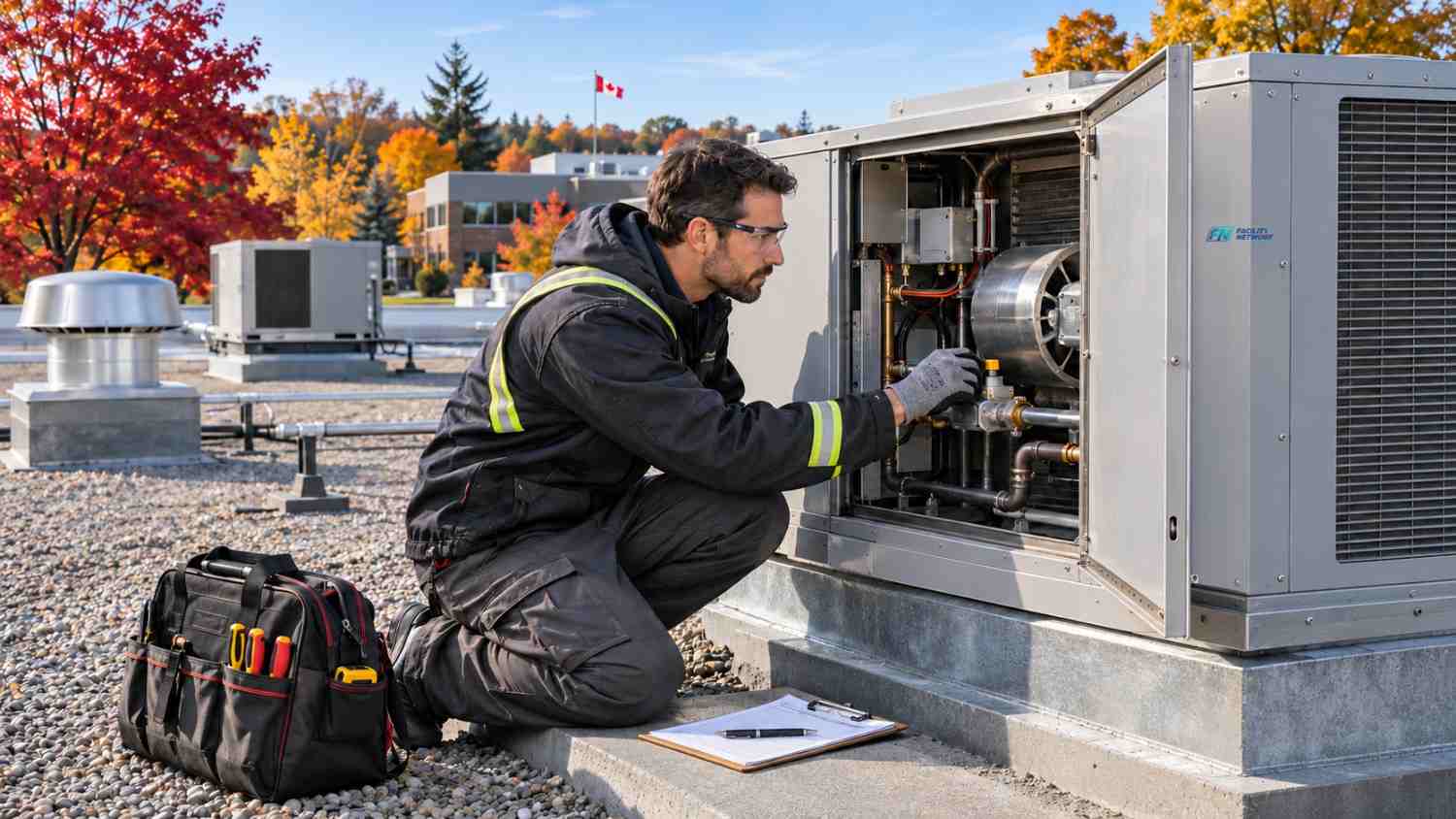
Preparing commercial heating systems before temperatures drop helps facility teams identify maintenance issues, check controls and reduce the risk of unexpected interruptions during winter. A structured commercial heating startup checklist gives property managers and maintenance supervisors a repeatable process for reviewing equipment across multiple buildings.
Facility Network supports organisations with coordinated facility services, including commercial HVAC and refrigeration services, helping teams plan seasonal maintenance and manage service needs across Canadian properties. Starting early also gives qualified technicians time to inspect equipment, document findings and recommend repairs before heating demand increases.
Commercial heating equipment may sit unused or operate at reduced capacity during warmer months. Before switching to regular heating, teams should check for wear, control issues, blocked airflow and other conditions that could affect performance. Fall preparation is especially important for portfolios with different building types, operating hours and local weather patterns.
Canadian conditions make a standardised process useful, but the schedule should reflect each site's location and equipment. Facilities in Calgary and Winnipeg may need to prepare for sharp temperature changes and prolonged cold. Buildings in southern Ontario and Québec may experience humid summers followed by freezing conditions, while coastal properties in Atlantic Canada may face salt-air exposure. Remote northern sites may also need longer lead times for parts and specialist service.
A planned startup helps teams:
Before scheduling inspections, confirm which heating assets each facility has and what work they need. An accurate asset register helps maintenance teams plan the right checks for each system instead of applying the same checklist to every building.
Record the equipment type, location, model, serial number, fuel or energy source, installation details and relevant maintenance history. Include rooftop units, boilers, heat pumps, make-up air units, ventilation equipment and associated controls where present.
Check the register against the equipment installed on site. Renovations, replacements and changes in building use can leave asset records out of date. Note recurring faults, previous service recommendations, warranty requirements and components approaching their planned replacement dates.
For multi-site portfolios, assign each asset a unique identifier and connect it to its service records. This makes it easier to compare recurring problems across buildings and identify whether an issue affects one unit or a wider group of similar assets.
A visual and mechanical inspection helps identify problems that need attention before the system runs regularly. The required checks depend on the equipment type, manufacturer instructions, site conditions and applicable local requirements.
A qualified HVAC technician should inspect relevant components, such as:
Do not treat a visual inspection as proof that equipment is safe or ready for service. Combustion analysis, electrical testing, pressure checks and other regulated or specialised work must be performed by appropriately qualified personnel.
If a technician identifies a potentially unsafe condition, follow the site's established isolation and escalation procedures. Record the finding, the immediate action taken and what must happen before the equipment returns to service.
Clean airflow paths help heating systems distribute air as designed. Dirty filters and fouled coils can restrict airflow, contribute to comfort complaints and affect equipment operation. The correct maintenance method depends on the unit and manufacturer instructions.
During the seasonal HVAC checklist, technicians should:
Indoor air quality also deserves attention before the building moves into its winter operating pattern. Confirm that outdoor air dampers, ventilation schedules and air distribution components operate as intended. In locations affected by wildfire smoke, review the building's approved smoke-response plan, filtration strategy and ventilation requirements with the appropriate facilities or indoor air quality professionals. Do not change ventilation settings without considering occupancy, building use and applicable guidance.
Record the filter type, service date, parts used and any airflow concerns. If the same unit repeatedly needs early filter replacement or develops coil fouling, investigate the operating environment rather than treating each visit as an isolated task.
Heating equipment can be mechanically sound but still operate poorly if its controls are incorrectly configured. Before the heating season, review thermostats, schedules, sensors, alarms and building automation system settings.
The controls review should confirm that:
Compare the temperature displayed by the control system with an appropriate independent measurement when readings appear inconsistent. Document sensor faults, unexplained temperature swings, short cycling and zones that fail to reach their intended conditions.
For multi-site operators, consistent naming conventions and reporting formats make it easier to compare performance between properties. Facility management technology and real-time visibility can support service tracking and coordination, but technology does not replace commissioning, on-site inspection or qualified technical judgement.
Some commercial heating systems, including heat pumps and rooftop units with heat-pump functions, contain refrigerant circuits. Refrigeration and air conditioning equipment may also share a site's maintenance programme. Review relevant refrigerant records as part of the broader seasonal process, even when the primary task is heating startup.
Check that asset records identify the refrigerant used, equipment details, service history and any reported leaks or refrigerant-related repairs. Where applicable, confirm that leak tests, recovery, charging and service activities are documented by the responsible contractor. Repeated refrigerant loss should trigger investigation into the cause, not simply repeated recharging.
A heating startup should establish a baseline for normal operation, not just confirm that equipment switches on. Review historical temperature data, energy consumption, fault logs and occupant complaints to identify patterns that may require investigation.
Useful indicators include:
Avoid comparing energy bills alone. A colder month, a change in occupancy or longer opening hours can increase consumption even when a system is operating properly. Where practical, use weather and operating context to interpret changes and investigate unexpected deviations.
A startup checklist is most useful when every issue has an owner, a priority and a clear next step. Establish response categories before the first cold-weather event so site teams and service providers understand how to handle different conditions.
These categories are examples, not universal response-time standards. Each organisation should define its own thresholds based on building use, occupant needs, asset criticality, service agreements and applicable requirements.
For every finding, record the asset ID, date, observed condition, supporting readings or photographs where appropriate, priority, assigned contractor, action taken and completion status. If a repair cannot be completed before winter demand increases, document the interim plan and the person responsible for reviewing it.
Facility teams that need support beyond planned maintenance can also review 24/7 emergency facility services when developing escalation arrangements for heating disruptions.
Technical and environmental requirements depend on the province or territory, building type, equipment and nature of the work. The National Energy Code of Canada for Buildings 2025 (NECB 2025) is a national model code published by the National Research Council Canada. The code's applicability depends on adoption and implementation by the relevant jurisdiction, so teams should confirm which edition and provisions apply locally rather than assume the 2025 edition is automatically enforceable everywhere.
Before work begins, confirm the contractor's qualifications, required local licences or certifications, insurance and site-specific safety arrangements. Depending on the work and location, compliance checks may also involve workers' compensation documentation through organisations such as WSIB in Ontario, WorkSafeBC in British Columbia, WCB in Alberta or CNESST in Québec. These checks should follow the applicable jurisdiction's requirements and the organisation's procurement policy.
Regional planning matters too. Prairie temperature swings can increase the importance of checking controls and freeze protection. Humid summers in southern Ontario and Québec may leave ventilation or cooling components needing attention before heating begins. Atlantic coastal sites should consider corrosion and salt exposure. Wildfire smoke can affect ventilation planning, while remote northern properties may need earlier parts ordering and contingency arrangements because service access can be limited.
Managing heating readiness across a portfolio involves more than booking inspections. Teams need clear service ownership, consistent documentation and a practical way to track outstanding work across locations.
Explore commercial facility maintenance services to understand the broader range of facility support available. You can also learn about Facility Network's national operating model to see how its approach to service coordination fits into multi-site operations.
Facility Network's role in coordinating facility services does not replace engineering assessments, regulated trade work or code certification. Equipment-specific decisions and required sign-offs remain with the appropriately qualified professionals responsible for the work.
A documented commercial heating startup checklist helps facility teams approach winter with a clearer view of equipment condition, maintenance priorities and operational risks. By combining timely inspections with control testing, refrigerant record reviews, energy monitoring and accountable follow-up, organisations can make better-informed maintenance decisions across Canadian locations.
Facility Network can support organisations seeking a coordinated approach to seasonal facility maintenance and service requirements. To discuss your property's needs and maintenance priorities, contact Facility Network.
What should Canadian facility teams know about a commercial heating startup checklist?
A commercial heating startup checklist should cover the asset register, equipment inspections, filters and coils, controls, relevant refrigerant records, temperature trends, energy performance and outstanding repairs. Teams should adapt the process to each building's equipment, local climate and applicable regulations.
When should commercial heating startup begin?
Start planning in late summer or early fall, allowing enough time to schedule technicians, obtain parts and address issues before sustained cold weather. The ideal timing depends on location, building use, equipment condition and contractor availability.
Who should complete commercial HVAC startup inspections?
Appropriately qualified technicians should complete inspections and technical work within their area of competence. Licensing, certification and other requirements depend on the province or territory and the type of equipment or work involved.
How often should commercial HVAC filters be changed?
Filter replacement frequency depends on the manufacturer's recommendations, filter type, operating hours, indoor conditions and site maintenance plan. Inspect filters regularly and document replacements rather than relying on one fixed schedule for every building.
What should rooftop unit maintenance include before winter?
Relevant checks may include filters, coils, fans, belts, electrical components, controls, drainage, weather seals and applicable safety devices. A qualified technician should follow the manufacturer's procedures and identify any repairs needed before routine heating operation.
How can facility teams identify heating energy inefficiency?
Review energy consumption alongside outdoor temperatures, occupancy, operating hours, indoor temperature trends and equipment runtime. Repeated cycling, uneven heating, persistent alarms and unexplained changes in consumption may indicate a need for further investigation.
Do federal refrigerant regulations apply to every Canadian commercial building?
No. The Federal Halocarbon Regulations, 2022 apply within their defined federal scope. Provincial and territorial requirements may govern other facilities, so operators should confirm the rules applicable to each site.
Related reading: How Often Should You Service Commercial HVAC Systems?