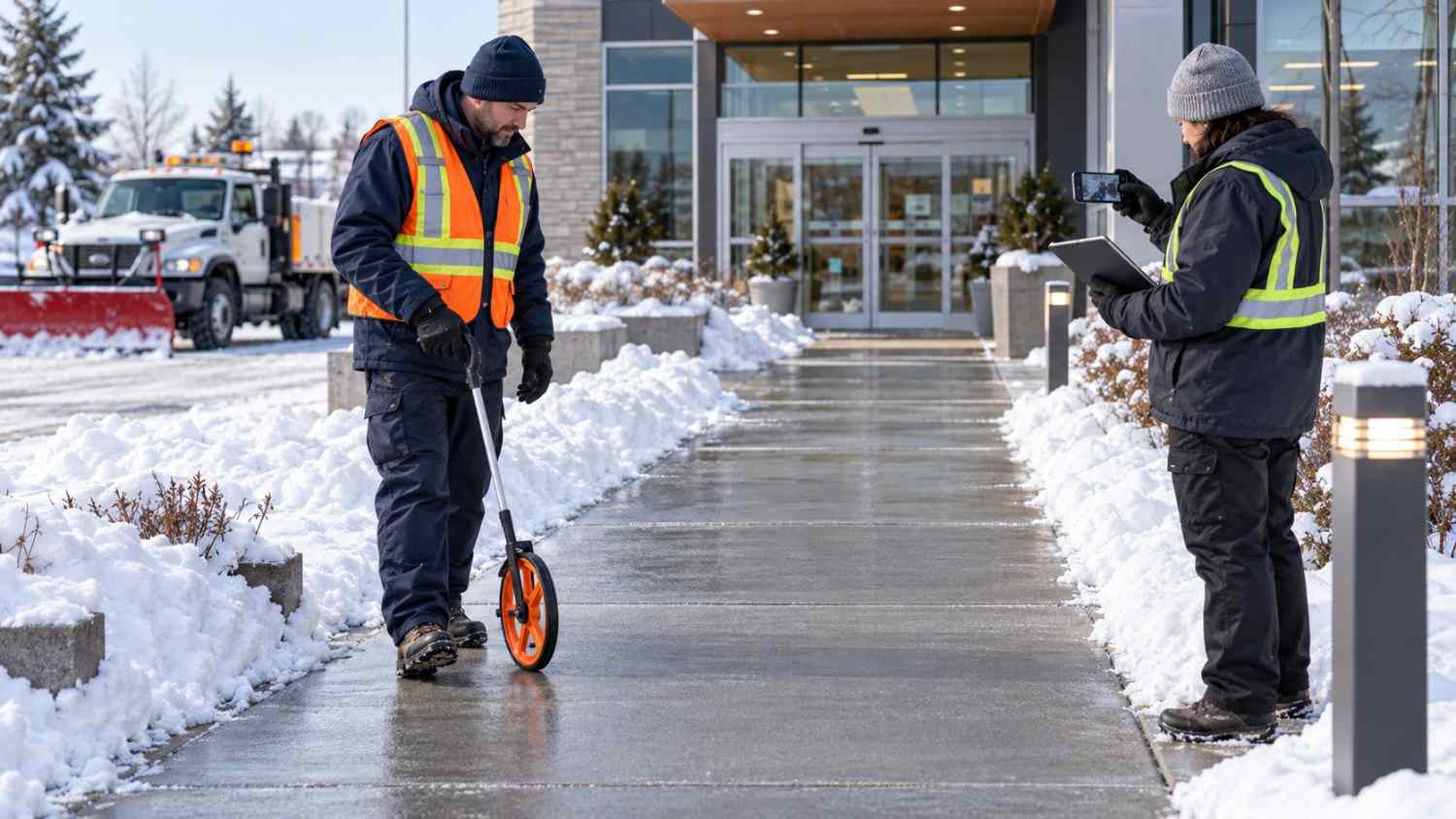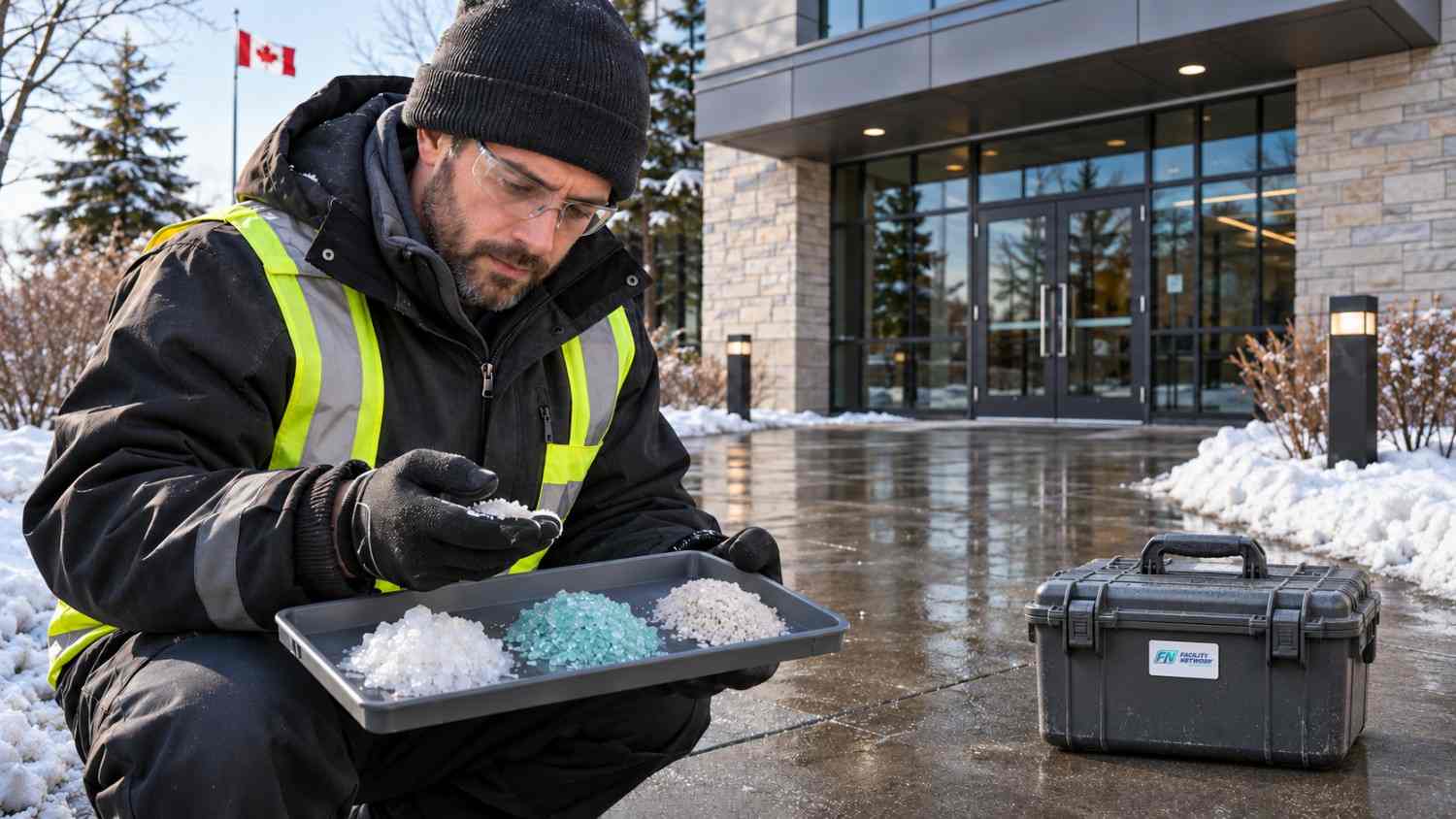
Choosing a de-icing material is more than a winter purchasing decision. For businesses managing multiple properties across Canada, the right choice affects operating budgets, pedestrian safety, surface conditions and contractor performance. Facility Network helps organisations coordinate facility services across 13 provinces and territories, supporting consistent winter operations across diverse locations. A practical approach to commercial de-icing material selection considers local weather, site risks, application requirements and documented results, rather than relying on the lowest price per bag or tonne.
Commercial properties face different winter conditions depending on their location, layout and use. An office entrance in Vancouver may experience wet snow and repeated freezing, while a distribution centre in Alberta may face prolonged deep-freeze conditions. Atlantic Canada can experience freezing rain, creating hazardous surfaces even when snowfall is limited.
These differences affect how de-icing products perform. Procurement teams should assess each site's exposure, pedestrian traffic, drainage, pavement type and operating hours before approving a material.
A consistent procurement framework can help organisations:
The goal is not to find one product for every property. It is to establish clear purchasing rules while allowing site-specific decisions when weather and surface conditions differ.
For organisations coordinating commercial snow removal services, de-icing requirements should form part of the wider winter maintenance plan.
The cheapest material per tonne may not deliver the lowest total operating cost. Procurement teams should compare products using a consistent evaluation method that considers performance, labour, equipment, storage and potential damage.
Different materials work under different conditions. Product labels and technical data sheets should guide purchasing decisions.
No product is best for every property. A material that suits a frequently used loading area may not be appropriate near sensitive landscaping, drainage infrastructure or specialised pavement.
A useful procurement comparison includes more than the supplier's quoted rate.
Compare products over a consistent period, such as a winter season, and account for differences in site size and weather exposure. Record costs in Canadian dollars and show GST, HST or applicable PST separately so that financial teams can compare supplier quotations on the same basis.
Actual savings should be measured against documented site results rather than assumed from a product's advertised coverage rate.
Effective commercial de-icing material selection starts with local weather patterns. Procurement leaders should avoid applying one national product specification without considering how individual locations experience winter.
Environment and Climate Change Canada's weather alerts and forecasts help operations teams monitor changing conditions. Its Canadian Climate Normals also provide historical climate information that can support seasonal planning. Neither replaces real-time site inspections.
Deep freezes can reduce the effectiveness of conventional rock salt. Alberta's Chinook cycles can also bring rapid temperature changes, melting snow and creating refreezing risks when temperatures fall again.
Sites should assess the expected pavement temperature, product limitations and likely need for repeat treatment. Loading bays, ramps and exposed walkways may require different treatment plans.
Lake-effect snow can create sharp differences in snowfall across relatively short distances. Southern Ontario and parts of Québec may also experience repeated freeze-thaw cycles.
Procurement teams should consider how quickly snow and ice accumulate, whether treated surfaces drain properly and how often inspections are needed. Entrances, stairs, accessible routes and high-traffic walkways deserve particular attention.
Freezing rain and fluctuating temperatures can create dangerous conditions with little warning. Materials that perform adequately during ordinary snowfall may not address every ice event.
Plans should include weather monitoring, clear treatment triggers and enough contractor capacity to respond to changing conditions. Teams should also check whether runoff could affect nearby drains, landscaped areas or watercourses.
The Lower Mainland can experience wet snow, rain and repeated freezing, while the BC Interior may face colder conditions. These differences affect application frequency, drainage and material performance.
Sites in coastal areas should assess runoff and corrosion risks. Colder inland sites should confirm that selected products are suitable for the temperatures expected at each property.
Material purchasing decisions should support slip and fall prevention without creating avoidable damage elsewhere on the property. A low material cost does not necessarily mean a low-risk winter programme.
Before approving a product, evaluate:
Avoid assuming that using more de-icer always produces safer conditions. Excessive application can increase residue, corrosion and environmental exposure without necessarily improving outcomes.
Procurement teams should also assess accessibility independently. De-icing does not replace the need to clear snow from designated accessible routes, maintain usable entrances and inspect surfaces after treatment.
For properties that need coordinated support beyond scheduled maintenance, Facility Network's 24/7 emergency facility services provide a relevant starting point for discussing broader facility response needs.
A written service-level agreement (SLA) turns purchasing expectations into operational requirements. It should explain when contractors must inspect, clear snow, apply materials, return for follow-up checks and record completed work.
The SLA should define site-specific trigger thresholds, rather than rely on vague instructions such as treating the property when conditions become unsafe.
Include these core controls:
A winter programme is only as reliable as the records used to evaluate it. For organisations operating across multiple provinces, consistent documentation helps managers compare contractor performance, investigate incidents and identify recurring problems.
Require contractors and site teams to maintain records that include:
These records should be linked to the correct site, date and service event. Managers should be able to identify which work was completed, who performed it and whether outstanding issues received attention.
Executives should review a small set of consistent indicators while allowing individual sites to maintain their own risk thresholds.
These indicators should be interpreted in context. A high number of repeat treatments may reflect severe weather rather than poor contractor performance. Similarly, fewer reported slips do not automatically prove that a site is safer.
Use the data to identify patterns, investigate exceptions and agree on corrective action. Avoid setting targets that encourage contractors to under-report incidents or apply less material than site conditions require.
Winter maintenance obligations vary by province, municipality, property type and the circumstances of an incident. Procurement teams should confirm the rules that apply to each location rather than assume a single national standard.
In provinces such as Ontario and British Columbia, occupiers' liability legislation may be relevant to the duties owed to people entering a property. Québec operates under its civil law framework, including applicable provisions of the Civil Code of Québec. The specific legal analysis depends on the facts and applicable law.
Municipal requirements may also address sidewalk clearing, snow storage, drainage, obstruction of public rights-of-way and clearing deadlines. These rules can differ between municipalities and may distinguish between public and privately maintained areas.
Before finalising contracts, organisations should:
Depending on the jurisdiction, contractor compliance may involve WSIB in Ontario, WorkSafeBC in British Columbia, WCB arrangements in applicable jurisdictions or CNESST in Québec. Requirements vary, so verify the relevant authority and coverage before work begins.
Documentation can support accountability and incident investigations, but it does not guarantee legal compliance or prevent liability. Organisations should obtain legal advice where responsibilities are unclear.
A multi-site winter programme needs standard controls without ignoring regional differences. A useful model establishes common procurement criteria, reporting requirements and performance indicators, then allows site managers to select approved treatments based on local conditions.
Facility Network states that it serves 13 provinces and territories, has more than 9,500 certified technicians, has completed over 600,000 jobs and offers more than 100 services. Organisations can learn more about Facility Network's national operating model when assessing a potential facilities partner.
A coordinated approach to commercial facility maintenance services can help organisations connect winter operations with their broader property maintenance plans.
Effective commercial de-icing material selection requires more than choosing a product at the right price. It means matching materials to weather and surface conditions, defining measurable service expectations, maintaining reliable records and reviewing contractor performance after each event. A structured approach helps procurement and operations teams make informed decisions while supporting safer, more consistent winter maintenance.
Facility Network can help organisations explore coordinated facility service requirements across their locations. To discuss your operational needs, book a facility services consultation and review how a documented winter maintenance programme could support your procurement and governance objectives.
How should enterprises evaluate de-icing materials by cost, risk and site conditions?
Enterprises should compare total applied cost, temperature performance, surface compatibility, environmental exposure and safety requirements. They should also consider delivery, labour, repeat treatments and cleanup. The final choice should reflect documented site conditions rather than purchase price alone.
Which de-icing material is best for commercial properties in Canada?
There is no single best material for every Canadian property. Rock salt may suit some applications in moderate winter conditions, while other products may be more appropriate in colder temperatures. Traction materials can help improve grip but do not melt ice in the same way. Site conditions and manufacturer guidance should determine the choice.
How can businesses reduce winter slip and fall risks?
Businesses can establish weather-based inspection triggers, clear snow promptly, select suitable de-icing materials, maintain accessible routes and verify completed work. They should also record slip reports, inspect recurring problem areas and follow up on hazards that remain after treatment.
What should a commercial snow and ice management SLA include?
An SLA should define service triggers, inspection and response expectations, priority areas, approved materials, escalation procedures, contractor responsibilities and post-event verification. It should also specify the records required to demonstrate that work was completed and unresolved hazards were addressed.
What records should contractors maintain during winter events?
Useful records include weather observations, ploughing and de-icing logs, application quantities, treatment locations, inspection results, photographs where appropriate, slip reports and corrective actions. Records should identify the site and event clearly so managers can review performance and investigate incidents.
How do Canadian winter maintenance requirements vary by province?
Occupiers' liability rules, occupational health and safety requirements, municipal clearing bylaws and other applicable obligations differ across jurisdictions. Québec follows a civil law framework, while other provinces have their own statutory regimes. Businesses should verify requirements for each property and seek legal advice when needed.
How can organisations manage de-icing procurement across multiple locations?
They can establish approved material criteria, standard reporting templates and common performance indicators while allowing site-specific decisions. Regional weather data, supplier availability, local regulations and contractor capacity should inform purchasing plans and seasonal budget reviews.
Related reading: How to Audit Contractor Safety Before Snow Season.