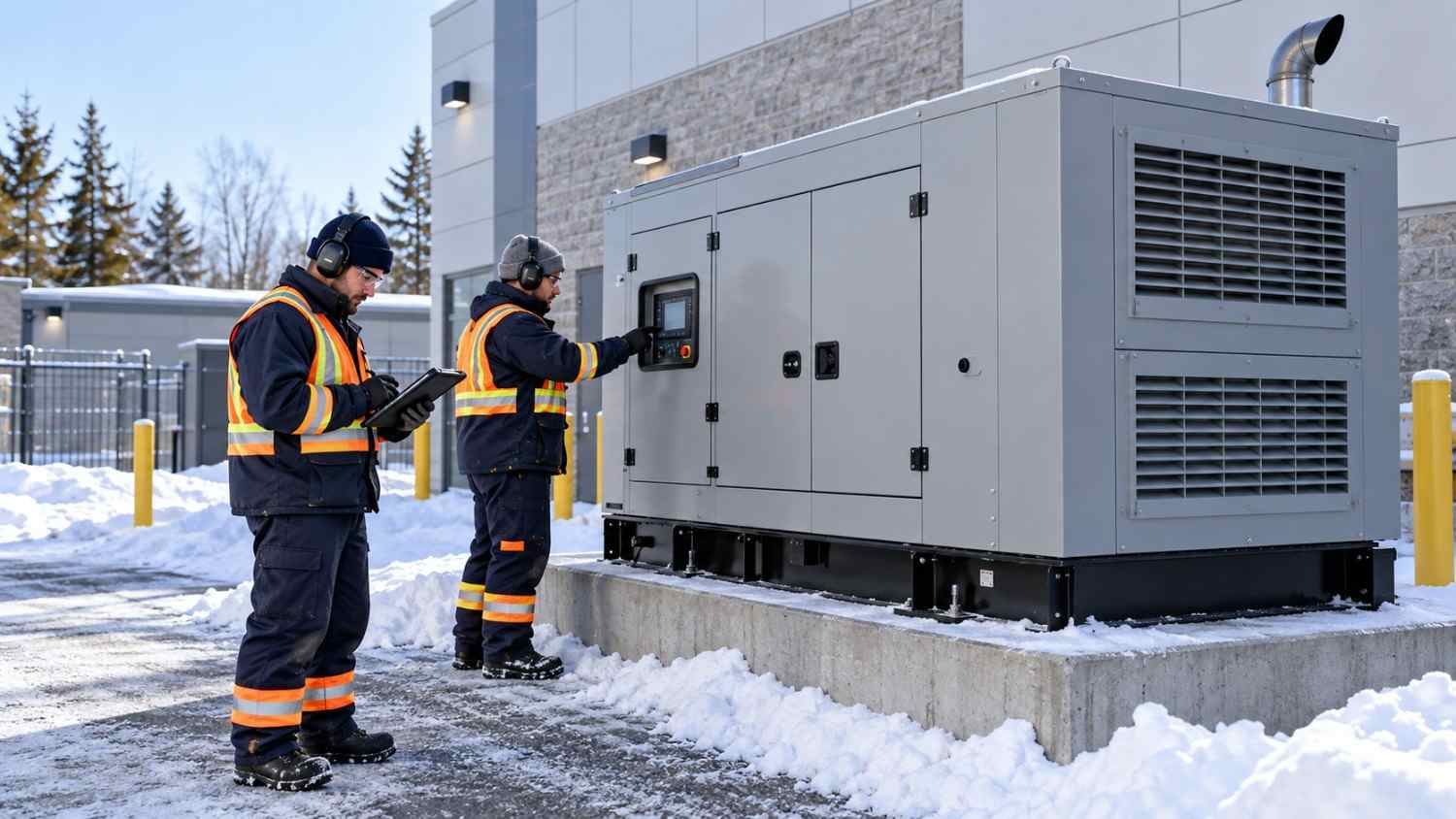
Winter storms can disrupt commercial facilities through snow, freezing rain, extreme cold, power interruptions, blocked access routes, equipment failures and contractor delays. For organisations operating across multiple Canadian locations, these risks can develop differently from one site to another. A practical winter storm business continuity plan therefore needs to connect emergency response with facility operations, service prioritisation, communications and documented recovery.
At Facility Network, we support organisations that need coordinated facility response across multiple locations. Our operating approach combines 24/7 year-round support, live dispatch, centralised job tracking and documented service activity. With a national network across 13 provinces and territories, we understand that winter response needs to account for local weather, geography, site access and operational requirements rather than relying on a single response model.
A strong continuity programme does more than establish an emergency phone number. It defines what happens when a storm affects a building, who makes decisions, which services receive priority, how contractors are dispatched, what information is recorded and how the organisation confirms that the incident has been closed.
A winter storm business continuity plan should provide a structured approach for maintaining critical facility operations before, during and after a significant weather event.
The plan should establish:
This approach aligns with Canada's broader all-hazards emergency management framework, which considers prevention and mitigation, preparedness, response and recovery as interconnected functions. Public Safety Canada also identifies emergency management as a shared responsibility involving governments, private-sector partners, communities and other stakeholders.
For facility teams, that means business continuity should not sit separately from day-to-day facility management. Emergency planning should connect with maintenance records, contractor management, asset information and operational decision-making.
A storm affecting one location may be manageable through a local response. A large weather system affecting several regions creates a different operational challenge.
A multi-site organisation may have:
This makes multi-site emergency planning particularly important.
A central team needs visibility into which sites require immediate intervention and which can continue operating with temporary controls. Without a prioritisation framework, dispatch resources can be allocated based on who calls first rather than which facility has the greatest operational risk.
A structured priority matrix can provide a more consistent basis for decision-making.
Not every storm-related issue requires the same response level.
A facility priority matrix can classify incidents according to factors such as:
The organisation should define its own thresholds based on facility type, occupancy, operational dependencies and risk tolerance.
The matrix should also identify who can change the priority. This prevents important incidents from remaining at a lower level because the original work order description did not fully capture the consequences.
An emergency plan becomes difficult to use when contact information is scattered across emails, spreadsheets and individual phones.
A central call tree should identify:
The list should include backup contacts.
Teams should also define the information required when an incident is escalated. A useful emergency call should communicate the site location, issue, immediate safety concern, affected systems, current site access conditions and any temporary controls already implemented.
This gives the receiving team enough information to begin triage without repeatedly requesting basic details.
Winter storms do not follow business hours.
An organisation's 24/7 facility response process should explain what happens when an incident occurs overnight, during a weekend or while a facility is closed.
The procedure should establish:
Our 24/7 emergency facility services support this type of structured response by connecting emergency service requirements with dispatch and facility coordination.
However, continuity planning should avoid promising a specific arrival or restoration time. Actual response can depend on weather conditions, geography, road access, parts availability, contractor capacity and local authority requirements.
Site access can become one of the most significant constraints during severe winter weather.
A technician may be available but unable to reach a facility because roads are closed, parking areas are inaccessible or snow clearing has not been completed.
A winter storm business continuity plan should therefore document access considerations for each site.
This can include:
Remote and rural facilities may require additional planning because travel distances and contractor availability can differ considerably from urban sites.
Continuity planning becomes more useful when it is tied to actual building systems.
Facility teams should identify services that could significantly affect safety, operations or property if unavailable.
Depending on the facility, these may include:
For example, a burst pipe during extreme cold may initially appear to be a plumbing issue. It can quickly become a building access, electrical, water damage and business continuity issue.
Our commercial plumbing services can be incorporated into an organisation's broader escalation structure where plumbing failures form part of the winter risk profile.
Similarly, electrical failures may require a defined escalation route through commercial electrical services, particularly when an outage affects critical building systems.
Not every facility problem can be permanently corrected immediately during a storm.
Temporary controls can help an organisation manage risk while awaiting permanent repairs, subject to qualified assessment and applicable requirements.
Examples may include:
Temporary controls should be documented, assigned to an accountable person and reviewed until the permanent corrective action is completed.
The objective is not to treat temporary measures as a substitute for permanent repair. They provide an interim operational step while the organisation manages the incident.
Incident documentation should begin during the response rather than after everything has been repaired.
A useful incident record may contain:
Photo documentation can provide useful context for facilities teams, contractors, property owners and risk professionals.
Centralised job tracking also helps organisations maintain a consistent record when multiple facilities experience incidents at the same time.
The objective is not simply to create a larger administrative record. Good documentation helps teams understand what happened, what actions were taken and what remains unresolved.
During a major storm, facility teams may receive multiple requests at once.
Live dispatch can help central operations identify:
This provides greater visibility than managing storm-related incidents through disconnected email chains or individual phone calls.
The dispatch model should still allow for regional conditions. A technician serving a facility in Québec may face different access conditions from a contractor travelling to a site in Alberta or Atlantic Canada.
National service delivery therefore needs central coordination alongside regional awareness.
A winter continuity programme should not focus exclusively on snowfall.
Canadian facilities can face a combination of hazards across the year, and an all-hazards approach provides a broader planning structure. Public Safety Canada's emergency management framework recognises natural hazards and other disruptions within a comprehensive preparedness, response and recovery model.
Facility teams can consider scenarios such as:
Extreme cold can affect heating, plumbing, building access and equipment. Plans should identify facilities where loss of heat could create rapid operational or property risks.
Ice accumulation can affect travel, access, power infrastructure and contractor mobility. Communication and access procedures should account for conditions that prevent normal site entry.
Snow can affect entrances, roofs, parking areas, loading zones and emergency access routes. Site-specific snow management responsibilities should be established in advance.
Freeze-thaw cycles can create water intrusion, drainage and access issues. Winter continuity planning should extend into the transition period rather than ending with the last major snowfall.
Some Canadian regions can experience wildfire smoke during warmer months. Continuity planning can consider impacts on indoor air quality, HVAC operation, staffing and facility use.
Extreme heat creates a different seasonal risk profile but can affect HVAC systems, electrical loads, occupant conditions and equipment. The same governance structure used for winter emergencies can support broader all-hazards planning.
Service restoration should follow predefined priorities rather than treating every facility issue equally.
A useful restoration sequence can consider:
Life Safety
Address conditions that may affect occupants or emergency systems.
Critical Building Systems
Restore services necessary to maintain essential facility operations.
Property Protection
Address conditions that could lead to further building or equipment damage.
Operational Continuity
Restore systems required for the organisation's core operations.
Routine Recovery
Complete lower-priority repairs and follow-up maintenance.
This sequence should be adapted to each organisation's risk framework.
The objective is to create a common decision structure that helps operations teams make consistent choices when resources are limited.
Multi-site emergency response can involve numerous contractors, each with different availability, qualifications and documentation.
Before winter, procurement and facility teams should review:
Contractor requirements can vary by province and trade. Organisations should verify applicable obligations with the relevant provincial authority and workers' compensation organisation.
For example, Ontario organisations may need to consider WSIB requirements when engaging contractors. Other jurisdictions use different systems and terminology, including WorkSafeBC, WCB Alberta and CNESST.
The purpose of a central contractor record is to reduce uncertainty during an event and help procurement and operations teams identify suitable resources more quickly.
Emergency and continuity planning should reflect the regulatory environment applicable to each facility.
The Emergency Management Framework for Canada provides an all-hazards approach built around prevention and mitigation, preparedness, response and recovery. It also recognises that emergency management responsibilities are distributed across federal, provincial and territorial governments.
CSA Z1600 is referenced by CSA materials as Emergency and continuity management program. It can provide a useful standards-based reference when organisations are developing or reviewing continuity programmes, but facility teams should determine which standards, regulations and contractual requirements apply to their particular operations.
The National Fire Code of Canada 2025 is a national model code. NRC states that organisations should contact the appropriate provincial or territorial official to determine which codes and regulations apply in their area.
This distinction matters. A national model code is not automatically the same as the enforceable requirement at every Canadian facility.
Technology can support business continuity by bringing work orders, asset information, technician updates, photographs and incident status into a more centralised workflow.
Useful capabilities may include:
For a multi-site organisation, this can make it easier to identify where incidents are occurring and which issues remain unresolved.
The technology should support the operating process rather than replace it. Clear escalation rules, ownership and response procedures remain necessary.
A plan that exists only in a document may not reveal practical gaps.
A tabletop exercise can simulate a realistic winter event and test the organisation's response.
For example:
Scenario: A severe storm causes widespread power disruption, heavy snow and freezing temperatures across several facilities.
The exercise can ask:
The purpose is to identify gaps before an actual event occurs.
After the exercise, document lessons learned and assign owners to corrective actions.
Closing an emergency work order should involve more than marking it complete.
The close-out process should confirm:
This creates a clear transition from emergency response to normal maintenance.
It also helps prevent temporary repairs or unresolved deficiencies from disappearing after the immediate crisis has passed.
A continuity programme should evolve based on actual experience.
After a major winter storm, facility leaders should review:
The review should distinguish between equipment problems and process problems.
For example, a facility may have experienced a heating failure because equipment failed. Another site may have experienced a longer disruption because the emergency contact list was outdated. Both issues matter, but they require different corrective actions.
Before winter, facility teams can use the following checklist:
The checklist should be adapted to each organisation's facility types, risk profile and applicable requirements.
At Facility Network, we focus on bringing emergency response, facility operations and service coordination into one connected process. Our support includes 24/7 year-round assistance, live dispatch and centralised job tracking, helping organisations maintain visibility when multiple facility issues develop at the same time.
Our national network spans 13 provinces and territories, allowing our operating model to account for different regional conditions while maintaining central coordination. We also use photo documentation and job tracking to provide a clearer record of service activity.
For organisations managing multiple Canadian facilities, this structure can support more consistent escalation, documented service activity and clearer accountability during winter events.
Our approach is not based on promising a universal response or restoration timeframe. Weather, geography, site access, contractor availability, parts and local authority requirements can all affect emergency response.
A winter storm business continuity plan should give facility teams a practical framework for making decisions before, during and after a severe weather event. The strongest plans connect priority matrices, call trees, live dispatch, site access, temporary controls, documentation and recovery reviews.
Canadian organisations also need to account for jurisdictional differences. Federal, provincial, territorial and municipal authorities have different responsibilities, while applicable codes, standards and occupational health and safety requirements can vary by location. Public Safety Canada's framework reinforces the importance of coordinated preparedness, response and recovery across jurisdictions and partners.
At Facility Network, we help organisations coordinate facility services across complex portfolios while maintaining visibility into emergency work, documentation and follow-up. If your organisation is reviewing its winter response structure, book a facility services consultation to discuss the operational requirements, regional considerations and continuity priorities affecting your facilities.
What Should a Winter Storm Business Continuity Plan Include?
A winter storm business continuity plan should include facility priorities, emergency contacts, escalation procedures, after-hours dispatch, site access arrangements, temporary controls, contractor information, incident documentation, service restoration priorities and post-event review procedures.
Why Is Multi-Site Emergency Planning Important For Canadian Organisations?
Different facilities can experience different weather conditions, access restrictions, equipment failures and contractor availability during the same storm. A multi-site plan provides a common governance structure while allowing individual locations to apply site-specific procedures.
How Should Facility Teams Prioritise Storm-Related Work Orders?
Teams can use a priority matrix based on life safety, critical building systems, property protection and operational continuity. The exact criteria should reflect the organisation's risk framework and facility characteristics.
Should Emergency Response Plans Include After-Hours Dispatch?
Yes. Winter storms can create incidents outside normal working hours. The plan should identify who receives after-hours calls, how incidents are triaged, when contractors are contacted and when leadership escalation occurs.
What Should Be Documented During A Winter Facility Incident?
Documentation can include the time and location of the incident, affected systems, photographs, weather and access conditions, dispatch activity, contractor information, temporary controls, repair activity and outstanding follow-up.
How Can Facilities Prepare For Limited Site Access During Winter Storms?
Review access routes, snow-clearing responsibilities, gate procedures, keyholder information, service entrances and local travel restrictions before winter. Remote facilities may require additional contingency arrangements because travel times and contractor availability can vary.
Does CSA Z1600 Automatically Apply To Every Canadian Facility?
CSA Z1600 is a Canadian emergency and continuity management standard, but a standard does not automatically become a legal requirement simply because it exists. Organisations should determine which standards, regulations, contractual requirements and authority having jurisdiction requirements apply to each facility.
Does The National Fire Code Of Canada 2025 Apply In The Same Way Across Canada?
No. The National Fire Code of Canada 2025 is a national model code. NRC advises users to confirm which codes and regulations apply in their area with the appropriate provincial or territorial official.
How Should Contractors Be Managed During A Winter Emergency?
Organisations should maintain current contractor contacts, service scopes, emergency availability, applicable documentation and escalation contacts. Provincial requirements can differ, so contractor compliance should be checked against the applicable jurisdiction.
How Often Should A Winter Business Continuity Plan Be Reviewed?
The plan should be reviewed when there are significant changes to facilities, critical assets, contractors, contacts, operating arrangements or applicable requirements. It should also be reviewed after significant incidents and exercises so lessons learned can be incorporated.