Frozen pipes can disrupt building operations, damage equipment and interiors, and interrupt essential water services. For organisations managing several commercial properties, preventing these incidents requires consistent inspections, clear isolation procedures and reliable records across every site.
Facility Network supports organisations with coordinated facility services, including commercial plumbing services, helping teams organise maintenance and respond to property service needs. A practical commercial frozen pipe prevention plan combines seasonal preparation, leak detection, drain maintenance and documented response procedures tailored to each building's plumbing layout and local winter conditions.
Water inside a pipe can freeze when temperatures fall far enough and exposure lasts long enough. As ice forms, it can restrict flow and increase pressure in sections of the plumbing system. A pipe may crack or fail, with water escaping when the ice melts or normal pressure returns. Pipes in unheated spaces, exterior walls, loading areas, mechanical rooms and vacant units can be particularly vulnerable.
Multi-site portfolios face an added challenge: buildings may have different layouts, occupancy schedules, plumbing materials and maintenance histories. A response procedure that works in a staffed office tower may not be suitable for a rural warehouse or a northern property with limited after-hours access.
Common risk factors include:
A documented approach helps facility teams identify high-risk locations, assign maintenance responsibilities and prioritise work before freezing weather arrives.
The first step in commercial frozen pipe prevention is understanding where water enters, travels through and leaves each property. Facility teams should maintain current plumbing plans that identify incoming water services, branch lines, isolation valves, backflow prevention devices, drain routes and critical equipment connections.
Mark pipes that pass through cold or poorly insulated spaces, including exterior wall cavities, parking garages, loading docks, crawl spaces, unheated storage rooms and rooftop service areas. Review vacant units and intermittently used spaces separately because heating schedules may differ from those in occupied areas.
Create an isolation map for each property that shows:
Store maps where authorised staff can access them during an incident. Where practical, keep an accessible digital copy as well as a site copy. Validate the map during inspections by confirming valve locations and labels with qualified personnel. Do not operate unfamiliar valves or interfere with backflow assemblies without following the site's approved procedures.
A pipe's location and surrounding conditions often matter as much as the outdoor temperature. During autumn inspections, examine exposed plumbing and the spaces around it for damaged insulation, air leaks, water entry and signs of previous freezing.
The inspection should cover:
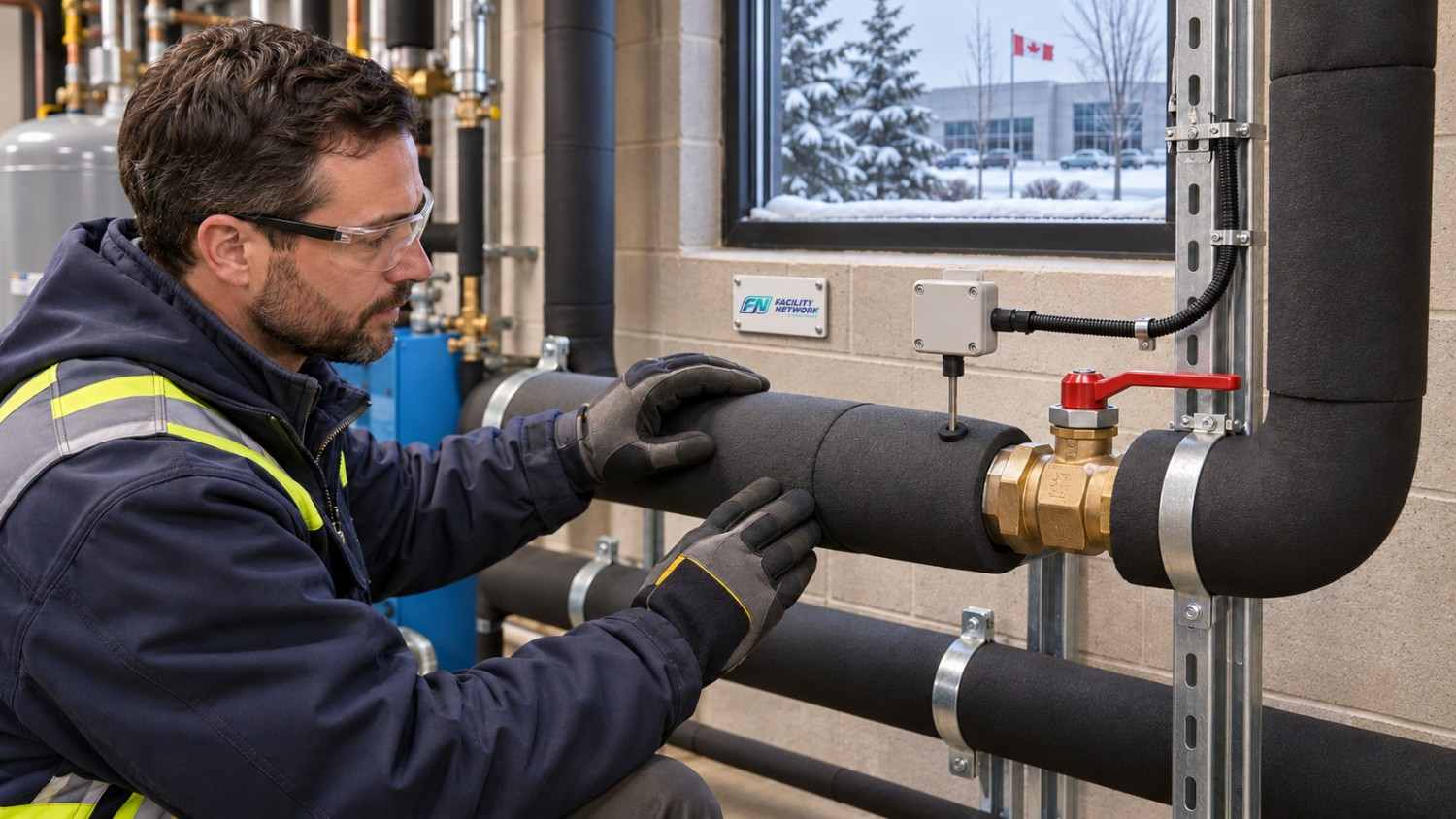
Do not assume that insulating a pipe alone will protect it under all conditions. Insulation slows heat loss but does not generate heat. The appropriate protection depends on the pipe location, exposure, building design and system requirements.
If inspection identifies a damaged component or a need for design changes, arrange assessment by an appropriately qualified local trade or specialist. Record the finding, location, recommended action, responsible party and target completion date.
Leak detection helps facility teams identify water loss before it develops into extensive damage. Some leaks are visible, but others occur behind walls, above ceilings, beneath floors or in mechanical spaces that receive little routine attention.
Build leak detection into the maintenance programme by checking water meters, reviewing unusual consumption and inspecting known problem areas. Where suitable, consider monitored leak sensors near vulnerable equipment, water heaters, risers, plumbing manifolds and other locations where a leak could affect critical operations.
For multi-site properties, establish a baseline for normal water use and investigate unexplained changes. A sudden increase outside operating hours may warrant inspection, although irrigation, cooling equipment, cleaning activities and other legitimate uses should also be considered.
A practical leak detection programme should define:
Sensors can provide an early warning, but they cannot guarantee detection of every leak. Their placement, power supply, connectivity, maintenance and alarm routing all affect usefulness. Test devices according to the manufacturer's instructions and record the results.
Frozen pipes are not the only winter-related plumbing concern. Blocked drains, overwhelmed drainage systems and water entering through vulnerable building openings can also cause damage during freeze-thaw cycles, spring snowmelt and intense rainfall.
Include drain maintenance in the seasonal programme. Inspect floor drains, roof drains, downspouts, catch basins, sump systems and other drainage components relevant to each property. Remove accumulated debris using suitable methods and check for signs of slow drainage, standing water, damaged grates or recurring blockages.
For buildings with sump pumps, confirm that the equipment is maintained and that alarms or backup arrangements are reviewed where installed. Roof drainage needs particular attention before periods of snow accumulation and thawing. Follow site-specific procedures for roof access and work at height.
Municipal sewer-use bylaws may govern what can enter a public sewer system, including restrictions on certain discharges. Requirements differ between municipalities, so confirm the applicable rules with the local authority. If a property has a history of sewer backups or drainage problems, arrange an assessment by qualified professionals rather than relying on repeated clearing alone.
Record drain inspections, cleaning dates, observed defects and follow-up work. A history of recurring blockages can help teams identify where further investigation or planned repairs may be needed.
Even with preventive maintenance, a pipe can freeze or fail during severe weather. A clear burst pipe response plan helps staff take appropriate initial steps while qualified trades assess the plumbing problem.
The plan should identify who can authorise water isolation, where the main and zone shut-offs are located, how to contact emergency plumbing support and how to protect affected areas. Staff should understand the difference between reporting a leak and attempting a repair.
When a leak or burst pipe is suspected:
For properties requiring after-hours assistance, review the escalation arrangements available through 24/7 emergency facility services. Response expectations should reflect the site's service agreement, risk profile and location, including travel constraints for rural and northern facilities.
Coordinating plumbing maintenance across different properties takes clear service requirements, accurate records and a defined route for handling urgent issues. Facility Network provides commercial facility services and states that its network includes 9,500+ certified technicians across 13 provinces and territories. The company also reports 600K+ jobs completed and 100+ services offered.
Its plumbing service offering includes preventive maintenance, leak detection, drain cleaning, pipe repairs and emergency plumbing support. Organisations can explore commercial facility maintenance services to understand the broader range of support available across property types.
To learn more about Facility Network's national operating model, facility teams can review how coordinated service delivery may fit into their maintenance planning. Coordination does not replace engineering advice, local code approval or the work and sign-off required from appropriately licensed trades.
Effective commercial frozen pipe prevention depends on early preparation, practical leak detection, maintained drainage systems and a response plan that staff can follow under pressure. For multi-site operators, consistent documentation helps identify recurring risks while allowing each property to account for its plumbing layout, climate and local requirements.
Facility Network can help organisations coordinate plumbing maintenance and facility service needs across their portfolios. To discuss preventive maintenance or emergency service requirements for your properties, contact Facility Network.
How can facility teams prevent frozen pipes in multi-site commercial properties?
Identify vulnerable pipes, maintain insulation and appropriate heating, inspect freeze-protection equipment, monitor for leaks and keep shut-off maps current. Assign responsibility for each action and document completed inspections across all properties before severe cold arrives.
Which commercial properties are most at risk of frozen pipes?
Risk depends on building design, pipe location, heating conditions and water use. Warehouses, vacant units, parking garages, loading areas, older buildings and properties with plumbing in exterior or unheated spaces may need additional attention.
How often should commercial plumbing be inspected for winter readiness?
Schedule a detailed review before the cold season and follow up at intervals suited to the property's risk, equipment and maintenance plan. Reinspect vulnerable locations after severe cold, building changes, reported leaks or heating failures.
Can pipe insulation alone prevent freezing?
No. Insulation slows heat loss but does not generate heat. The right approach may also require suitable space heating, air-leak control, heat tracing where appropriate and monitoring. A qualified professional should assess persistent or high-risk exposure.
What should a commercial frozen pipe response plan include?
It should identify emergency contacts, main and zone shut-offs, safe isolation procedures, contractor escalation, water-damage controls and incident documentation. Staff should know what they are authorised to do and when to leave the work to qualified professionals.
How does leak detection help prevent water damage?
Leak sensors, water-use reviews and routine inspections can help teams identify abnormal conditions earlier. Their effectiveness depends on correct placement, maintenance, alert routing and timely follow-up, so detection tools should complement rather than replace inspections.
Which Canadian plumbing code applies to a commercial property?
The applicable requirements depend on the province or territory, municipal rules, building and type of work. The National Plumbing Code of Canada 2025 is a model code, and its provisions apply through adoption or adaptation by the relevant authority. Confirm the current local requirements before work begins.
Related reading: How Often Should You Service Commercial HVAC Systems?